

TL;DR (En résumé)
Le fossé de la réalité :
- Chromebook scolaires : Ils sont verrouillés par des professionnels. Ils utilisent des outils de niveau entreprise qu'il est presque impossible pour un enfant de contourner.
- Appareils personnels : Ils reposent sur des applications grand public que les parents doivent gérer eux-mêmes. Ils sont notoirement faciles à détourner.
Pourquoi le combat est déloyal : Les écoles disposent de départements informatiques dédiés et de systèmes qui sont propriétaires du matériel. Les parents sont généralement seuls, essayant de gérer des appareils que leurs enfants "possèdent" techniquement ou utilisent constamment, souvent avec un temps technique limité.
La solution : Vous ne pouvez pas construire un département informatique de niveau scolaire dans votre salon. Mais vous pouvez utiliser la même philosophie — la mise sur liste blanche — pour sécuriser le plus gros risque : YouTube. WhitelistVideo apporte ce contrôle de "style scolaire" à vos appareils domestiques.
Le dilemme des parents
Pensez à un mardi typique pour un enfant de 13 ans.
À l'école (10h00) : Elle ouvre son Chromebook scolaire. Si elle essaie d'aller sur YouTube, GoGuardian s'affiche : "Restreint pendant les heures de cours". Elle tente d'utiliser un VPN pour contourner l'interdiction, mais celui-ci est également bloqué. Chaque mouvement est enregistré et signalé. Elle ne peut pas installer d'applications, elle ne peut pas modifier les paramètres, et elle ne peut certainement pas contourner les filtres sans un niveau de compétences en piratage que la plupart des collégiens n'ont tout simplement pas.
À la maison (20h00) : Elle prend son iPhone. Elle ouvre l'application YouTube et a un accès instantané à plus de 2 milliards de vidéos. L'algorithme commence à lui proposer tout ce qui la fera regarder le plus longtemps possible. Peut-être avez-vous installé Bark, mais elle a déjà compris qu'il ne voit pas tout. Si elle s'ennuie, elle peut simplement utiliser le mode navigation privée ou, si elle se sent audacieuse, supprimer entièrement l'application de surveillance.
La partie difficile à accepter : Votre enfant est en réalité plus en sécurité sur Internet à l'école qu'assis à un mètre de vous sur le canapé.
Comment fonctionnent réellement les contrôles des Chromebook scolaires
La configuration d'entreprise
Les écoles ne s'amusent pas avec des applications à 5 $ par mois. Elles utilisent une gestion d'appareils d'entreprise.
Google Workspace for Education : L'école "possède" l'identité de l'appareil. Les administrateurs informatiques définissent les règles depuis un tableau de bord central, et ces règles sont poussées vers le Chromebook au niveau du système d'exploitation. On ne peut pas simplement les "éteindre".
Les acteurs majeurs :
- GoGuardian (celui que les enfants détestent le plus)
- Securly
- Lightspeed Systems
Ce ne sont pas seulement des applications ; elles font partie de l'ADN de l'appareil.
Ce que l'informatique scolaire peut réellement faire
- Contrôle total du domaine : Ils peuvent mettre sur liste blanche ou liste noire des sections entières d'Internet.
- Verrouillage des applications : Personne n'installe quoi que ce soit sans le feu vert d'un administrateur.
- Surveillance en direct : Dans de nombreux cas, un enseignant peut voir exactement ce qui se trouve sur l'écran d'un élève en temps réel.
- Interrupteurs matériels : Ils peuvent désactiver les ports USB, empêcher les réinitialisations d'usine ou effacer la machine à distance en cas de perte.
- Spécificités YouTube : Ils ne se contentent pas de "filtrer" YouTube ; ils le limitent souvent à "YouTube for Education", qui n'autorise que des chaînes spécifiques et vérifiées.
Pourquoi cela fonctionne (et pas les applications domestiques)
Ce n'est pas seulement la technologie ; c'est l'environnement. Si un enfant enfreint les règles sur un ordinateur portable d'école, il y a des conséquences réelles comme une heure de colle ou la perte de l'appareil. À la maison, ces limites sont souvent négociables. De plus, l'école est propriétaire du matériel. À la maison, la frontière entre "mon téléphone" et "le téléphone de la famille" est floue, ce qui rend l'application des règles complexe.
Comment fonctionnent les contrôles des appareils personnels (et pourquoi ils échouent)
L'approche des applications grand public
La plupart des parents finissent par utiliser l'une de celles-ci :
- Bark, Qustodio, Net Nanny ou Google Family Link.
Le processus : Vous installez l'application, définissez quelques règles et espérez que le logiciel attrape les "mauvaises choses".
Les points faibles
- Ils restent en surface : Ces applications s'exécutent par-dessus le téléphone. Elles ne font pas partie du système. Les enfants peuvent souvent forcer l'arrêt dans les paramètres ou trouver des navigateurs "fantômes" que les applications ne suivent pas.
- Le jeu du chat et de la souris : Les enfants ont des téléphones, des tablettes et des consoles de jeux. Maintenir une application grand public en parfait état de fonctionnement sur quatre systèmes d'exploitation différents est un travail à plein temps.
- L'écart technologique : Soyons honnêtes — la plupart des adolescents sont plus calés en technologie que leurs parents. S'il existe une solution de contournement sur TikTok, ils la trouveront en dix minutes.
- L'option "nucléaire" : Si un enfant est assez frustré, il réinitialise simplement le téléphone en mode usine ou utilise l'appareil d'un ami.
Comparaison côte à côte : École vs Maison
Faites défiler horizontalement pour voir toutes les colonnes.
| Fonctionnalité | Chromebook d'école | Téléphone personnel |
|---|---|---|
| Gestion | Niveau OS (Difficile à casser) | Niveau App (Facile à casser) |
| Qui commande | Équipe informatique pro | Parents fatigués |
| YouTube | Listes blanches strictes | "Mode restreint" (Inutile) |
| Difficulté de contournement | Très élevée | Faible |
| Support | Assistance technique d'astreinte | Recherche Google et prières |
| Efficacité | ~90% | ~40% |
Le problème YouTube
Pourquoi YouTube est le plus gros risque
À l'école, YouTube est un outil. À la maison, c'est un puits sans fond. Les statistiques sont stupéfiantes : 500 heures de vidéo sont mises en ligne chaque minute. Aucune "liste noire" ou "filtre" ne peut suivre ce volume. Au moment où une vidéo est signalée comme inappropriée, des milliers d'enfants l'ont déjà vue.
Pourquoi les solutions domestiques classiques échouent
- YouTube Kids : C'est génial pour les tout-petits, mais un enfant de 10 ans préférerait faire des corvées supplémentaires plutôt que d'être vu en train de l'utiliser. De plus, l'affaire "Elsagate" a prouvé que même l'application "sûre" a des failles.
- Mode restreint : C'est une blague pour la plupart des enfants. Vous pouvez le contourner en vous déconnectant ou simplement en ouvrant un autre navigateur.
- Limites de temps d'écran : Celles-ci limitent combien de temps ils regardent, mais elles ne font rien pour arrêter ce qu'ils regardent.
La solution WhitelistVideo : Un contrôle de niveau professionnel à la maison
Combler l'écart
La raison pour laquelle les contrôles scolaires fonctionnent est qu'ils utilisent une liste blanche. Ils n'essaient pas de bloquer les "mauvaises" choses (qui sont infinies) ; ils n'autorisent que les "bonnes" choses (ce qui est gérable).
WhitelistVideo fait exactement cela pour vos appareils domestiques :
- Liste blanche de chaînes stricte : Votre enfant ne peut voir que les chaînes que vous avez approuvées. Pas de "vidéos suggérées" d'inconnus, pas de "puits sans fond" algorithmiques, et pas de barre de recherche pour trouver des choses qu'ils ne devraient pas voir.
- Protection contre le contournement : Le système est conçu pour gérer les astuces. Il bloque le mode navigation privée et détecte lorsqu'un enfant essaie d'utiliser un VPN ou de changer de compte pour contourner les règles.
- Une liste, tous les appareils : Vous n'avez pas besoin de le configurer cinq fois. Une seule liste blanche suit leur compte sur leur téléphone, tablette et ordinateur portable.
- Le système de requête : C'est essentiel pour les plus grands. S'ils trouvent un nouveau créateur qu'ils aiment, ils cliquent sur "demander". Vous recevez une notification, vérifiez la chaîne et cliquez sur "approuver". Cela transforme un rapport de force en conversation.
Histoires réelles : L'écart entre l'école et la maison
Étude de cas 1 : Le relâchement estival
Jake a 14 ans. Pendant l'année scolaire, son utilisation de YouTube était correcte car le Chromebook de l'école le maintenait concentré sur ses tâches. Mais quand l'été est arrivé, il passait 6 heures par jour sur son téléphone personnel. En un mois, l'algorithme l'avait fait passer des vidéos de jeux vidéo à du contenu de la "manosphère" et des diatribes politiques agressives. Ses parents ont essayé Bark, mais Jake utilisait simplement un navigateur privé.
Ils sont finalement passés à WhitelistVideo. Ils se sont assis et ont choisi 40 chaînes ensemble. La nature "addictive" de l'application a disparu parce que l'algorithme ne pouvait plus lui proposer de nouveau contenu choquant.
Étude de cas 2 : Le piège de l'apprentissage hybride
Emma (12 ans) utilisait un appareil scolaire trois jours par semaine et son propre MacBook pour deux jours d'apprentissage à distance. Les jours d'école, tout allait bien. Les jours à la maison, elle utilisait Safari pour contourner le "Mode restreint" que ses parents avaient configuré dans Chrome. Elle s'est retrouvée plongée dans des vlogs faisant l'apologie de l'anorexie ("pro-ana").
Ses parents ont réalisé qu'une protection "partielle" n'était pas suffisante. Ils avaient besoin d'une liste blanche qui fonctionne quel que soit le jour de la semaine.
Comment gérer les deux
- Parlez à l'école : Découvrez ce qu'ils utilisent. S'ils utilisent GoGuardian, sachez que ces règles peuvent s'arrêter dès que votre enfant quitte le Wi-Fi de l'école.
- Priorisez YouTube : N'essayez pas de contrôler toutes les applications à la fois. Commencez par YouTube — c'est là que les plus gros dégâts se produisent.
- Soyez cohérent : Utilisez la sévérité de l'école comme excuse. "L'école bloque cela pour une raison, et nous suivons la même logique à la maison."
- Le facteur amis : N'oubliez pas que vos règles n'existent pas chez les voisins. Parlez aux autres parents. Si trois familles dans un groupe d'amis utilisent la mise sur liste blanche, les "maillons faibles" disparaissent.
Quand devriez-vous utiliser un Chromebook à la maison ?
L'argument pour un Chromebook à la maison (8-12 ans) : Ils sont bon marché, difficiles à casser et beaucoup plus faciles à gérer avec Google Family Link qu'un ordinateur portable Windows ou Mac. Si votre enfant a juste besoin de faire ses devoirs et de regarder quelques vidéos, un Chromebook est la solution idéale.
L'argument pour un "vrai" ordinateur portable (13 ans et +) : Les lycéens finissent par avoir besoin de logiciels spécialisés (montage vidéo, codage ou applications Microsoft spécifiques). Lorsqu'ils font ce saut, vous avez besoin d'un outil comme WhitelistVideo car les contrôles "Famille" intégrés sur Windows et Mac sont notoirement faciles à contourner.
Questions fréquentes
"Puis-je simplement acheter GoGuardian pour ma maison ?" Non. C'est réservé aux entreprises. Vous avez besoin d'un domaine scolaire et d'une licence informatique professionnelle. WhitelistVideo est ce qui s'en rapproche le plus pour les parents.
"Devrais-je simplement interdire YouTube ?" Vous pouvez, mais vous passerez à côté de ressources comme Khan Academy ou Mark Rober. Une liste blanche est préférable car elle conserve la partie "bibliothèque" de YouTube tout en supprimant la partie "ruelles sombres".
Le mot de la fin
L'écart entre la sécurité à l'école et à la maison est réel, et les enfants sont assez intelligents pour l'exploiter. Vous ne pouvez pas être un professionnel de l'informatique 24h/24, mais vous pouvez arrêter de jouer au "chat et à la souris" avec des listes noires et des filtres.
Appliquez la philosophie de niveau scolaire à la maison. Utilisez une liste blanche.
Essayez WhitelistVideo gratuitement → whitelist.video
Si votre enfant est plus en sécurité sur Internet à l'école qu'il ne l'est à la maison, il est temps de changer le système que vous utilisez.
Fonctionne sur tous leurs appareils
Synchronisez votre liste blanche sur Chromebook, ordinateur portable, téléphone et tablette. La même protection partout.
Questions frequentes
Les écoles gèrent les Chromebook via des systèmes de niveau entreprise (GoGuardian, Securly, Google Workspace for Education) avec un personnel informatique appliquant les politiques 24h/24. Les appareils personnels dépendent d'applications grand public que les parents gèrent seuls. L'écart de ressources et de capacités techniques est massif. WhitelistVideo apporte le contrôle YouTube de niveau entreprise aux appareils personnels.
Non. GoGuardian, Securly et les autres outils scolaires nécessitent des licences d'entreprise et une infrastructure informatique scolaire. Ils ne sont pas disponibles pour les particuliers. WhitelistVideo offre des capacités de mise sur liste blanche YouTube similaires pour les appareils personnels sans avoir besoin d'un support informatique scolaire.
Oui, de manière significative. Les contrôles des Chromebook scolaires sont appliqués par le service informatique et liés au matériel. Les contrôles des appareils personnels sont basés sur des applications et plus faciles à contourner (désinstallation de l'application, utilisation d'un autre appareil, mode navigation privée). La clé est d'utiliser des solutions techniquement robustes comme WhitelistVideo qui bloquent les méthodes de contournement courantes.
Cela dépend. Les Chromebook sont plus faciles à contrôler via Google Family Link, mais les enfants plus âgés peuvent avoir besoin d'ordinateurs complets pour leurs devoirs. La meilleure approche : concentrez-vous sur le contrôle des applications à haut risque (YouTube) avec des outils de liste blanche, quel que soit le type d'appareil.
Appareils scolaires : Collaborez avec le service informatique de l'école pour comprendre les contrôles existants. Appareils personnels : Utilisez WhitelistVideo pour une mise sur liste blanche au niveau des chaînes sur tous les appareils personnels (téléphone, tablette, ordinateur portable). WhitelistVideo fonctionne parallèlement aux contrôles scolaires sans conflit.
Lire dans d’autres langues:








Publié le 15 décembre 2025 · Mis à jour le 16 mai 2026

À propos de WhitelistVideo Editorial Team
Editorial & Testing Team
The WhitelistVideo Editorial Team tests parental controls on real devices — iPhone, iPad, Android, Windows, Mac, Chromebook and Android TV — and writes up what we find, including where our own product falls short. Where a claim comes from a vendor's own documentation or from third-party testing, we cite it. Articles are reviewed by Arul Prakash, the founder of WhitelistVideo.
Vous pourriez aussi aimer

Mode restreint YouTube : 7 façons de le contourner (2026)
Le Mode restreint YouTube se contourne en quelques secondes. Voici les 7 méthodes que les enfants utilisent vraiment en 2026 — et la seule qui tient face à eux.

Qu'est-ce que le contrôle parental par liste blanche ? Guide complet
Le contrôle parental par liste blanche est l'approche la plus sûre en ligne. Découvrez en quoi il diffère du filtrage par liste noire et pourquoi les parents technophiles le choisissent.
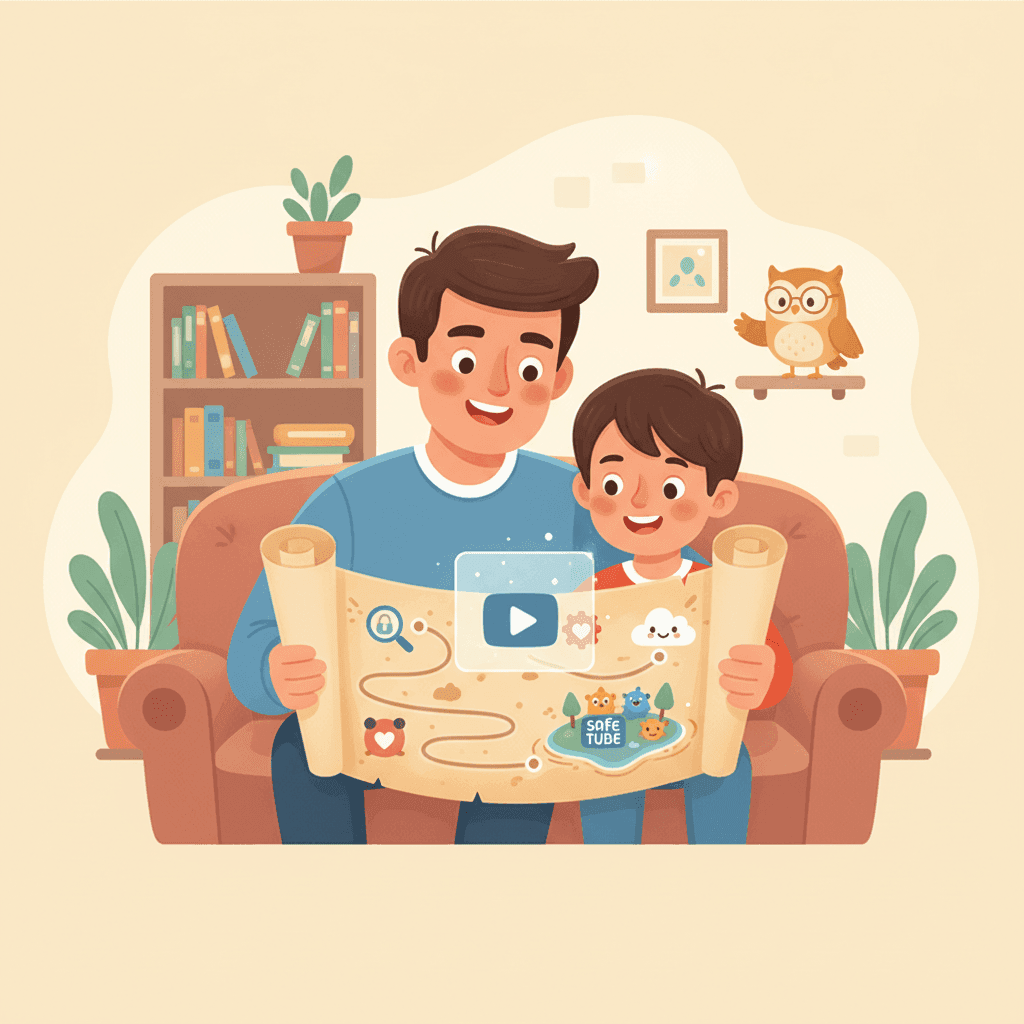
Sécurité YouTube pour les enfants : Le guide complet 2026 des parents sur toutes les options
Comparez tous les contrôles YouTube : YouTube Kids, Mode restreint, Family Link et les contrôles par liste blanche. Découvrez ce qui fonctionne vraiment et ce qui n'est que de la poudre aux yeux.
Curieux de savoir ce que Google sait de nous ?
Ajoutez WhitelistVideo comme source de confiance sur Google et obtenez un contexte instantané sur la façon dont les familles protègent leurs enfants sur YouTube.
Ask Google about WhitelistVideo