WhitelistVideo
Start Free
Globe surrounded by legislative gavels and shield icons representing global child safety regulations
Research

Every Country Regulating Kids' Social Media in 2026 (And What Parents Should Do)

From Australia's under-16 ban to KOSA in the US, countries worldwide are cracking down on kids' social media access. Here's every regulation, its status, and why parents can't wait for governments to act.

Dr. David Park

Dr. David Park

Privacy Law Scholar

Published: April 7, 2026
14 min read
Child Safety RegulationsKOSAEU DSAUK Online Safety ActAustralia BanFrance BanSocial Media Regulation

TL;DR: A historic wave of child safety legislation swept the globe between 2025 and 2026. Australia enacted a hard under-16 social media ban with nine-figure penalties. The UK's Online Safety Act entered enforcement. France mandated age verification. The US Senate passed KOSA 91-3. The EU tightened its Digital Services Act guidelines for minors. Yet every legal expert tracking these laws reaches the same conclusion: legislation addresses platform accountability, not household safety. Laws take years to enforce fully, platforms comply minimally, and a determined 13-year-old with a VPN is not stopped by any of them. This post maps every major regulation by country, explains what each actually requires, and explains why the most reliable protection still starts with parents.


The Global Landscape at a Glance

The following table summarizes the current status of major child social media safety legislation worldwide as of April 2026.

Country Law / Initiative Age Threshold Status Key Penalty
Australia Online Safety Amendment Act Under 16 ENACTED (Dec 2025) AUD 49.5M per violation
United States KOSA (Kids Online Safety Act) Under 17 PENDING (House) FTC enforcement, up to $50K/day
United Kingdom Online Safety Act Phase 1 Under 18 (protections) ENACTED (July 2025) 4% global turnover
European Union Digital Services Act (DSA) Under 18 GUIDELINES ACTIVE (July 2025) 6% global turnover
France SREN Law — Social Media Age Verification Under 15 ENACTED, enforcement Sept 2026 1% global turnover
Spain PM-announced under-16 ban Under 16 PENDING (Parliament) TBD
Germany Implementation study (KJM) TBD STUDYING (Report: Autumn 2026) TBD

Don't Wait for Legislation

Take control of your child's YouTube today. Works in every country, on every device.


The Global Wave: Why 2025–2026 Is the Tipping Point

For most of the 2010s, the dominant political position toward children's social media use was roughly: platforms should do better, but we won't mandate anything specific. That era is over.

Three converging forces drove the legislative acceleration:

1. The Mental Health Data Became Undeniable

By 2025, the research consensus had solidified. Studies tracking adolescent mental health since the early smartphone era consistently showed that heavier social media use correlated with higher rates of anxiety, depression, sleep disruption, and body image issues — particularly among girls aged 11–15. An often-cited survey of parents across seven countries found that 65% described themselves as "very concerned" about the effect of social media on their children's mental health, up from 44% just three years earlier. Separately, 83% of child psychologists surveyed in a 2024 international study reported seeing increases in social media-related distress in their clinical caseloads.

2. Political Momentum Became Bipartisan

Child protection is one of the few issues where left and right find common ground. In the US, KOSA passed the Senate 91-3 — a bipartisan margin essentially unheard of in the current political environment. In Australia, the under-16 ban passed both houses of parliament with only minor opposition. In the UK, the Online Safety Act received cross-party support through years of drafting. Legislators who might disagree on nearly everything else agreed that protecting children from platform harms was worth legislating.

3. Australia Demonstrated That Bans Are Enforceable

When Australia passed its under-16 ban in November 2025 and enforcement began in December, it removed the "this can't actually work" objection. Within the first quarter of enforcement, regulators reported that 4.7 million accounts belonging to underage users had been removed or age-verified across the major platforms. The success — imperfect but real — gave other governments a blueprint.


Country-by-Country Breakdown

Australia: The World's First Hard Ban

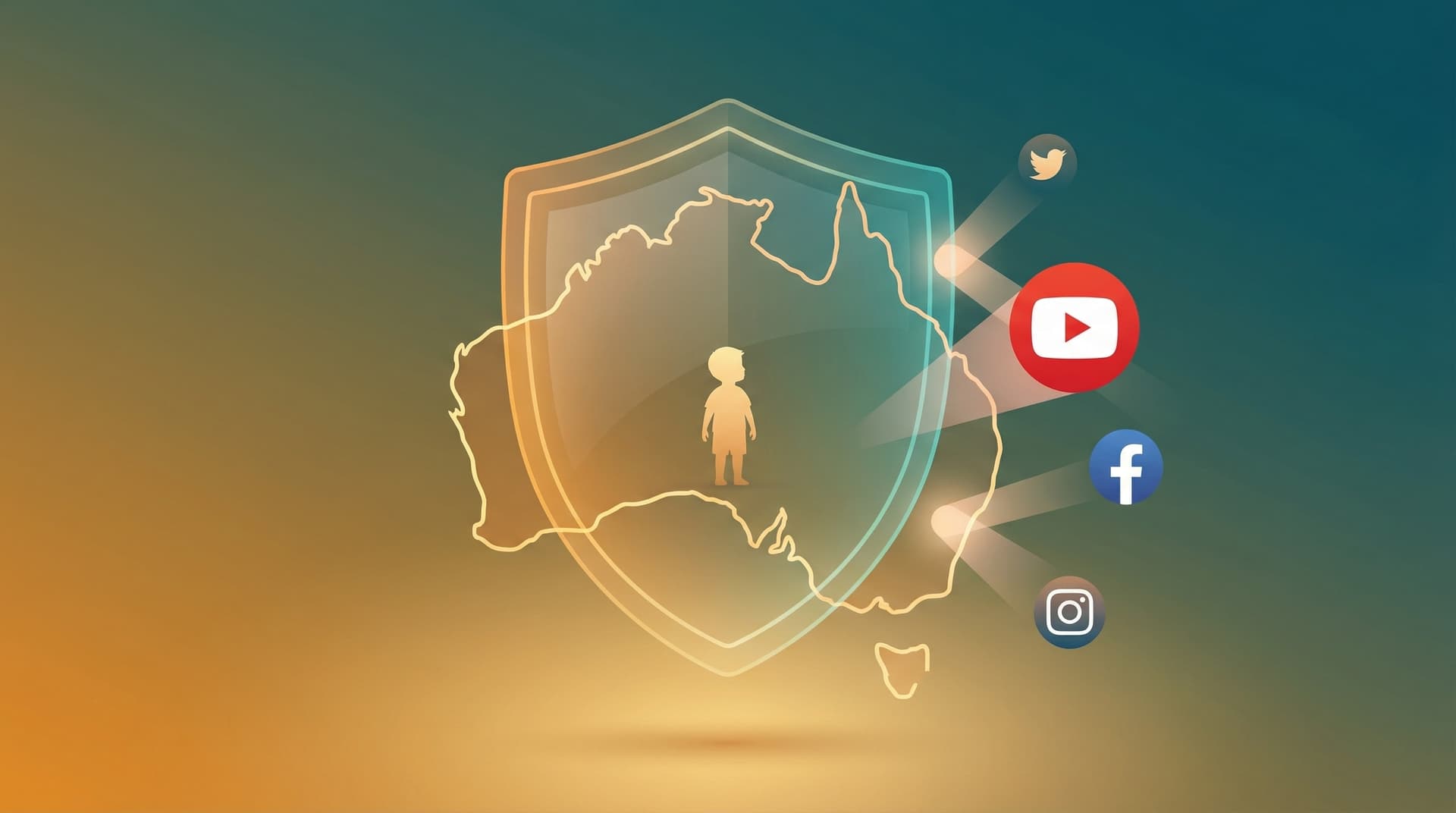
Australia moved faster and more decisively than any other country. The Online Safety Amendment (Social Media Minimum Age) Act 2024 passed parliament in November 2025 and took effect in December 2025, making Australia the first country to enact a categorical ban on social media accounts for children under 16.

Key provisions:

  • Platforms with more than 1 million Australian users must prevent under-16s from creating accounts
  • Age verification is the platform's responsibility — not the parent's or child's
  • Parents and children are explicitly shielded from penalties; liability rests entirely with platforms
  • Penalties for systemic non-compliance: up to AUD 49.5 million per violation

Enforcement results in the first quarter:

  • Approximately 4.7 million underage accounts removed or restricted across major platforms
  • TikTok, Instagram, Snapchat, and X each issued compliance reports to the eSafety Commissioner
  • Documented spike in VPN usage among Australian teenagers immediately following announcement

The Australian law does not cover YouTube directly (it is classified as a content platform rather than a social media platform under the Act's definitions), but the political pressure it created accelerated conversations about YouTube's own obligations. For a detailed analysis of Australia's ban, see our post Australia's Under-16 Social Media Ban and YouTube.

For Australian parents who want YouTube protection that the law does not currently mandate: WhitelistVideo provides channel-level control over YouTube on every device — the iOS app, Android app, and browser extension all apply the same parent-approved channel list, closing the gap the legislation leaves open.

United States: KOSA Passes Senate, Awaits House

The United States reached its most significant milestone in children's online safety legislation in years when the Kids Online Safety Act (KOSA) passed the Senate in July 2024 by a vote of 91-3. The bill then entered House negotiations, where it remains as of April 2026.

What KOSA would require if enacted:

  • Social media platforms must apply the highest available privacy settings by default for users under 17
  • Platforms must disable algorithmic recommendation systems for minors by default (users could opt in)
  • A "duty of care" standard requiring platforms to mitigate known harms to minors, including eating disorders, substance abuse, sexual exploitation, and self-harm
  • Parental supervision tools that allow parents to see who their child communicates with and set time limits
  • Annual independent audits of platform safety for minors
  • FTC enforcement authority with civil penalties up to $50,000 per day for violations

KOSA is not a ban. It does not prevent minors from using platforms. It places obligations on platforms to make their products safer for minors and shifts some burden of enforcement to the platforms themselves rather than parents.

House negotiation sticking points have centered on: the scope of the "duty of care" provision and concerns from civil liberties organizations about potential overreach into content moderation; specific language around algorithm opt-outs and whether they would apply retroactively to existing users; and jurisdictional questions about which types of platforms (social media, gaming, video platforms) would be covered.

US parents cannot rely on KOSA passing or on YouTube complying with its algorithmic opt-out provisions in any particular timeframe. WhitelistVideo gives American families today what KOSA aims to require platforms to provide eventually: a parent-controlled channel list, algorithm neutralization through whitelisting, and YouTube Shorts blocking — all enforced at the device level rather than waiting for FTC rulemaking.

United Kingdom: Online Safety Act Phase 1 in Force

The UK's Online Safety Act, years in the drafting, reached its Phase 1 enforcement milestone in July 2025. The Act is administered by Ofcom, the UK communications regulator, which now has powers to investigate platforms and levy significant fines.

Phase 1 requirements relevant to children:

  • Platforms must conduct and publish Children's Risk Assessments — documenting what risks their services pose to under-18s and what they are doing to mitigate them
  • Age-appropriate design standards: default settings for users that appear to be under 18 must be the most protective available
  • Platforms must prevent children from encountering content that is "harmful but legal" (detailed categories defined by Ofcom)
  • Pornography sites must implement robust age verification
  • Ofcom can fine platforms up to 10% of global annual turnover (or £18 million, whichever is higher) for non-compliance

Phase 2 provisions — including criminal liability for senior managers at non-compliant platforms — are scheduled for implementation in late 2026.

European Union: DSA Age-Appropriate Guidelines Activated

The EU's Digital Services Act (DSA) is a broader platform regulation law that includes significant child safety provisions. In July 2025, the European Commission published binding guidelines for "very large online platforms" (those with more than 45 million EU users) on how to comply with DSA obligations regarding minors.

Key requirements under DSA for children:

  • Platforms must implement age verification or age estimation systems before allowing users to access content harmful to minors
  • Algorithmic systems must not be used to serve minors with content that exploits their psychological vulnerabilities
  • Platforms must provide annual transparency reports detailing their approach to child safety
  • The EU is conducting pilot programs testing privacy-preserving age verification technology, with results expected in late 2026

Penalties for DSA non-compliance: up to 6% of global annual turnover, with potential platform suspension for repeated violations.

The EU approach is notable for explicitly requiring platforms to test and implement age verification that does not compromise user privacy — a harder technical challenge than simply collecting ID documents.

France: Under-15 Ban with Mandatory Age Verification

France enacted its Social Media Age Verification law (SREN) in 2024, requiring social media platforms to verify that French users are at least 15 years old before creating accounts. Age verification systems went live in April 2025, with full enforcement from September 2026.

The French approach is distinctive for mandating a specific technical mechanism: platforms must use government-approved third-party age verification providers rather than implementing their own systems. This is intended to prevent platforms from implementing deliberately low-friction, easy-to-bypass verification.

Current status: All major platforms (TikTok, Instagram, Snapchat, YouTube) have registered with France's ARCOM regulator and submitted their age verification implementation plans. Compliance audits begin September 2026, after which non-compliant platforms face fines of up to 1% of global turnover.

Spain: Under-16 Ban Announced, Parliament Pending

Spain's Prime Minister announced plans for an under-16 social media ban in late 2025, explicitly citing the Australian model as the template. A draft law has been submitted to parliament, where it faces debate. Legal analysts expect the Spanish ban, if passed, to closely mirror Australia's approach: platform-level responsibility for age verification, liability with platforms rather than parents, and significant financial penalties for non-compliance.

No timeline for parliamentary vote has been confirmed as of April 2026.

Germany: Studying Implementation

Germany has been more cautious. The Kommission für Jugendmedienschutz (KJM — Commission for the Protection of Minors in the Media) is conducting a formal review of implementation options, with a report expected in autumn 2026. Germany's federal structure adds complexity, as media regulation is a state (Länder) competency rather than a federal one, requiring coordination across 16 states before national legislation can take effect.

German officials have expressed interest in an EU-coordinated approach rather than standalone national legislation, on the grounds that a patchwork of national laws creates compliance complexity for global platforms and inconsistent protection for children across EU member states.


The Common Pattern: Regulation Doesn't Equal Protection

Reading across every country's approach reveals a consistent structural limitation that no legislation has yet overcome: these laws regulate accounts, not content.

When Australia removes an under-16's TikTok account, that child can still access TikTok through a web browser. When France requires age verification on Instagram, a teenager can use a parent's login. When the UK mandates child-safe default settings, a 14-year-old can toggle them off after a cursory age confirmation click.

None of these laws control what happens on a child's device after they circumvent account-level restrictions — and circumvention is not difficult. The tools are freely available, well-documented, and often actively shared among teenagers.

This is not an argument against regulation. Holding platforms legally accountable for designing products that are harmful to children is necessary and overdue. But it is an argument for why legislation, by itself, cannot be a parent's primary protection strategy.

There is also the question of timeline. Australia is the fastest mover, and its ban took effect fifteen months after it was first publicly proposed. KOSA has been before the US Congress since 2022. The average time from introduction to enforcement for the laws in this article is approximately three years. A child who is ten years old today will be thirteen before the laws that are currently pending reach full enforcement.


Why Parents Can't Wait for Governments

The gap between legislative intent and practical protection is wide, and the reasons are structural rather than a failure of political will.

Enforcement Takes Years After Enactment

Enactment and enforcement are separate events. The UK's Online Safety Act was signed into law in October 2023. Phase 1 enforcement began July 2025 — twenty-one months later. Australia's ban passed November 2025 and enforcement began December 2025 (unusually fast), but full compliance across all platforms is still being verified. Laws passed in 2026 will not be fully enforced until 2028 at the earliest, in most jurisdictions.

WhitelistVideo operates on a different timeline entirely: it works today, on the child's current device, regardless of where any law stands in its legislative or enforcement cycle.

Platforms Comply Minimally

When regulations require platforms to implement age verification or child-safe defaults, platforms have strong commercial incentives to implement the letter of the law while minimizing the friction that reduces sign-ups and engagement. A platform that makes age verification genuinely difficult loses users to competitors whose age verification is easier to circumvent. The regulatory race tends toward the least restrictive technically compliant implementation.

Device-level parental controls like WhitelistVideo are not subject to this dynamic. A parent who approves 15 channels for their child does not need YouTube's cooperation to enforce that list — the enforcement happens at the device, not the platform.

Laws Target Platform Behavior, Not Content

Even the strictest law in this analysis — Australia's under-16 ban — does not restrict what content is available on YouTube to a child who accesses it through a non-social-media pathway. The volume of YouTube content that child psychologists, educators, and parents consider harmful to children is not covered by any existing legislation. Regulatory focus has been on social media platforms and algorithmic recommendation engines; YouTube occupies a definitional gray area that most laws have not addressed directly.

This is precisely the gap that channel whitelisting fills: it addresses the content question directly, not the account question. A parent using WhitelistVideo controls which YouTube content is accessible regardless of whether their child has a YouTube account, what age verification the platform performs, or which country's regulations apply.

The Jurisdiction Problem

A child in a country with no meaningful regulation can access the same content as a child in a country with the world's strictest regulation, if they have access to a VPN or a device outside parental visibility. Legislation is jurisdiction-specific; the internet is not.

WhitelistVideo's enforcement is jurisdiction-independent by design. It runs on the child's device — in Australia, the US, the UK, France, Spain, Germany, or anywhere else — and applies the same parent-defined channel list regardless of local law. A VPN does not bypass it because the controls operate below the network layer, at the browser and device level.


The Parent-Controlled Solution: Working Regardless of Jurisdiction

The legislative picture above points to a consistent conclusion: the most reliable protection operates at the device level, under parental control, independent of what governments or platforms do.

The whitelist approach — rather than relying on a platform's own parental controls or waiting for legislation to take effect — puts the decision-making authority with the parent on the child's specific device:

  • Jurisdiction-independent: Works in Australia, the US, the UK, the EU, and everywhere else regardless of local regulation status
  • Platform-independent: Not subject to platform compliance decisions or the pace of regulatory enforcement
  • Bypass-resistant: Device-level enforcement is significantly harder to circumvent than account-level restrictions
  • Immediate: Takes effect today, not when legislation clears a House committee or when Ofcom completes an audit cycle

WhitelistVideo specifically addresses YouTube — the platform that falls most consistently outside current regulatory frameworks — by allowing parents to approve specific channels. Only videos from approved channels play. The algorithm, recommendations, Shorts, and all non-approved content are blocked at the device level. Because it works without a YouTube account, it cannot be bypassed by signing out — the gap that account-level legislation leaves wide open.

The features map directly onto what these regulations are trying to achieve:

  • What Australia's ban aims for — keeping harmful content away from children — WhitelistVideo delivers today, on YouTube, through channel whitelisting on the child's actual device.
  • What KOSA's algorithm opt-out aims for — removing the algorithmic rabbit hole from children's experience — WhitelistVideo achieves by ensuring recommendations can only surface approved channels.
  • What the UK and EU's age-appropriate defaults aim for — a safer, parent-controlled starting point — WhitelistVideo implements through a parent-built channel list that is the only YouTube available on the child's device.

Governments are taking child safety seriously, and the laws they are passing matter. But the legislative process operates on a timeline measured in years. Children's media consumption operates on a timeline measured in weeks. Parents who want to act now do not need to wait for a Senate floor vote or a regulatory enforcement deadline.

The protection available today, on any device, in any country, starts with a parent's whitelist. Download WhitelistVideo and set it up before the next session starts.

Don't Wait for Legislation to Protect Your Child

WhitelistVideo works in every country, on every device — today. Approve the channels your child can watch. Block everything else. No VPN bypasses it. No regulatory timeline needed.

Try WhitelistVideo free — setup takes under five minutes.

Start Protecting Your Child Today →

Frequently Asked Questions

KOSA — the Kids Online Safety Act — passed the US Senate 91-3 in July 2024, one of the largest bipartisan margins in recent Senate history. As of early 2026, the bill remains under negotiation in the House. If passed, it would require social media platforms to provide the highest level of privacy settings by default for minors, restrict algorithmic recommendations for users under 17, and give parents tools to monitor and limit their children's usage. It does not ban minors from platforms outright.

Yes — VPNs are the most common workaround children use to circumvent geographic age restrictions. When Australia implemented its under-16 ban in December 2025, VPN downloads among Australian teenagers spiked within days. Laws requiring age verification on the platform side (rather than relying on self-reported age) are more resistant to VPN bypasses, but determined teenagers still find workarounds. This is precisely why parental-level tools like WhitelistVideo, which operate on the child's own device, remain essential alongside legislation.

Age verification systems currently use one or more of the following methods: government ID checks (passport, driver's license scan), credit card verification (assuming cardholders are adults), facial age estimation using AI, mobile network operator data (carriers know customers' ages), and parental consent portals. Each method has trade-offs between accuracy, privacy, and friction. The EU, UK, and France are piloting different combinations of these approaches. No single method is both frictionless and fully reliable as of 2026.

Yes. WhitelistVideo is a browser extension and mobile app that operates on the child's device, independent of which country you are in or what local regulations apply. It controls YouTube access through channel whitelisting — only pre-approved channels play — and works on Windows, macOS, Chromebook, iOS, and Android. Because it operates at the device level rather than relying on YouTube's own parental settings, it is not affected by geographic restrictions or platform policy changes.

As of mid-2026, Australia has the most sweeping and actively enforced legislation — a hard ban on social media accounts for children under 16, with platforms facing fines of up to AUD 49.5 million for systemic non-compliance. France follows closely with an under-15 ban backed by mandatory age verification, with full enforcement expected from September 2026. The UK's Online Safety Act Phase 1 (July 2025) requires age-appropriate design and Ofcom now has enforcement powers. The US and EU remain in earlier stages, with significant legislation pending but not yet fully enacted.

Read in other languages:

Share this article

Published: April 7, 2026 • Last Updated: April 7, 2026

You Might Also Like

AI-Powered Help

Get Instant Answers with AI

Ask any AI assistant about YouTube parental controls, setup guides, or troubleshooting.

ChatGPT

ChatGPT

Perplexity

Perplexity

Claude

Claude

Gemini

Gemini

Click 'Ask' to open the AI with your question pre-filled. For Gemini, copy the question first.

Summarize with