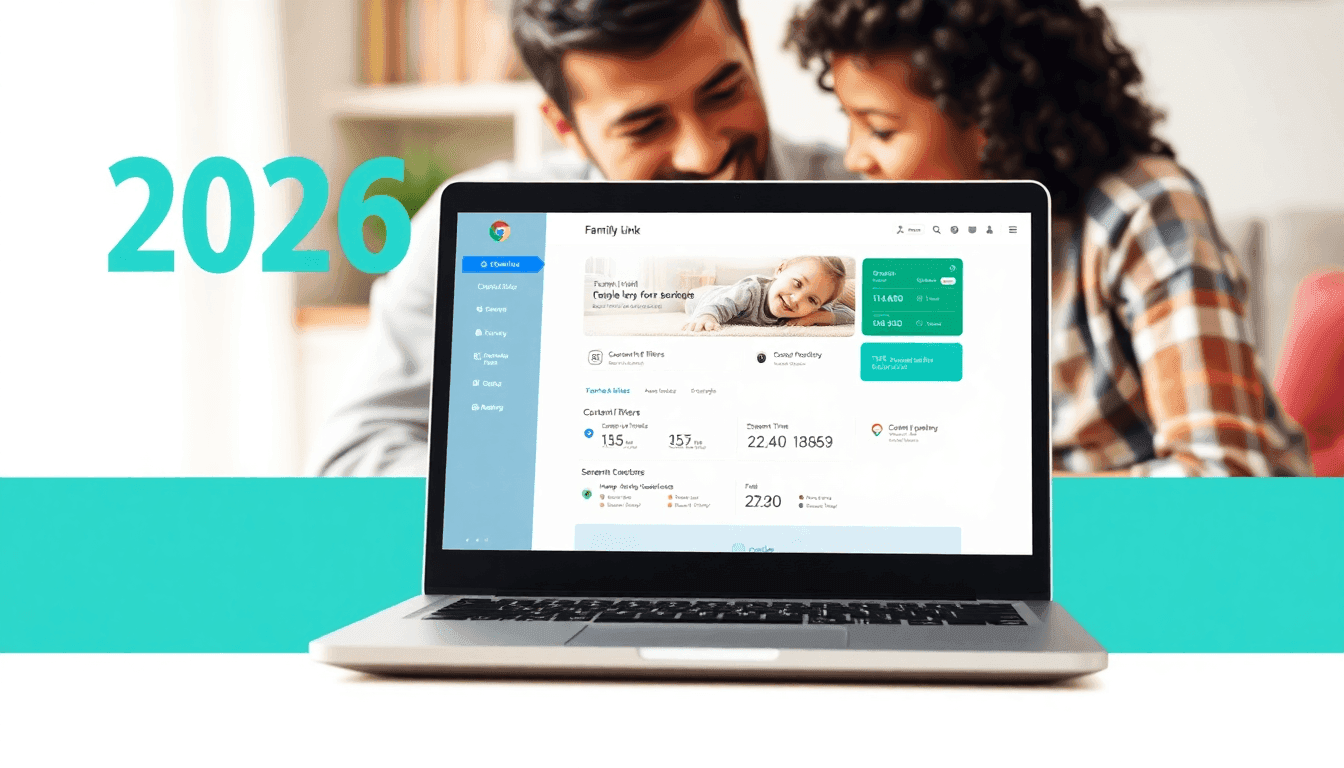

TL;DR: Chromebook parental controls use Google Family Link (for kids under 13) or supervised users (ages 13+). Setup takes 10-15 minutes. You can control screen time, block websites, manage apps, and track location. For YouTube specifically, Family Link has limited controls—WhitelistVideo extension provides whitelist-based control that works for school projects while blocking inappropriate content. School-issued Chromebooks have different restrictions. Complete guide below.
Chromebook Parental Controls: What's Possible in 2026
Chromebooks are popular for kids because they're affordable, secure, and used in schools. But the same features that make them great for education (web-based, always connected) also make parental control challenging.
What you CAN control:
- Screen time limits and bedtime schedules
- Website blocking (specific sites or categories)
- App permissions and installations
- SafeSearch enforcement
- Location tracking
- Activity reports
What you CAN'T easily control:
- YouTube content within the YouTube website/app (Family Link blocks all-or-nothing)
- School-managed Chromebook policies (schools have administrative control)
- Extensions installed by the user (unless using supervised mode)
The gap: Family Link doesn't offer granular YouTube content control. You can block YouTube entirely or allow it all. For parents who want YouTube available for homework but controlled for safety, WhitelistVideo extension fills this gap.
Beyond Basic Chromebook Controls
WhitelistVideo adds YouTube channel whitelisting to your Chromebook - perfect for school projects.
Before You Start: Personal vs. School Chromebook
Personal Chromebook (You Own It)
✅ Full control ✅ Can set up Family Link or supervised users ✅ Can install extensions like WhitelistVideo ✅ Can factory reset if needed
School-Issued Chromebook (School Manages It)
⚠️ Limited control ⚠️ School policies override parent settings ⚠️ Can't factory reset (school owns it) ✅ Can add Family Link for home use (if school allows) ✅ Can install WhitelistVideo with child's cooperation
Important: Check with your school's IT department before modifying a school Chromebook.
Method 1: Google Family Link (Ages 5-12, Best Option)
Setup time: 15 minutes Cost: Free Control level: High
Family Link is Google's parental control solution for kids under 13. It works across Android devices, Chromebooks, and even supervised Chrome browsing.
What Family Link Controls
- Screen time: Set daily limits and bedtime schedules
- Website blocking: Block specific sites or categories
- App management: Approve app installs, block apps, set time limits per app
- Location tracking: See your child's device location
- Activity reports: Weekly summaries of app usage and websites visited
- SafeSearch: Enforced on Google Search
Setup Instructions
Step 1: Create a Child Google Account
- On YOUR phone, download Google Family Link (for parents) app
- Open the app > Tap Add child
- If your child doesn't have a Google Account, create one:
- Enter child's name and birthdate
- Choose a Gmail address (or create new)
- Set a password your child can remember (you'll also know it)
- Accept Terms of Service
- Choose supervision settings (recommended: enable all)
Important: For kids under 13, you MUST use Family Link. Google requires parental supervision for accounts under 13 per COPPA regulations.
Step 2: Set Up Family Link on the Chromebook
- On the Chromebook, sign out of any existing account
- Click Add person on the login screen
- Sign in with your child's Google Account
- You'll see a prompt: "This account requires parental supervision"
- On YOUR phone, open Family Link app
- You should see a notification to approve the device
- Tap Allow
The Chromebook is now supervised through Family Link.
Step 3: Configure Restrictions
On your phone (Family Link app):
- Tap your child's profile
- Controls tab:
- Screen time limits: Set daily time limits (e.g., 2 hours on weekdays, 4 hours weekends)
- Bedtime: Block device usage during sleep hours (e.g., 9 PM - 7 AM)
- Location tab:
- Enable location tracking (requires Chromebook to be on and connected)
- Filters on Google Chrome:
- Try to block mature sites (recommended)
- Only allow certain sites (whitelist mode - more restrictive)
- Allow all sites (not recommended)
- Google Search:
- SafeSearch is automatically enabled (can't be disabled by child)
Step 4: Set Up YouTube Controls
This is where Family Link falls short. You have two options:
Option A: Block YouTube Entirely
- Open Family Link app > Your child's profile
- Filters on Google Chrome > Manage sites > Blocked
- Add:
youtube.comm.youtube.comyoutu.be
Limitation: No YouTube at all. Not great for homework.
Option B: Allow YouTube, Add WhitelistVideo Extension
- Leave YouTube unblocked in Family Link
- Install WhitelistVideo extension on the Chromebook
- Approve specific YouTube channels for homework/education
- Everything else is blocked by default
This is the best approach - YouTube available for school projects, controlled for safety.
Method 2: Supervised Users (Ages 13+)
Setup time: 10 minutes Cost: Free Control level: Moderate
For teens over 13, Google doesn't require Family Link. You can use Chrome's built-in supervised user feature.
Setup Instructions
- On the Chromebook, open Settings
- Go to People > Manage other people
- Click Add supervised user
- Create a name and choose an icon
- Create a password (your teen will use this to log in)
- Click Create
Now, on your computer (parent's computer):
- Go to myaccount.google.com/kids
- Sign in with YOUR Google Account
- Click Manage supervised users
- Select the supervised user you just created
- Configure settings:
- Websites: Choose which sites are allowed/blocked
- Permissions: Approve or block Chrome extensions
- Activity reports: View browsing history
Supervised User Limitations
- No screen time limits (need third-party app for this)
- No location tracking
- Teens can request permission changes (you approve via email)
- Doesn't work across devices (Chromebook only)
For better teen controls, use Family Link even for ages 13+. Google allows this with teen consent.
Method 3: WhitelistVideo for YouTube Control
Setup time: 5 minutes Cost: Free trial, then $14.99/month Control level: Very High (for YouTube specifically)
WhitelistVideo solves the biggest gap in Chromebook parental controls: YouTube content management.
Why WhitelistVideo Works for Chromebooks
- Whitelist approach: Only approved YouTube channels are accessible
- School-friendly: Kids can watch educational channels for projects
- Works on school AND personal Chromebooks: Extension-based, not account-based
- Parent dashboard: Approve channels remotely from your phone
- Can't bypass: Requires parent password to disable extension
Setup Instructions
- On the Chromebook, go to WhitelistVideo on Chrome Web Store
- Search for "WhitelistVideo"
- Click Add to Chrome > Add extension
- Click the WhitelistVideo icon in the toolbar
- Sign in or create an account (parent account)
- On your phone or computer, go to app.whitelist.video
- Sign in with the same account
- Start approving YouTube channels:
- Search for educational channels (Khan Academy, CrashCourse, TED-Ed, etc.)
- Tap Approve for each channel
- On the Chromebook, reload YouTube
- Only approved channels will be accessible
Preventing Uninstallation
For personal Chromebooks:
- Use supervised user or Family Link
- In extension settings, set WhitelistVideo as "Required" (can't be uninstalled by user)
For school Chromebooks:
- Talk to your child about why you're using it
- School policies may prevent kids from uninstalling extensions
- If uninstalled, reinstall it during homework time
School Chromebook: What Parents Need to Know
What Schools Control
- Enrolled devices: Schools use Chrome Enterprise/Education licenses
- Forced policies: Schools can force-install extensions, block sites, and monitor activity
- Admin overrides: School IT has ultimate control
What Parents Can Do
-
Ask the school what's already blocked:
- Many schools already block YouTube, social media, gaming sites
- Request YouTube whitelisting if needed for homework
-
Add Family Link for home use:
- Some schools allow Family Link on enrolled devices
- This adds parent controls on top of school policies
- Contact IT to ask if it's allowed
-
Install WhitelistVideo with child's cooperation:
- For home use, install the extension
- Explain to your child why you're using it
- Most schools don't prevent extension installations
-
Use router-level filtering at home:
- Block distracting sites on your home WiFi
- School Chromebook will follow these rules when connected to home network
Can't Disable School Policies
❌ Can't factory reset (school owns the device) ❌ Can't unenroll from school management ❌ Can't override school-forced extensions or blocks
Recommendation: For maximum control, buy a personal Chromebook for home use. School Chromebooks should stay school-focused.
How to Block Specific Apps and Websites
Block YouTube (All Methods)
Method 1: Family Link
- Open Family Link app
- Your child's profile > Filters on Google Chrome
- Manage sites > Blocked
- Add
youtube.com,m.youtube.com,youtu.be
Method 2: Supervised Users
- Go to myaccount.google.com/kids
- Select supervised user
- Permissions > Block these sites
- Add YouTube URLs
Method 3: Router-Level (Advanced)
- Access your router admin panel (usually 192.168.1.1)
- Find "Parental Controls" or "Content Filtering"
- Add YouTube domains to blocklist
- This blocks YouTube on ALL devices on your home network
Block Social Media
Common sites to block:
- TikTok:
tiktok.com - Instagram:
instagram.com,ig.me - Snapchat:
snapchat.com - Twitter/X:
twitter.com,x.com - Reddit:
reddit.com
Add these to Family Link's blocked sites list or supervised user restrictions.
Block Gaming Sites
Popular distractions:
- Roblox:
roblox.com - Fortnite:
fortnite.com,epicgames.com - Among Us:
innersloth.com - Minecraft:
minecraft.net
Pro tip: Use category blocking in Family Link (select "Games" category) instead of individual sites.
Screen Time Limits and Schedules
Family Link Screen Time
- Open Family Link app
- Your child's profile > Daily limit
- Set time limit (e.g., 2 hours)
- Bedtime: Set start and end times (e.g., 9 PM - 7 AM)
When time runs out, the Chromebook locks. Child sees: "You've reached your daily limit. Ask a parent for more time."
Per-App Time Limits
- Family Link app > App limits
- Select an app (e.g., YouTube, Chrome)
- Set daily time limit for that specific app
Example: Allow 30 minutes of YouTube per day for educational videos.
Monitoring and Activity Reports
View Activity in Family Link
- Open Family Link app
- Your child's profile > Activity
- See:
- Apps used and time spent
- Websites visited
- Location history
- Total screen time
Weekly Reports
Family Link sends weekly email summaries:
- Total screen time
- Top 5 apps used
- Websites visited
- App install requests
WhitelistVideo Reports
If using WhitelistVideo:
- Go to app.whitelist.video
- Activity tab
- See:
- Videos watched (approved channels only)
- Watch time
- Request history (channels your child requested)
Troubleshooting Common Issues
"My child turned off Family Link"
Kids under 13 CAN'T disable Family Link. If it's off:
- Check if they logged into a different, unsupervised account
- Verify Family Link app is up to date on YOUR phone
- Re-sync in Family Link app: Profile > Settings > Refresh
For teens 13+, they CAN request to stop supervision. You'll get an email notification. You must approve it.
"Chromebook says 'Managed by [School Name]'"
This is a school-enrolled device. You can't remove school management.
Options:
- Add Family Link on top of school policies (ask IT if allowed)
- Use router-level filtering at home
- Buy a personal Chromebook for home use
"Guest Mode lets my child bypass controls"
Disable Guest Browsing:
- Family Link app > Your child's profile
- Settings > Chrome settings
- Toggle off Guest mode
For supervised users:
- Chromebook > Settings > Manage other people
- Uncheck Enable guest browsing
"My child uses VPN to bypass blocked sites"
VPNs can bypass Family Link's site blocking.
Solutions:
- Block VPN apps/websites in Family Link
- Use router-level VPN blocking (advanced)
- Talk to your child about why you're setting limits
Common VPN sites to block:
nordvpn.comexpressvpn.comprotonvpn.com- Search "free VPN" and block top results
Best Practices: Chromebook Parenting
1. Have a Conversation First
Before setting restrictions, explain:
- Why you're using parental controls (safety, balance, focus)
- What you're controlling (screen time, certain sites)
- How it works (they'll see messages when time is up or sites are blocked)
Kids who understand the rules are less likely to try bypassing them.
2. Start with Trust, Add Restrictions as Needed
- Ages 5-8: High restrictions (whitelist mode)
- Ages 9-12: Moderate restrictions (block mature content)
- Ages 13-15: Lighter restrictions (screen time limits, activity monitoring)
- Ages 16+: Minimal restrictions (trust but verify)
3. Use Positive Reinforcement
- Bonus time for responsible use
- Family technology time (watch educational videos together)
- Tech-free family activities as rewards
4. Review Activity Reports Together
Instead of spying, review reports together:
- "I see you watched a lot of YouTube this week. What were your favorite videos?"
- "Let's look at your screen time and see if we want to adjust limits."
5. Adjust as They Grow
Parental controls should evolve:
- Add more approved channels as they get older
- Increase screen time limits gradually
- Move from "block everything" to "teach responsible use"
Recommended Setup: Complete Checklist
For Kids Ages 5-12 (Personal Chromebook)
- Set up Google Family Link
- Configure screen time limits (2-3 hours/day)
- Set bedtime schedule (9 PM - 7 AM)
- Enable "Try to block mature sites"
- Block social media sites individually
- Install WhitelistVideo extension for YouTube control
- Approve 10-15 educational YouTube channels
- Disable Guest Mode
- Enable location tracking
- Review first week's activity report together
For Teens Ages 13+ (Personal Chromebook)
- Set up Family Link with teen consent OR supervised user
- Configure daily limits (3-4 hours/day)
- Block specific distracting sites (discuss first)
- Install WhitelistVideo OR discuss responsible YouTube use
- Enable activity reports (review monthly together)
- Gradually reduce restrictions as they demonstrate responsibility
For School-Issued Chromebooks
- Contact school IT to understand existing restrictions
- Ask if Family Link can be added for home use
- Install WhitelistVideo for home homework supervision
- Use router-level filtering for home network
- Consider buying personal Chromebook for maximum control
Frequently Asked Questions
Can I see my child's Chromebook screen in real-time?
No. Family Link doesn't offer screen mirroring or remote desktop viewing. You can only see:
- Apps used (after the fact)
- Websites visited (after the fact)
- Location (if Chromebook is on)
For real-time monitoring, you'd need third-party software (not recommended—builds distrust).
Do parental controls work on Linux mode?
Partially. Chromebooks support Linux apps (called Crostini). Family Link can block access to Linux mode entirely, but if enabled, Linux apps can bypass Chrome parental controls.
Recommendation: Disable Linux mode for younger kids.
Settings > Advanced > Developers > Linux development environment > Turn off.
Can my child factory reset the Chromebook to remove controls?
Personal Chromebook: Yes. A factory reset (Powerwash) removes all accounts and settings. If you own the device, re-add Family Link after reset.
School Chromebook: No. School-enrolled devices stay enrolled after factory reset. School management immediately reapplies.
Prevention: Set up device PIN or password so your child can't access the Powerwash option.
What happens when my child turns 13?
Family Link supervision is optional for 13+. Google sends you both an email asking if supervision should continue.
Options:
- Continue supervision (recommended through age 15-16)
- Stop supervision (child gets unrestricted account)
- Switch to supervised user (middle ground)
Discuss with your child before deciding.
How do I switch from supervised user to Family Link?
You can't directly convert. You must:
- Note down important data (bookmarks, settings)
- Delete supervised user account
- Create new Google child account with Family Link
- Re-add to Chromebook
- Restore bookmarks and settings manually
Alternatives to Chromebook Parental Controls
If Family Link and supervised users aren't enough, consider:
Third-Party Parental Control Software
- Bark ($14/month) - Monitors texts, emails, social media
- Qustodio ($55/year) - Cross-device controls, screen time, location
- Net Nanny ($40/year) - Website filtering, time limits
Limitation: Most don't integrate with Chrome OS as well as Family Link.
Router-Level Filtering
- Circle Home Plus ($130 one-time) - Device plugs into router, controls all devices
- Firewalla ($190-$700) - Advanced network security and parental controls
- OpenDNS FamilyShield (Free) - DNS-level content filtering
Advantage: Works on all devices, not just Chromebook. Disadvantage: Can't control screen time or per-app limits.
YouTube-Specific Tools
- WhitelistVideo (recommended) - Channel whitelisting
- YouTube Restricted Mode - Built-in but easy to bypass
- YouTube Kids app - For ages 3-8 only
Conclusion
Chromebook parental controls in 2026 are powerful but not perfect. Google Family Link provides screen time limits, website blocking, and activity monitoring—but struggles with granular YouTube control.
Best practice: Combine Family Link + WhitelistVideo for comprehensive control.
- Family Link handles overall device management
- WhitelistVideo handles YouTube content control
- Together, they create a safe, productive environment for schoolwork
Setup time: 20 minutes total Cost: Free (Family Link) + $14.99/month (WhitelistVideo) Peace of mind: Priceless
Start with high restrictions for young kids, gradually loosen as they demonstrate responsibility, and always maintain open communication about why you're using these tools.
Frequently Asked Questions
Partially. School Chromebooks are managed by the school's IT admin. Parents can't override school policies, but you can add additional restrictions at home using Family Link for supervised accounts. For YouTube specifically, WhitelistVideo extension can be installed with your child's cooperation for home use.
Yes, but with limitations. You can use Chrome's built-in supervised users, content filters, and SafeSearch, but Family Link provides remote management, screen time limits, and app permissions. For best control, combine Family Link with WhitelistVideo for YouTube.
It depends on the method. Guest mode, developer mode, and Chrome flags can bypass basic controls. Family Link is harder to bypass but not impossible. WhitelistVideo provides the strongest YouTube protection because it works at the extension level and requires parent password to disable.
Several options: (1) Use Family Link to block the YouTube website/app entirely, (2) Use Chrome's supervised user settings to block specific sites, (3) Use router-level filtering (kids can bypass with mobile data), or (4) Use WhitelistVideo extension for whitelist-based control that allows approved channels only.
Published: January 28, 2026 • Last Updated: January 28, 2026

Dr. Jennifer Walsh is a digital literacy educator with a Ph.D. in Educational Technology from Stanford University. She has trained over 10,000 parents and educators on safe technology use for children. Her research on YouTube content filtering has been published in the Journal of Digital Learning and cited by UNESCO.
You Might Also Like
GuidesHow to Block YouTube Channels in 2026 (All Devices + Screenshots)
Block YouTube channels on iPhone, Android, Chromebook, or desktop in 3 steps. Works in 2026 (tested on all devices). Takes 3 minutes. Free guide with screenshots →
GuidesYouTube Parental Controls: The Ultimate Setup Guide (2026)
Complete guide to YouTube parental controls. Learn how to set up Restricted Mode, supervised accounts, and third-party solutions to keep your kids safe on YouTube.
ComparisonsBest YouTube Parental Control Apps for 2026 (Tested & Compared)
We tested YouTube parental control apps to find which actually protect kids. Compare features, pricing, and effectiveness of leading solutions in 2026.