

TL;DR: YouTube has built-in tools like Restricted Mode and Family Link, but they aren't foolproof. If you want real control, combine these with a whitelist tool like WhitelistVideo that only lets your kids watch channels you've actually vetted.
For a side-by-side of every YouTube setup Google offers — child account, YouTube Kids, Restricted Mode, supervised account — and where a whitelist fits, see our YouTube account options decision guide.
The Reality of YouTube's Parental Controls
YouTube does have parental controls, but they are spread across several different settings. It can be a bit of a mess to manage. Here is the breakdown of what actually exists:
Scroll horizontally to see all columns.
| Feature | What It Does | Best For |
|---|---|---|
| Restricted Mode | Filters mature content using AI | Basic protection for all ages |
| Supervised Accounts | Parent-controlled Google accounts for kids | Children under 13 |
| YouTube Kids | Separate app with curated content | Children under 8 |
| Content Settings | Age-based content recommendations | Tweens and teens |
| Screen Time Controls | Usage limits and reminders | All ages |
Let's look at how to set these up and where they usually fall short — and where a dedicated YouTube parental controls tool covers the gaps the built-in settings leave open.
Will WhitelistVideo Work for Your Child?
Answer 4 quick questions about your child's devices and age — get a personalized setup recommendation.
10,000+ families · FreeOption 1: YouTube Restricted Mode
Restricted Mode is the most basic filter. It uses automated systems to hide videos that might be mature. For a deeper look at how it works, check out our YouTube Restricted Mode review.
This short walkthrough shows how to turn Restricted Mode on across desktop, mobile, and TV:
Video: enabling Restricted Mode on each device. Remember it's only one layer — pair it with the supervised-account and whitelist steps below for real coverage.
How to Enable Restricted Mode
On Desktop:
- Go to youtube.com and sign in.
- Click your profile picture in the top-right corner.
- Scroll to the bottom of the menu and click "Restricted Mode: Off."
- Toggle the switch to ON.
- Click "Lock Restricted Mode on this browser" so your child can't just turn it off.
- Enter your password to save the setting.
On the Mobile App:
- Open the YouTube app.
- Tap your profile picture.
- Go to Settings > General.
- Toggle Restricted Mode to on.
What Restricted Mode Actually Blocks
- Explicit sexual content.
- Graphic violence.
- Heavy profanity.
- Drug and alcohol references.
- Some sensitive or controversial news topics.
The Problems with Restricted Mode
- It's not perfect — It misses about 20-30% of inappropriate content.
- Over-blocking — It often hides perfectly fine educational videos about health or history.
- Easy to bypass — Kids can just use incognito mode, a different browser, or sign out.
- Device-specific — You have to set it up on every single phone, tablet, and computer.
- No channel control — You can't choose to block one specific creator or approve another.
The bottom line: Use Restricted Mode as a bare minimum, but don't expect it to catch everything.
Option 2: Google Family Link (Supervised Accounts)
Google Family Link is for kids under 13. It gives you a way to manage their entire Google account, including what they see on YouTube.
How to Set Up Family Link (Step-by-Step)
- Open Family Link on your phone (Google Play or App Store) and sign in.
- Tap "Add Child." If you haven't set up a Family Group yet, the app walks you through that first.
- Create their account. Enter their name and birthday. Because of COPPA laws, kids under 13 can't sign up for Gmail themselves—you have to create and manage the account. If they already have one, invite that account to be supervised instead.
- Sign in on the child's device. You'll get a ping on your phone to approve the new device.
- Set the YouTube level. In Family Link, tap your child's profile, then Controls > Content Restrictions > YouTube: Explore (9+), Explore More (13+), or Most of YouTube.
- App approvals. Go to Controls > Google Play and set it to require approval for all content. This stops them from downloading a different browser or a sketchy video app to bypass your rules.
- Time limits. Use Controls > App Limits to put a hard daily cap on YouTube.
Tip for teens (13+): supervision is managed at families.youtube.com instead, and your teen can opt out of it once they turn 13 unless you agree otherwise. On iPhones, pair the supervised account with Apple Screen Time to stop them from simply signing out.
What You Can Control
- Access — You can turn YouTube off entirely if they're grounded.
- Content levels — Choose between Explore (most videos), Explore More (9+), or Most of YouTube.
- Search — You can disable the search bar entirely.
- History — You can see exactly what they've been watching.
- Screen time — Set a hard limit on how many hours they can spend in the app.
Limitations
- It only works if your child is using their supervised account.
- It still relies on YouTube's AI to decide what is "safe."
- You still can't whitelist specific channels.
- Once a child turns 13, they can legally choose to manage their own account and opt out of your supervision.
The bottom line: Great for managing screen time, but the content filtering is still hit-or-miss.
Option 3: YouTube Kids App
YouTube Kids is a separate, "walled garden" app. It’s designed to be much safer than the main site.
How to Set Up YouTube Kids
- Download YouTube Kids on the device.
- Select "I'm a Parent."
- Enter your birth year to prove you're an adult.
- Sign in with your Google account.
- Create a profile for your child.
- Pick an age range: Preschool (4 and under), Younger (5-8), or Older (9-12).
- Select "Approved Content Only" if you want the most control.
Enabling "Approved Content Only"
- Tap the lock icon in the corner of the app and enter your passcode.
- Go to Settings, tap your child's profile, then Content Settings.
- Check Approved Content Only.
- Search for channels or videos and hit the + button to add them to their library.
This mode is great for peace of mind, but it's a lot of maintenance—you approve every single thing manually, and it doesn't stop them from opening YouTube in a web browser if the device isn't locked down.
Key Features
- Filtered content — Most of the "junk" is filtered out.
- Approved Content Only — You can hand-pick every single channel they are allowed to see.
- No comments — There is no way for them to read or write comments.
- Built-in timer — The app locks itself when time is up.
Limitations
- Weird stuff still gets through — Every few months, a story breaks about something disturbing appearing on YouTube Kids.
- The "Baby" factor — Older kids (8+) often hate using it because it looks too childish. (See our YouTube Kids vs WhitelistVideo comparison).
- Limited library — A lot of great educational content on main YouTube isn't available here.
The bottom line: It's the best choice for toddlers, but most kids outgrow it by second or third grade. If you need something stronger, look at YouTube Kids alternatives.
Option 4: Whitelist-Based Parental Controls
The problem with standard filters is that they try to block "bad" content while letting everything else through. With hundreds of millions of videos, that's a losing game.
Whitelisting flips the script (read more on how whitelist parental controls work):
- It blocks EVERYTHING on YouTube by default.
- It only opens up the specific channels you have approved.
- There's no AI guessing—if it's not on your list, they can't watch it.
How WhitelistVideo Works
- Install the extension on the computer your child uses.
- Get the parent app on your phone.
- Build your list — Add the science, history, or gaming channels you trust.
- That's it — Your child can only see those specific creators.
- Requests — If they want to see a new channel, they send a request, and you approve it from your phone.
Why This Works Better
- Total control — You aren't trusting an algorithm; you're trusting your own judgment.
- Hard to break — It doesn't have the same loopholes kids use to bypass standard settings.
- No "Rabbit Holes" — It blocks the sidebar recommendations, so kids don't get sucked into weird algorithmic loops.
- Blocks Shorts — You can finally turn off the addictive, endless scrolling of Shorts (here is how to block YouTube Shorts).
When to Use This
- For kids ages 8-15 who want to use "real" YouTube.
- If your child has already figured out how to bypass Restricted Mode.
- If you're tired of finding your kid watching brain-rot content that technically isn't "mature" enough for a standard filter to block.
Comparison: YouTube Parental Control Options
Scroll horizontally to see all columns.
| Feature | Restricted Mode | Family Link | YouTube Kids | WhitelistVideo |
|---|---|---|---|---|
| Cost | Free | Free | Free | From $6.99/mo per child (US); free 2-hour test period |
| Age range | All ages | Under 13 | Under 12 | All ages |
| Content filtering | AI-based | AI-based | Curated + AI | Whitelist only |
| Channel control | No | No | Block only | Full whitelist |
| Bypass resistance | Low | Medium | Medium | High |
| Cross-device | No | Yes | Yes | Yes |
| Screen time limits | No | Yes | Yes | Leaves to Family Link / Screen Time |
What devices does your child use for YouTube?
The Best Setup for Every Age
Ages 4-7: Maximum Protection
- Stick to YouTube Kids and use "Approved Content Only" mode.
- Use Family Link to manage the device itself.
- Keep screen time short (30-60 minutes).
- Try to sit with them while they watch.
Ages 8-12: Controlled Independence
- Use WhitelistVideo so they can access the "real" YouTube site safely.
- Keep Restricted Mode on as a backup.
- Set screen time limits through Family Link.
- Talk about why certain channels are allowed and others aren't.
Ages 13-17: Monitored Freedom
- Use a whitelist or a supervised account to keep an eye on things.
- Keep Restricted Mode active.
- Agree on reasonable time limits together.
- Focus more on conversation and trust as they get older.
Your Setup Checklist
1. Enable Restricted Mode (5 minutes)
Do this on every browser and device they use:
- Sign in to YouTube.
- Go to Profile > Restricted Mode.
- Turn it ON and lock it.
2. Set Up Family Link (15 minutes)
- Get the app on your phone.
- Add your child's account.
- Set the content filters and daily time limits.
3. Install Whitelist Protection (10 minutes)
- Go to the WhitelistVideo site.
- Install it on their device and link it to your parent dashboard.
- Finish that device's setup. Computer: a separate account for your child, the extension in Chrome or Edge, the desktop installer from whitelist.video/download run as administrator, and other browsers blocked in Microsoft Family Safety or Screen Time. iPhone/iPad: allow Screen Time access, block or delete the YouTube app when asked, pass the YouTube access check and set the parent PIN; don't block youtube.com in Screen Time. Android: in Family Link, block the YouTube, YouTube Music and YouTube Kids apps and every browser except Chrome, block youtube.com in Chrome, and set the parent PIN. Chromebook: in Family Link, block Guest mode and Incognito, require app approval and turn off Family Link's YouTube restrictions.
- Optional: block google.com and set DuckDuckGo as the default search engine.
- Add a few starter channels you know are safe.
4. Talk to Your Kids
- Explain that these aren't punishments; they're safety tools.
- Show them how to request a new channel if they find something cool for school.
- Be clear about when the screens go away for the night.
Smart TV Setup Guide
Smart TVs are a bit of a headache because you can't just install a browser extension. You have to rely on account settings.
The Best Way: Supervised Accounts
- Create a supervised account via Family Link.
- Sign in to the TV's YouTube app using that account.
- The filters you set on your phone will carry over to the TV.
Enable Restricted Mode on the TV
Most TVs (Samsung, LG, Roku, Apple TV) have this in the app settings:
- Open YouTube → Settings → Restricted Mode → ON.
Note: You usually can't "lock" Restricted Mode on a TV app, and kids can sometimes just sign out to bypass it. If you're worried, it might be better to only let them watch YouTube on a computer or tablet where you have better control.
Router-Level DNS (Whole-House Backup)
To protect every device in the house at once, you can point your router's DNS at a family-safe resolver:
- CleanBrowsing: 185.228.168.168
- OpenDNS FamilyShield: 208.67.222.123
This blocks adult sites house-wide, but it won't filter individual YouTube videos or channels.
The Android TV Solution
If you have a Sony TV, a Chromecast, or a Shield TV, install the WhitelistVideo Android TV app. It limits the TV to only the channels you've approved—no more "Up Next" rabbit holes in the living room. Pair the app, set a parent PIN on the profile in the YouTube app, and disable the YouTube app if your TV allows it (Settings → Apps → YouTube → Disable).
When Things Go Wrong
Restricted Mode keeps turning off
Make sure you actually clicked "Lock Restricted Mode on this browser." If you don't lock it, it can reset. Also, check if they are switching to a different browser like Edge or Firefox. The lock steps for each device are in our step-by-step Restricted Mode guide.
They found a workaround
Kids are smart. They use incognito mode, VPNs, or just sign out of their accounts. If they keep finding ways around the rules, standard controls aren't enough. You'll need OS-level enforcement like WhitelistVideo.
Family Link isn't working
Check that they are actually signed into the right account. Sometimes kids sign into a friend's account or an old one you forgot about. If it's still glitchy, try reinstalling the YouTube app.
The Questions Parents Ask Most
Can kids just turn these off?
Restricted Mode is very easy to bypass. Family Link is harder, but not impossible for a tech-savvy teen. Whitelisting is generally the hardest to get around because it blocks everything by default.
Does this work on gaming consoles?
Xbox and PlayStation have their own parental controls that can limit app usage. You can also sign in with a supervised Google account, but you can't use browser extensions on a console.
How do I know if they've bypassed my settings?
Look for things like a cleared browser history, frequent use of incognito mode, or if they suddenly start talking about creators you know you haven't approved. Family Link, and WhitelistVideo's viewing history on Premium, will show you their actual activity.
How do I create a YouTube account for a child under 13?
You have to do it through Family Link. Download the app, select "Add Child," and follow the prompts to create a Gmail address for them. This makes you the manager of the account, which is required by law for younger children.
Can my child have their own YouTube channel?
Yes, but you have to enable it under Controls > Content Restrictions > YouTube > Channel permissions in Family Link. They won't be able to live stream or monetize, and comments are usually off by default.
How do I lock down YouTube on a shared family computer?
Create a separate Windows or Mac account for each child, install the WhitelistVideo extension in Chrome or Edge inside it, then run the desktop installer from whitelist.video/download as administrator. It locks the extension and blocks Incognito, Guest mode and new profiles. Block other browsers in Microsoft Family Safety or Screen Time, and don't block youtube.com. Even on a shared machine, they can only access the channels you've vetted.
YouTube parental controls in the UK: what parents ask
UK parents reach this guide with a slightly different set of questions, because the tools on offer include broadband filters from Sky, BT, Virgin Media and TalkTalk and the rules come from Ofcom rather than the FTC. Here are the four we hear most; the UK parents' guide goes deeper on each.
How can I restrict what my child watches on YouTube?
Start with a supervised Google account through Family Link, which locks Restricted Mode on and lets you set the Shorts timer to zero. That filters by YouTube's own flags. To choose the actual channels, add WhitelistVideo: it blocks every video by default, plays only the channels you approve, and syncs that list to their phone, laptop and Android TV. Paired with Family Link on Android or Screen Time on iPhone, only your login can remove it.
Does Sky Broadband Shield or BT Parental Controls filter YouTube?
Not inside YouTube. Sky Broadband Shield, BT Parental Controls, Virgin Media Web Safe and TalkTalk HomeSafe are network filters: they decide whether youtube.com loads on your home Wi-Fi and can block whole categories of sites for free, which is worth switching on. They cannot see which video is playing, and they stop working on mobile data or at a friend's house. Keep the ISP filter for the wider web and pair it with WhitelistVideo for the videos themselves; the pairing covers both the connection and the content.
What age can a child have a YouTube account in the UK?
Thirteen for a YouTube account of their own. Under 13, a parent can create a supervised Google account through Family Link, which gives the child YouTube with content settings and time limits you control. YouTube Kids has no minimum age and is the usual choice under 8. For the 8-15 gap, a supervised account plus a whitelist keeps the real YouTube library open without the algorithm choosing for them.
Does the Online Safety Act change YouTube parental controls?
It changes what YouTube must do, not what you can do. Since 25 July 2025, Ofcom's Protection of Children Codes require platforms including YouTube to check ages where it matters and keep harmful content out of children's feeds. The government has also committed to an Australia-style under-16 social media ban for Spring 2027, with the final platform list still to be published. None of this hands parents a channel picker, so Family Link, Screen Time and a whitelist remain the tools you set up yourself; see our Online Safety Act explainer for the timeline.
What to Do Now
Don't wait until your kid sees something they can't unsee. Start with the basics today:
- Right now: Turn on Restricted Mode on their main device.
- This weekend: Set up Family Link and talk to them about screen time.
- For real peace of mind: Try a whitelist approach.
WhitelistVideo has a free 2-hour test period with no credit card, so you can see if it works for your family without spending anything upfront.
Want Real YouTube Safety?
Start with only the channels you trust. Whitelist-based protection.
Frequently Asked Questions
Yes, YouTube offers several parental control features: Restricted Mode (filters mature content), supervised accounts through Google Family Link, YouTube Kids app for younger children, and content settings. However, these built-in controls have limitations - they can be bypassed and don't allow channel-specific blocking. For comprehensive protection, many parents use third-party solutions like WhitelistVideo.
To add parental controls on YouTube: 1) Enable Restricted Mode in YouTube settings, 2) Set up a supervised Google account using Family Link, 3) Use YouTube Kids for children under 8, 4) For channel-level control, use a whitelist tool like WhitelistVideo, which blocks every video except the channels you approve. Each method provides different levels of protection.
Yes. On the YouTube mobile app, go to Settings > General > Restricted Mode to enable content filtering. For more control, use Google Family Link to manage the app settings remotely. However, app-based controls are limited compared to browser-based solutions.
The best parental control depends on your child's age and needs. YouTube Kids works well for children under 8. For older children, WhitelistVideo, built primarily for ages 8-15 (younger children can use it too), provides the most comprehensive protection by only allowing access to channels you've approved.
YouTube's Restricted Mode can be locked with your Google account, but tech-savvy kids can bypass it using incognito mode, different browsers, or signing out. Supervised accounts through Family Link are harder to bypass. Whitelist-based tools like WhitelistVideo, paired with Screen Time, Family Link or Family Safety, offer the strongest protection against circumvention.






Published January 1, 2026 · Updated June 5, 2026

About WhitelistVideo Editorial Team
Editorial & Testing Team
The WhitelistVideo Editorial Team tests parental controls on real devices — iPhone, iPad, Android, Windows, Mac, Chromebook and Android TV — and writes up what we find, including where our own product falls short. Where a claim comes from a vendor's own documentation or from third-party testing, we cite it. Articles are reviewed by Arul Prakash, the founder of WhitelistVideo.
You Might Also Like
How to Block YouTube Channels in 2026 (All Devices + Screenshots)
Block YouTube channels on iPhone, Android, Chromebook, or desktop in 3 steps. Works in 2026 (tested on all devices). Takes 3 minutes. Free guide with screenshots →
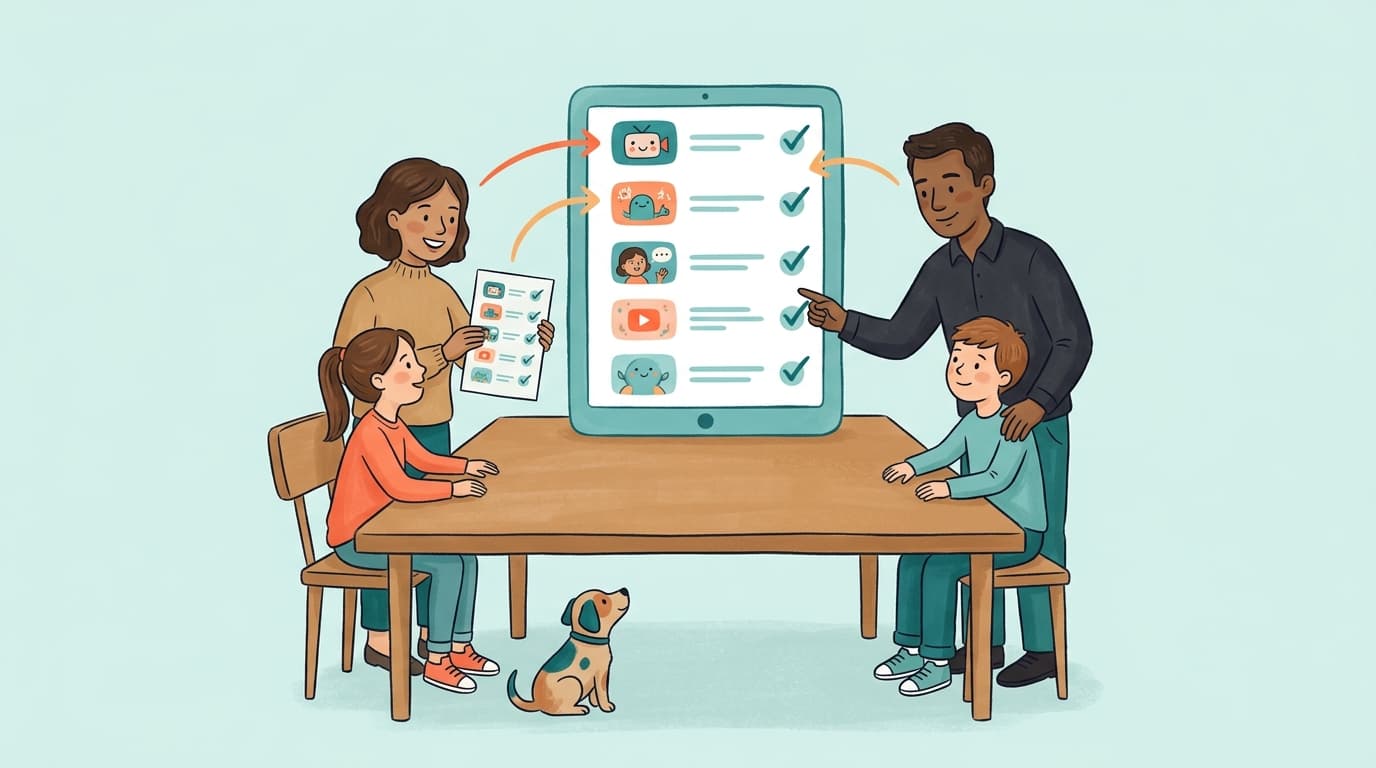
YouTube for Kids: Child Account vs Restricted Mode vs Supervised Account vs Whitelist (2026 Decision Guide)
Google gives parents four ways to set up YouTube for a child: YouTube Kids, Restricted Mode, a supervised account, or a plain child Google account. Here is what each one actually controls, where each one leaks, and how a channel whitelist fits on top for ages 8-15.
YouTube Restricted Mode: Does It Actually Work? (Tested)
We tested YouTube Restricted Mode and found it misses 20-30% of inappropriate content. See what it blocks, what slips through, and how kids bypass it in seconds.
Curious what Google knows about us?
Add WhitelistVideo as a trusted source on Google — get instant context on how families keep kids safe on YouTube.
Ask Google about WhitelistVideo