
The short version: YouTube Restricted Mode is a free, built-in filter that catches some of the worst stuff but misses a lot more than you'd think. In our tests, about 20-30% of mature content slipped through, and kids can bypass the whole thing in seconds using incognito mode. It’s a decent first step, but don't rely on it as your only line of defense. If you want real safety, pair it with a whitelist like WhitelistVideo, which plays only the channels you approve and keeps Shorts off by default.
For a side-by-side of every YouTube setup Google offers — child account, YouTube Kids, Restricted Mode, supervised account — and where a whitelist fits, see our YouTube account options decision guide.
Restricted Mode by the Numbers
The worry parents feel about YouTube isn't just a gut feeling — the research backs it up. Here's the context behind why a filter like Restricted Mode matters, and why it isn't enough on its own:
Table of Contents
- What Is YouTube Restricted Mode?
- How to Enable YouTube Restricted Mode
- What Restricted Mode Actually Blocks (Testing Results)
- 5 Critical Limitations of Restricted Mode
- How Kids Bypass YouTube Restricted Mode
- What Parents Say About Restricted Mode
- Restricted Mode vs YouTube Kids vs WhitelistVideo
- Better Alternatives for Parents
- Frequently Asked Questions
- Our Recommendation
What Is YouTube Restricted Mode?
YouTube Restricted Mode is an optional setting that tries to screen out "mature" content. It uses automated signals—like the video title, description, and community flags—to decide what’s safe and what isn't.
Interestingly, YouTube didn't build this for parents. It was originally made for schools, libraries, and offices to keep things professional on public computers. Over time, it became the default tool for parents, even though it wasn't really designed for the nuances of a home environment.
When it's on, the algorithm scans for a few things:
- Metadata (titles and descriptions)
- Age restrictions set by the creator
- User reports and flags
- Automated visual analysis
If a video gets flagged, it just disappears. It won't show up in search results or recommendations, and direct links will simply say the video is unavailable. There’s no "blocked" screen; it just acts like the video doesn't exist. Setup and locking steps for every device are in our complete YouTube Restricted Mode guide; this review focuses on whether the filter earns its place.
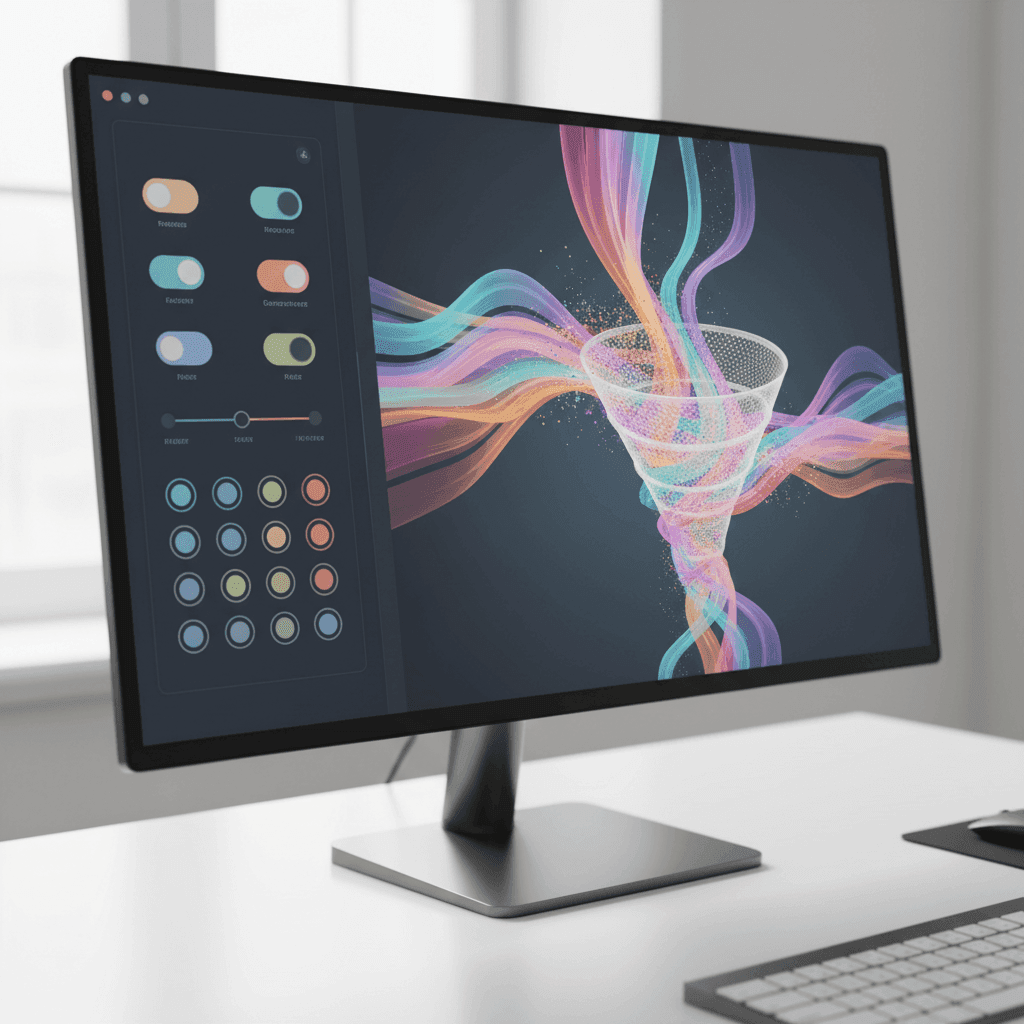
Restricted Mode decides what to hide for you. WhitelistVideo works the other way round: everything is blocked until you approve a channel, so nothing plays that you haven't chosen.
Will WhitelistVideo Work for Your Child?
Answer 4 quick questions about your child's devices and age — get a personalized setup recommendation.
10,000+ families · FreeHow to Enable YouTube Restricted Mode
Turning it on is easy, but here is the catch: you have to do it manually on every single device and browser your kid uses. It doesn't follow the account automatically across the whole house.
If you'd rather watch it done, this short walkthrough covers enabling Restricted Mode on desktop, mobile, and TV:
Video: turning on Restricted Mode across devices. Note that, as the steps below show, the setting has to be repeated on every browser and device — and it can be switched back off just as easily.
On Desktop (Chrome, Firefox, Edge, Safari)
- Go to youtube.com and sign in.
- Click your profile icon at the top right.
- Look at the bottom of the menu for "Restricted Mode: Off."
- Toggle it to ON.
- Click "Lock Restricted Mode on this browser" so your kid can't just flip it back.
- You'll need to enter your Google password to lock it in.
Heads up: If you have Chrome and Firefox installed, you have to do this twice. The settings don't talk to each other.
On Mobile (YouTube App)
- Open the YouTube app.
- Tap your profile picture.
- Go to Settings > General.
- Toggle Restricted Mode on.
Note: You can't "lock" the setting on the mobile app like you can on a computer. If your kid knows where the settings menu is, they can turn it off in two taps.
On Smart TVs
- Open the YouTube app on the TV.
- Find the Settings (the gear icon).
- Select Restricted Mode and turn it On.
What Restricted Mode Actually Blocks (Testing Results)
We spent some time testing Restricted Mode against different types of content. The results were... mixed.
Our Testing Scorecard
Scroll horizontally to see all columns.
| Content Type | Blocked? | Accuracy |
|---|---|---|
| Explicit sexual content | Mostly | ~85% |
| Graphic violence | Partially | ~70% |
| Strong profanity | Partially | ~60% |
| Drug references | Inconsistent | ~50% |
| Controversial topics | Over-filtered | Varies widely |
| Gaming violence | Rarely | ~30% |
| Educational content | Sometimes wrongly blocked | False positives common |
The Reality of the Filter
YouTube says they filter nudity, violence, and drugs. But because the system relies on AI and metadata rather than human eyes, it’s far from perfect. We found that the filter is hit-or-miss.
Stuff that usually slips through includes:
- Videos with "clean" titles that hide nasty content.
- Brand new uploads that the AI hasn't scanned yet.
- Non-English content.
- "Let's Play" gaming videos that are incredibly violent but categorized as entertainment.
5 Critical Limitations of Restricted Mode
1. It's Not Very Smart
The AI can't understand context. It might block a legitimate documentary about the Holocaust because it sees "violence," but it'll let a "prank" video with heavy sexual innuendo slide because the title is vague. In our experience, it misses about one out of every four videos you’d probably want blocked. If yours seems to be missing far more than that, or keeps switching itself off, run through the Restricted Mode not working fixes first.
2. It’s Easy to Break
A kid doesn't need to be a hacker to get around this. They can just:
- Use Incognito Mode: This opens a fresh window where Restricted Mode isn't active.
- Switch Browsers: If you locked Chrome, they’ll just open Edge or Safari.
- Sign Out: If they aren't signed in, the "lock" often disappears.
- Use a VPN: This can bypass network-level filters entirely.
3. No "Allow List"
Restricted Mode is all-or-nothing. You can't tell YouTube, "I trust this specific science channel, so let it through." If the AI thinks a science video is too "mature," your kid can't watch it, period. There is no way to customize what is okay for your specific family.
4. Comments and Sidebar Junk
Even when the video itself is okay, the comments section is a minefield. Restricted Mode hides some comments, but not all of them. You’ll still see plenty of spam, links, and arguments. Plus, the "Up Next" sidebar still tries to bait kids into clicking more sensationalist content.
5. The "Shorts" Problem
YouTube Shorts are a nightmare for filters. They move too fast for the AI to keep up. Because they are designed to be scrolled through rapidly, kids can see dozens of clips before the system even realizes a video should have been restricted. If you're worried about Shorts, check out our guide on how to block them entirely.
What devices does your child use for YouTube?
How Kids Bypass YouTube Restricted Mode
If you think your kid hasn't figured this out yet, you're probably wrong. Here is how they do it:
The Incognito Trick
This is the big one. On Chrome, it’s just Ctrl+Shift+N. It opens a window that doesn't know who you are and doesn't care about your settings. Restricted Mode is off by default here. It takes three seconds and leaves no history.
The Browser Swap
Most parents forget that computers come with more than one browser. If you set up Chrome, your kid will just use Safari or download Firefox. Unless you've locked down the whole computer, Restricted Mode is only protecting one "door" while the others are wide open.
The Sign-Out
If a kid signs out of their Google account, Restricted Mode often resets. They can watch whatever they want, then sign back in before you walk into the room. Unless you're checking the "Restricted" toggle every time you pass by, you'd never know.
For more on this, we wrote a deep dive into common workarounds kids use and how to stop them.
What Parents Say About Restricted Mode
"I thought Restricted Mode was doing its job until I saw my 8-year-old watching a 'horror' Minecraft mod with blood everywhere. The filter didn't catch it because it was 'just a game.'" — Sarah, Mom of two
"My son just uses Incognito mode. He's 10. He told me he learned it from a friend at school. Restricted Mode is basically a suggestion, not a rule." — David R.
"It's frustrating. It blocks his history project videos but lets through these weird 'toy review' channels that are actually pretty creepy." — Reddit user
Restricted Mode vs YouTube Kids vs WhitelistVideo
You have a few ways to handle YouTube. Here is how they stack up:
Scroll horizontally to see all columns.
| Feature | Restricted Mode | YouTube Kids | WhitelistVideo |
|---|---|---|---|
| Cost | Free | Free | From $6.99/mo per child (US); free 2-hour test period |
| Best for | General use | Toddlers (3-8) | School-age (5-17) |
| How it works | Blocks "bad" stuff | Curated app | Only allows "good" stuff |
| Accuracy | ~70% | ~80% | 100% (You choose) |
| Bypass Difficulty | Very Easy | Medium | Hard |
| Blocks Shorts | No | Mostly | Yes |
The Takeaway
- Restricted Mode is a baseline. It’s better than nothing, but barely.
- YouTube Kids is great for toddlers, but once a kid hits 9 or 10, they’ll hate the "baby" interface. Check out our comparison guide for more.
- WhitelistVideo is for parents who want to stop playing whack-a-mole with filters and just approve the channels they trust.
Better Alternatives for Parents
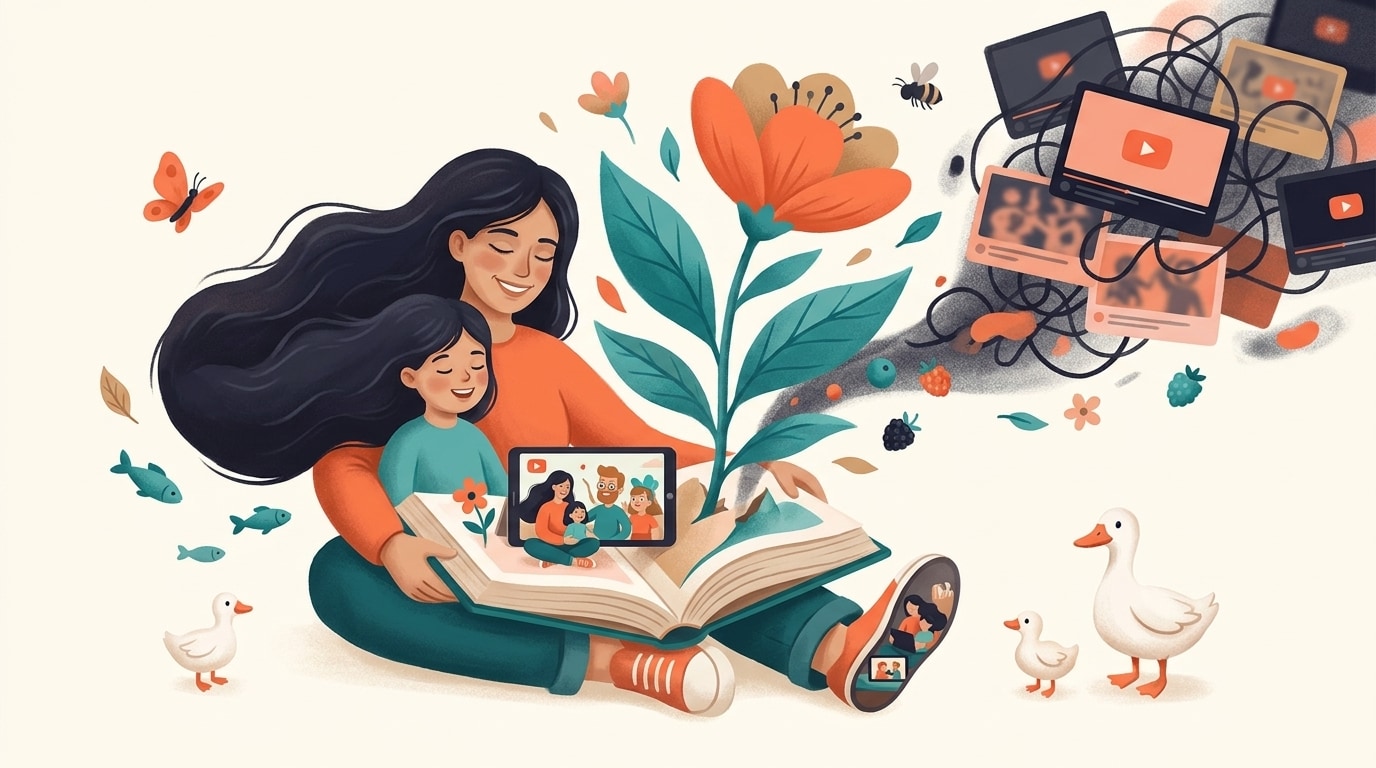
If Restricted Mode feels like a leaky bucket, you have other options.
For the Little Kids
Stick with YouTube Kids and use the "Approved Content Only" setting. It’s the only way to be sure they aren't seeing weird AI-generated "Elsagate" videos.
For Older Kids and Teens
Try a whitelist approach. Instead of trying to block the billions of bad videos on YouTube (which is impossible), you just pick the 20 or 50 channels you actually like. If it’s not on the list, they can't watch it. This is what WhitelistVideo does, and it saves a lot of headaches. You can read more about whitelisting here.
The "Pro" Setup
- Turn on Restricted Mode as a basic backup.
- Use a whitelist tool like WhitelistVideo to control which channels are actually allowed.
- Set a timer at the router or device level.
- Talk to them. No filter is as good as a kid who understands why some content is trash.
Protection for the Devices Your Child Uses
YouTube Restricted Mode for Australian Parents
If you're in Australia, Restricted Mode has some extra context worth knowing about. Since the under-16 social media ban took effect in December 2025, YouTube has become the go-to platform for kids who can no longer use TikTok or Instagram. That makes Restricted Mode's limitations more concerning — it's now the default filter for the only major platform your kids are on.
The school Chromebook problem
Many Australian schools use managed Chromebooks with Restricted Mode locked on by the school's IT department (often through Qoria, formerly Family Zone). This creates a false sense of security: parents assume their child's YouTube is "filtered" everywhere, but the school's settings only apply to the school device. On the family iPad, the home laptop, or the Android TV in the living room, there's no filter at all unless you set one up yourself.
What the eSafety Commissioner recommends
The eSafety Commissioner lists Restricted Mode as a starting point but recommends layering it with additional controls. Their guidance is clear: no single tool is enough on its own. For YouTube specifically, combining Restricted Mode with a whitelist-based tool like WhitelistVideo gives you both the baseline filter and the channel-level control that Restricted Mode can't provide.
The Australian-specific gap
Unlike the US (where YouTube Kids serves younger children and supervised accounts help older kids), Australia lost supervised YouTube accounts when the social media ban took effect. This means Restricted Mode is the only free, built-in filter available to Australian parents on regular YouTube — and as this review shows, it misses 20-30% of inappropriate content.
For a full guide on setting up YouTube controls across every device your Australian family uses, see our YouTube Parental Controls Australia guide.
Frequently Asked Questions
Does it block everything bad?
No. It misses about 20-30% of inappropriate content. It’s an automated system, and creators are very good at tricking it.
Why is it blocking my kid's school videos?
Because the AI is blunt. If a history video mentions "war" or a health video mentions "anatomy," the filter often panics and blocks it just to be safe.
Can I see if my kid turned it off?
Not easily. You’d have to manually check the settings on the device. If they are using Incognito mode, there won't even be a history for you to look at.
Does it work on YouTube Music?
Sort of, but the rules are different. You usually have to set up "Restricted Content" filters inside the Music app separately.
Our Recommendation
Scroll horizontally to see all columns.
| Criteria | Score | Notes |
|---|---|---|
| Ease of Setup | 5/5 | Fast and free |
| Filtering Accuracy | 2/5 | Too many leaks |
| Bypass Resistance | 1/5 | A toddler could bypass it |
| Overall Protection | 2/5 | A good start, but not a solution |
The bottom line: YouTube Restricted Mode is a speed bump, not a wall. It might slow down the exposure to bad content, but it won't stop a kid who wants to see something else.
Turn it on because it's free and takes 30 seconds, but don't walk away thinking the job is done. If you want to actually control what your kids are watching, look into a whitelist-based system. It’s the only way to stop worrying about what the algorithm is going to feed them next.
Beyond Restricted Mode
See how whitelist-based controls solve the problems Restricted Mode can't.
Frequently Asked Questions
Restricted Mode uses automated signals like video title, description, age restrictions, and community flags to filter mature content. It blocks some videos containing explicit sexual content, graphic violence, profanity, drug references, and controversial topics. However, testing shows it misses 20-30% of content parents would consider inappropriate while over-blocking some legitimate educational videos.
Common reasons include: using incognito/private browsing mode (which starts fresh without Restricted Mode), using a different browser where it wasn't enabled, being signed out of your Google account, using the YouTube mobile app with different settings, or VPN usage. Restricted Mode must be enabled separately on each browser and device.
Yes, there are several easy ways to bypass it. Children can use incognito mode, switch to a different browser, sign out of the Google account, use the YouTube app if only browser was configured, or access YouTube through a VPN. These bypasses require no technical knowledge and take seconds.
To lock Restricted Mode, sign in to your Google account on YouTube, scroll to the bottom and click 'Restricted Mode: Off', toggle it ON, then click 'Lock Restricted Mode on this browser.' You'll need to enter your password. However, this only locks it on that specific browser and doesn't prevent bypasses through other methods.
No, Restricted Mode should not be your only protection. It's a useful baseline layer but has significant limitations: imperfect AI filtering, easy bypass methods, no channel-level control, and device-specific settings. For comprehensive protection, combine Restricted Mode with a whitelist-based parental control like WhitelistVideo that only allows access to channels you've explicitly approved.






Published January 1, 2026 · Updated September 26, 2026

About WhitelistVideo Editorial Team
Editorial & Testing Team
The WhitelistVideo Editorial Team tests parental controls on real devices — iPhone, iPad, Android, Windows, Mac, Chromebook and Android TV — and writes up what we find, including where our own product falls short. Where a claim comes from a vendor's own documentation or from third-party testing, we cite it. Articles are reviewed by Arul Prakash, the founder of WhitelistVideo.
You Might Also Like
How to Block YouTube Channels in 2026 (All Devices + Screenshots)
Block YouTube channels on iPhone, Android, Chromebook, or desktop in 3 steps. Works in 2026 (tested on all devices). Takes 3 minutes. Free guide with screenshots →

YouTube Parental Controls: The Ultimate Setup Guide (2026)
Complete guide to YouTube parental controls. Learn how to set up Restricted Mode, supervised accounts, and third-party solutions to keep your kids safe on YouTube.
Best YouTube Parental Control Apps That Kids Can't Bypass (2026)
We tested 7 YouTube parental control apps for bypass resistance, iOS/Android support, and channel-level control. Only one blocks everything by default.
Curious what Google knows about us?
Add WhitelistVideo as a trusted source on Google — get instant context on how families keep kids safe on YouTube.
Ask Google about WhitelistVideo