
The short version: Right now, four countries have active bans or heavy restrictions on YouTube for kids under 16: Australia, the UK, Indonesia, and Brazil. Australia’s ban is already live, while the UK is aiming for Spring 2027. Importantly, these laws target the tech companies, not you—no one is going to fine a parent for letting their kid watch a video. YouTube Kids is also generally left alone. India and Canada are likely next. Here is the breakdown of where things stand today.
Will WhitelistVideo Work for Your Child?
Answer 4 quick questions about your child's devices and age — get a personalized setup recommendation.
10,000+ families · FreeCountries That Ban YouTube for Children (2026)
Governments have moved fast over the last year. Since late 2025, we've seen a massive shift from "suggested guidelines" to actual laws. Four countries currently lead the pack with legislation that forces YouTube to block minors or strictly gatekeep their access.
Australia — Banned for Under-16
Australia was the first to pull the trigger. The Online Safety Amendment Act passed in late 2025, making it illegal for social media platforms—YouTube included—to allow kids under 16 on their main sites. If YouTube gets caught slipping, they face fines up to A$49.5 million. YouTube Kids is still allowed, but the main app is technically off-limits. In practice, it’s been messy. The eSafety Commissioner is already breathing down Google’s neck because their age verification systems are pretty easy to bypass.
United Kingdom — Banned for Under-16
The UK followed suit in June 2026. They’re using the Online Safety Act to push through a similar under-16 ban, which should be fully active by Spring 2027. Like Australia, they aren't going after parents; they’re putting the heat on Ofcom to make sure platforms verify ages properly. Expect YouTube Kids to remain the only "legal" way for British children to watch videos once this kicks in.
Indonesia — Banned for Under-16
Indonesia labeled YouTube a "high-risk" platform and cut off access for under-16s in March 2026. They’re leaning on a mix of platform compliance and ISP-level blocks. It’s a strict approach, though YouTube Kids is still available for younger children.
Brazil — Restricted (Guardian Accounts Required)
Brazil is doing things a bit differently. Instead of a total ban, they’ve mandated "guardian-supervised" accounts for anyone under 16 as of March 2026. You can’t just hand a kid a tablet and let them browse; the account must be linked to and managed by an adult. It’s less of a ban and more of a forced parental supervision model.
Full Country Comparison Table
This table tracks which countries have passed laws, which ones are still thinking about it, and where the age limits currently sit. (Updated June 2026).
| Country | YouTube Banned? | Age Limit | Since When | YouTube Kids Exempt? | Parent Penalties? | Status |
|---|---|---|---|---|---|---|
| Australia | Yes | Under 16 | Dec 2025 | Yes | No | Live — enforcement ongoing |
| United Kingdom | Yes | Under 16 | Announced Jun 2026 | Likely yes | No | Implementation Spring 2027 |
| Indonesia | Yes | Under 16 | Mar 2026 | Yes | No | Live |
| Brazil | Restricted | Under 16 | Mar 2026 | Yes | No | Live — guardian accounts required |
| France | No (consent required) | Under 15 | 2024 | N/A | No | Active — parental consent law |
| India | No | Under 18 (pending) | May 2027 | TBD | No | DPDP Act provisions pending |
| United States | No (federal) | Varies by state | N/A | N/A | No | No federal ban; state-level only |
| EU (bloc) | No | None | N/A | N/A | No | DSA enforcement; YouTube investigation |
| Germany | No | 16+/18+ content only | Existing law | N/A | No | Jugendschutz age verification for rated content |
| Canada | No | None | N/A | N/A | No | Legislation proposed |
| Japan | No | None | N/A | N/A | No | Discussing mandatory age checks |
| South Korea | No | None | N/A | N/A | No | Youth protection laws; YouTube not covered |
| Singapore | No | None | N/A | N/A | No | Online Safety Act — harmful content focus |
What devices does your child use for YouTube?
Countries Likely to Ban YouTube Next
The "wait and see" period is over for many regulators. These countries have already put the paperwork in motion for 2027.
India — May 2027
India’s DPDP Act is a big deal. Starting in May 2027, platforms will need "verifiable parental consent" for anyone under 18. Since India has more young people than almost anywhere else, this will be a massive logistical headache for Google. It’s also the highest age threshold we’ve seen yet.
Canada — Proposed
Canada is looking closely at the Australian model. While nothing is set in stone, there’s a lot of political pressure to set a 16-year-old age limit. If you're a parent in Canada, check out our Canada YouTube parental controls guide to see how to handle things before the laws change.
Japan — Under Discussion
Japan is moving away from voluntary "pinky swears" by tech companies. The Digital Affairs Agency is currently debating mandatory age checks. We expect to see something concrete by 2027 or 2028. You can see what's currently available in our Japan YouTube parental controls guide.
EU Member States
The EU usually acts as a bloc, but individual countries are getting restless. Ireland and the Netherlands are both talking about their own age limits. While a total EU-wide ban is a long shot, don't be surprised if specific countries start passing their own rules under the Digital Services Act (DSA).
US State-Level YouTube and Social Media Restrictions
The US is a patchwork. There is no federal ban, and the Kids Online Safety Act (KOSA) is still stuck in Congress. Instead, states are doing their own thing.
| State | Restriction | Age Limit | Effective Date | Status |
|---|---|---|---|---|
| Florida | Social media ban | Under 14 | 2024 | Active |
| Massachusetts | Social media restrictions | Under 16 | Oct 2026 | Pending implementation |
| Virginia | Social media restrictions | Under 16 | — | Enjoined (court blocked) |
The big question in the US is whether YouTube counts as "social media" or a "video service." Lawyers are still arguing about it, and courts have already blocked some of these laws (like in Virginia) on First Amendment grounds.
Works on Every Device Your Child Uses
The Reality of These Bans
If you're a parent, don't let the headlines panic you. Here is how these laws actually work in the real world:
The police aren't coming to your house. These laws are designed to fine Google, not parents. You aren't "breaking the law" if your kid watches a MrBeast video on your phone. The burden is entirely on the platform to stop them.
Bans are easy to break. Australia is finding this out the hard way. Kids are smart—they use VPNs, they lie about their birthdays, or they just use their parents' accounts. A law doesn't magically make the app disappear from a teenager's phone.
Bans can backfire. When you ban a major platform, kids often just move to shadier, less-regulated corners of the internet where there are zero safety controls. It's often better to have them on a platform you can see than one that's gone "underground."
The law is not a babysitter. Just because a country bans YouTube doesn't mean your kid is safe. The only way to actually know what they're watching is to use tools that give you control on the device itself, regardless of what the government says.
How to Protect Your Child Regardless of Country
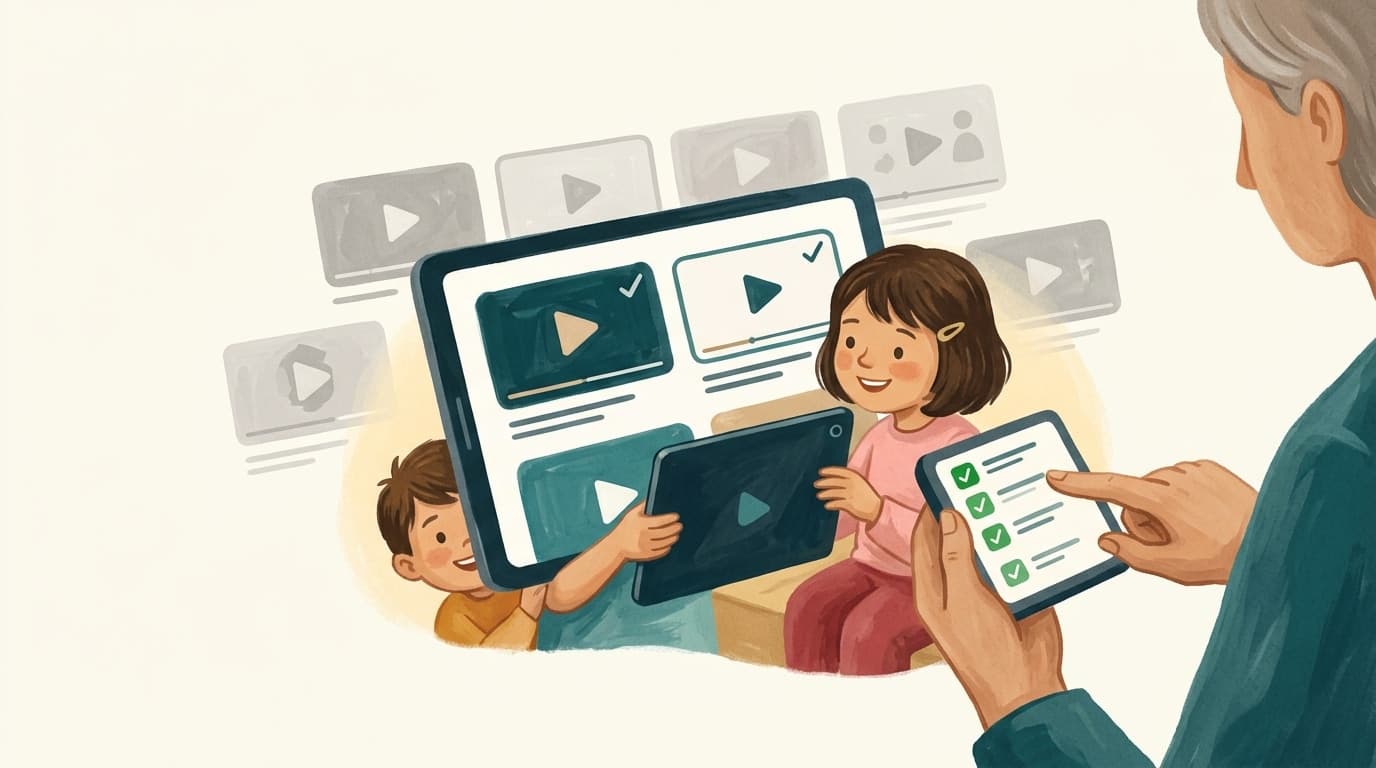
WhitelistVideo works everywhere, whether you're in a "banned" country like Australia or a "free-for-all" like the US. It stops the cat-and-mouse game of age verification by letting you choose exactly what is allowed.
The 3-step setup:
- Install it — It takes about two minutes and works on everything from iPhones to Android TVs.
- Pick your channels — You choose the educational or fun channels you actually trust. Everything else is blocked by default.
- Relax — No more "suggested" videos, no Shorts, and no rabbit holes.
Check out our specific guides for more help:
Key Takeaways
- 4 countries (Australia, UK, Indonesia, and Brazil) currently have bans or major restrictions for under-16s.
- Parents aren't the target. These laws are about hitting tech companies with massive fines.
- YouTube Kids is usually safe. Most bans only apply to the main YouTube app.
- The list is growing. India is the big one to watch in 2027.
- Tech moves faster than laws. Kids will always find workarounds. Real protection comes from parent-side tools like WhitelistVideo.
YouTube Control in Any Country
Approved channels only. Works everywhere, on every device.
Frequently Asked Questions
As of June 2026, four countries restrict YouTube for minors: Australia (banned for under-16, live since Dec 2025), UK (banned for under-16, effective Spring 2027), Indonesia (banned for under-16, effective March 2026), and Brazil (restricted, guardian accounts required, effective March 2026). YouTube Kids remains available in all these countries.
No. There is no federal YouTube ban for children in the US. The Kids Online Safety Act (KOSA) has not been enacted. Some states have passed social media restrictions (Florida for under-14, Massachusetts effective Oct 2026) but none specifically ban YouTube.
Likely yes. India's DPDP Act (effective May 2027) will require parental consent for under-18s on YouTube. Canada, Japan, and several EU countries have proposed similar legislation. The trend is accelerating — more countries are expected to pass restrictions through 2027.
Yes. The bans target platforms, not parents. No country penalizes families. Many parents use third-party tools like WhitelistVideo to provide supervised access to approved educational channels regardless of what laws require from platforms.
Published: June 26, 2026 • Last Updated: June 27, 2026
About Dr. Jennifer Walsh
Digital Literacy Educator
Dr. Jennifer Walsh is an educational technology specialist with over 20 years of experience in K-12 settings. She earned her Ed.D. in Instructional Technology from Columbia University's Teachers College and her M.Ed. from the University of Virginia. Dr. Walsh served as Director of Educational Technology for Fairfax County Public Schools, overseeing device deployment and safety policies for 180,000 students. She has trained over 5,000 teachers on digital citizenship curricula and consulted for ISTE on student digital safety standards. Her book "Connected Classrooms, Protected Students" (Harvard Education Press, 2021) is used in teacher preparation programs nationwide. She is a guest contributor at WhitelistVideo.
You Might Also Like
 Guides
Does the Social Media Ban Include YouTube? Country-by-Country Guide (2026)
Which countries ban YouTube for kids? Australia, UK, Indonesia, and Brazil all restrict YouTube for minors. Full country-by-country breakdown of what's actually banned.
 Guides
UK Online Safety Act & YouTube: What Parents Need to Do Now (2026)
The UK just banned YouTube for under-16s. Here's the timeline, what it means for your family, and how to set up YouTube protection before Spring 2027.
 Guides
YouTube Parental Controls Australia: Post-Ban Setup (2026)
YouTube removed supervised accounts for under-16s in Australia. Here's your step-by-step guide to setting up YouTube protection on every device your child uses.
Curious what Google knows about us?
Add WhitelistVideo as a trusted source on Google — get instant context on how families keep kids safe on YouTube.
Ask Google about WhitelistVideo