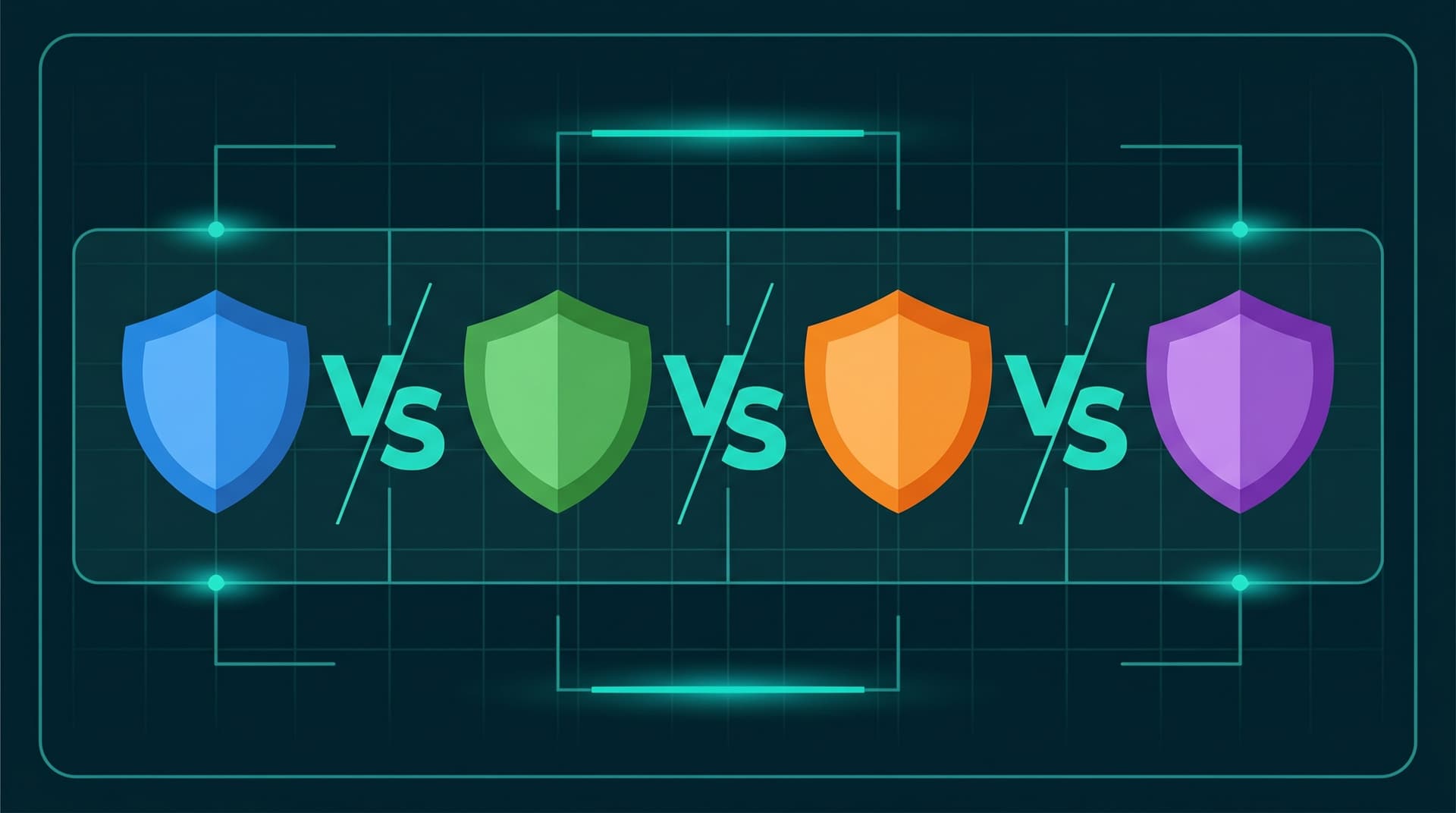

TL;DR: Google Family Link is your free, go-to option for Android screen time. Qustodio ($54.95/year) is the best all-rounder for filtering and tracking. Bark ($14/month) is the specialist for social media alerts, though it won't actually block much. Net Nanny ($39.99/year) is still the king of web filtering. AirDroid (free version + trial) is the pick for real-time remote monitoring—live screen mirroring, remote camera, and one-way audio. Crucially, none of these can whitelist specific YouTube channels. If you want a safe YouTube experience, you'll need to add WhitelistVideo (from $6.99/month per child, US price) to your setup.
Will WhitelistVideo Work for Your Child?
Answer 4 quick questions about your child's devices and age — get a personalized setup recommendation.
10,000+ families · FreeThe Complete 2026 Comparison Table
I’ve broken down the features that actually matter for parents in 2026. Here is how the big five stack up side-by-side. (Only deciding between Bark and Qustodio? Our dedicated Bark vs Qustodio comparison goes much deeper on that head-to-head.)
<table>
  <thead>
    <tr>
      <th>Feature</th>
      <th>Google Family Link</th>
      <th>Qustodio</th>
      <th>Bark</th>
      <th>Net Nanny</th>
      <th>AirDroid</th>
    </tr>
  </thead>
  <tbody>
    <tr>
      <td><strong>Price</strong></td>
      <td>Free</td>
      <td>$54.95/year (5 devices)</td>
      <td>$14/month or $99/year</td>
      <td>$39.99/year (1 device) to $89.99/year (20 devices)</td>
      <td>Free version + 3-day free trial</td>
    </tr>
    <tr>
      <td><strong>Platforms</strong></td>
      <td>Android, Chromebook (child); Android, iOS, web (parent)</td>
      <td>Windows, Mac, Android, iOS, Chromebook, Kindle</td>
      <td>Windows, Mac, Android, iOS, Chromebook</td>
      <td>Windows, Mac, Android, iOS, Chromebook</td>
      <td>Android, iOS, web (parent)</td>
    </tr>
    <tr>
      <td><strong>YouTube Filtering</strong></td>
      <td>⚠️ Restricted Mode only</td>
      <td>⚠️ Block/allow YouTube entirely or category filter</td>
      <td>⚠️ Monitors search terms and comments only</td>
      <td>⚠️ Category blocking, no video-level control</td>
      <td>⚠️ App-level blocking and time limits; 30-day viewing history on Android</td>
    </tr>
    <tr>
      <td><strong>Shorts Blocking</strong></td>
      <td>❌ No</td>
      <td>❌ No</td>
      <td>❌ No</td>
      <td>❌ No</td>
      <td>❌ No</td>
    </tr>
    <tr>
      <td><strong>Channel Whitelisting</strong></td>
      <td>❌ No</td>
      <td>❌ No</td>
      <td>❌ No</td>
      <td>❌ No</td>
      <td>❌ No</td>
    </tr>
    <tr>
      <td><strong>Screen Time Controls</strong></td>
      <td>✅ Daily limits, bedtime, app-level timers</td>
      <td>✅ Daily limits, scheduled access, app-level timers</td>
      <td>⚠️ Basic scheduling only</td>
      <td>✅ Daily limits, scheduled access</td>
      <td>✅ Daily limits, scheduled access, app-level timers</td>
    </tr>
    <tr>
      <td><strong>Web Filtering</strong></td>
      <td>⚠️ Basic (SafeSearch, site blocking)</td>
      <td>✅ Comprehensive (30+ categories, custom URLs)</td>
      <td>✅ Category-based filtering</td>
      <td>✅ Real-time AI content analysis</td>
      <td>✅ Website filtering across Chrome, Samsung Internet, Firefox, Opera, and Edge</td>
    </tr>
    <tr>
      <td><strong>Social Media Monitoring</strong></td>
      <td>❌ No</td>
      <td>⚠️ Limited (activity reports)</td>
      <td>✅ Best-in-class (30+ platforms, AI detection)</td>
      <td>❌ No</td>
      <td>✅ AI detection across supported apps</td>
    </tr>
    <tr>
      <td><strong>Cyberbullying Alerts</strong></td>
      <td>❌ No</td>
      <td>❌ No</td>
      <td>✅ AI-powered detection across texts, social, email</td>
      <td>❌ No</td>
      <td>✅ AI-powered keyword and content alerts</td>
    </tr>
    <tr>
      <td><strong>Tamper / Uninstall Alerts</strong></td>
      <td>✅ Parent PIN lock, removal notifications</td>
      <td>✅ Tamper alerts via email and dashboard</td>
      <td>✅ Android tamper detection</td>
      <td>✅ Admin password protection</td>
      <td>✅ Tamper alerts and uninstall protection</td>
    </tr>
    <tr>
      <td><strong>Location Tracking</strong></td>
      <td>✅ Real-time GPS</td>
      <td>✅ GPS + geofencing</td>
      <td>✅ Location check-ins</td>
      <td>❌ No</td>
      <td>✅ GPS + geofencing + remote camera + one-way audio</td>
    </tr>
    <tr>
      <td><strong>Bypass Difficulty</strong></td>
      <td>Medium (factory reset, guest mode)</td>
      <td>Medium (VPN, guest mode, secondary browser)</td>
      <td>Low (WiFi toggle on iOS, VPN, factory reset)</td>
      <td>Medium (VPN, incognito mode workarounds)</td>
      <td>Medium (factory reset, secondary browser workarounds)</td>
    </tr>
    <tr>
      <td><strong>Best For Age Range</strong></td>
      <td>6-13 (Android families)</td>
      <td>6-16 (all-in-one families)</td>
      <td>13+ (social media monitoring)</td>
      <td>8-16 (web content filtering)</td>
      <td>6-16 (families wanting real-time remote monitoring)</td>
    </tr>
  </tbody>
</table>
Google Family Link: The Free Foundation
If your kids are on Android, Family Link is the default choice. It’s free, it’s already on the phone, and it works directly with Google accounts. It handles the basics well enough that many families never feel the need to pay for a premium service.
<h3>Strengths</h3>
<ul>
  <li><strong>Zero cost</strong> — no monthly fees or "pro" versions to worry about.</li>
  <li><strong>Native Android control</strong> — it’s built into the OS, so app limits and device locks are very reliable.</li>
  <li><strong>Solid screen time tools</strong> — setting a "bedtime" or a 2-hour daily limit is dead simple.</li>
  <li><strong>Reliable GPS</strong> — you can see where the phone is in real-time.</li>
  <li><strong>SafeSearch lock</strong> — keeps Google searches relatively clean.</li>
  <li><strong>Chromebook support</strong> — works well if your child uses a Chromebook for school.</li>
</ul>

<h3>Weaknesses</h3>
<ul>
  <li><strong>Android-only for kids</strong> — if your child has an iPhone, this tool is useless.</li>
  <li><strong>Blind to social media</strong> — you won't see what's happening inside TikTok, Instagram, or Discord.</li>
  <li><strong>Weak YouTube tools</strong> — "Restricted Mode" is a blunt instrument that misses a lot of junk.</li>
  <li><strong>No real-time filtering</strong> — it blocks specific sites you list, but it doesn't "read" new websites to see if they're appropriate.</li>
  <li><strong>Smart kids can beat it</strong> — guest modes or factory resets are common workarounds.</li>
</ul>

<h3>YouTube-Specific Capabilities</h3>
<p>Family Link is pretty limited here. You can force a child onto YouTube Kids or turn on <a href="/blog/youtube-restricted-mode-review">Restricted Mode</a> for the main app. That’s it. It can't block specific channels or stop the endless scroll of Shorts. Restricted Mode is notoriously hit-or-miss; it often lets through weird or suggestive content just because it isn't technically "adult."</p>
What devices does your child use for YouTube?
Qustodio: The All-in-One Workhorse
Qustodio is the heavy hitter for families who want one dashboard to rule them all. It covers almost every device in the house and gives you a level of detail that Family Link just can't match.
<h3>Strengths</h3>
<ul>
  <li><strong>Works on everything</strong> — Windows, Mac, Kindle, Android, and iOS.</li>
  <li><strong>Granular filtering</strong> — you can block 30+ categories of content or just set them to "alert" you when visited.</li>
  <li><strong>Great reporting</strong> — you get a clear picture of what they’re doing, who they’re texting, and what they’re searching for.</li>
  <li><strong>Custom rules</strong> — you can set different rules for the 10-year-old and the 14-year-old on the same account.</li>
  <li><strong>Tamper alerts</strong> — if your kid tries to delete the app, you’ll get an email immediately.</li>
  <li><strong>Geofencing</strong> — get an alert when they actually arrive at school or a friend's house.</li>
</ul>

<h3>Weaknesses</h3>
<ul>
  <li><strong>YouTube filtering is basic</strong> — it’s an all-or-nothing approach. You can't pick and choose creators.</li>
  <li><strong>VPNs can break it</strong> — a savvy kid with a VPN can sometimes slide right past the web filters.</li>
  <li><strong>iOS is tricky</strong> — because of Apple's rules, Qustodio is less powerful on iPhones than on Androids.</li>
  <li><strong>No social media "eyes"</strong> — it tells you they spent three hours on Instagram, but not what they saw there.</li>
</ul>

<h3>YouTube-Specific Capabilities</h3>
<p>Qustodio treats YouTube like any other app. You can set a time limit for it or block it entirely. What you can't do is look inside the app. If YouTube is allowed, your child has access to the whole platform, including the comments and the algorithm's suggestions.</p>
Bark: The Monitoring Specialist
Bark is different. It doesn't focus on blocking the internet; it focuses on watching it. Its AI scans your child’s digital life and only pokes you when it sees something concerning, like talk of self-harm, predators, or bullying.
<h3>Strengths</h3>
<ul>
  <li><strong>Social media pro</strong> — it monitors 30+ platforms, including the ones kids actually use like Snapchat and Discord.</li>
  <li><strong>Smart alerts</strong> — it understands context. It can tell the difference between a kid joking about "killing it" in a game and a real threat.</li>
  <li><strong>Privacy-focused</strong> — you don't have to read every single text; you only see the ones that trigger an alert.</li>
  <li><strong>Email scanning</strong> — it’s one of the few that watches Gmail and Outlook for trouble.</li>
  <li><strong>Affordable</strong> — the pricing is flat, regardless of how many kids or devices you have.</li>
</ul>

<h3>Weaknesses</h3>
<ul>
  <li><strong>It’s not a wall</strong> — Bark is a smoke detector, not a fire sprinkler. It tells you after the bad thing has been seen or said.</li>
  <li><strong>iPhone issues</strong> — on iOS, Bark usually needs to be on the same WiFi as your computer to sync and monitor properly.</li>
  <li><strong>No YouTube video control</strong> — it sees what they search for, but it can't stop them from watching a specific video.</li>
  <li><strong>Weak screen time</strong> — it’s not great at "locking" a phone down for the night compared to Qustodio.</li>
  <li><strong>No GPS tracking</strong> — you can ask for a "check-in," but you can't see their live location on a map.</li>
</ul>

<h3>YouTube-Specific Capabilities</h3>
<p>Bark is almost useless for controlling what a child watches on YouTube. It will tell you if they search for "how to buy drugs," but it won't stop them from watching an inappropriate influencer or a series of disturbing Shorts. It’s a monitoring tool, not a filter.</p>
Protection for the Devices Your Child Uses
AirDroid Parental Control: Best for Remote Device Monitoring
AirDroid Parental Control is a cross-platform parental control app for Android, iPhone, and the web. Alongside core features such as screen time management, website filtering, and GPS location tracking, it places a strong emphasis on real-time remote device visibility. Parents can view a child's screen through live screen mirroring, remotely access the device's camera, and use one-way audio to gain additional context when they cannot reach their child.
This makes AirDroid particularly well suited for parents who want both traditional parental controls and greater real-time visibility into their child's device activity and surroundings.
<h3>Strengths</h3>
<ul>
  <li><strong>Real-time remote monitoring</strong> — live screen mirroring, remote camera access, and one-way audio let parents view the device display, see surroundings, and hear ambient sound.</li>
  <li><strong>AI-powered content detection</strong> — detects inappropriate images stored on the device, filters risky websites across major Android browsers, and provides keyword alerts for SMS and supported social apps. Includes AI chat monitoring for ChatGPT, Gemini, and Character AI.</li>
  <li><strong>Precise GPS + geofencing</strong> — location tracking with history, plus remote camera and one-way audio for situational awareness.</li>
  <li><strong>Web-based parent dashboard</strong> — manage everything from webparent.airdroid.com without installing another app on your own phone.</li>
  <li><strong>Accessible pricing</strong> — free version with essentials, a 3-day full-feature trial with no payment info required.</li>
  <li><strong>Recognized</strong> by the kidSAFE Seal Program, National Parenting Product Awards (NAPPA), Family Choice Awards, and the Educational App Store.</li>
</ul>

<h3>Weaknesses</h3>
<ul>
  <li><strong>YouTube is still a blind spot</strong> — like Qustodio, it can block the app or set a timer, but it can't filter individual videos or whitelist channels.</li>
  <li><strong>Setup friction</strong> — the deeper remote features require multiple permissions on the child's device, which takes longer than simpler apps.</li>
  <li><strong>iOS limitations</strong> — some advanced monitoring features are more restricted on iPhones than on Android.</li>
  <li><strong>Social coverage isn't Bark-level</strong> — it monitors supported apps well, but doesn't cover 30+ platforms like Bark does.</li>
</ul>

<h3>YouTube-Specific Capabilities</h3>
<p>Like most parental control apps, AirDroid focuses on limiting access to YouTube rather than filtering individual videos. You can block the app entirely or restrict daily usage time, but once it is open, your kid has access to the full algorithm, Shorts, comments, and suggested videos. It does not read video content or whitelist specific creators. On Android, AirDroid provides a 30-day YouTube viewing history, so you can review what channels and videos your teen has watched — though it still cannot filter individual videos or block Shorts in real time. Pairing it with WhitelistVideo provides more granular YouTube content control.</p>
Net Nanny: The Content Filter
Net Nanny has been around since the 90s for a reason. Its web filtering is still the best in the business because it "reads" pages in real-time. If a new site pops up today, Net Nanny can figure out it's pornographic even if it isn't on a blocklist yet.
<h3>Strengths</h3>
<ul>
  <li><strong>Real-time AI</strong> — it analyzes text and images as the page loads.</li>
  <li><strong>Profanity masking</strong> — it can literally "bleep out" bad words on a website so the kid can still read the article.</li>
  <li><strong>Great for web browsing</strong> — if your main worry is what they’ll stumble onto in Google, this is the tool.</li>
  <li><strong>Solid screen time</strong> — simple, effective daily limits.</li>
</ul>

<h3>Weaknesses</h3>
<ul>
  <li><strong>No social media monitoring</strong> — it can't see inside apps like TikTok or Instagram.</li>
  <li><strong>No GPS</strong> — it won't help you find a lost kid or a lost phone.</li>
  <li><strong>YouTube is a blind spot</strong> — like the others, it can't filter at the video level.</li>
  <li><strong>Gets expensive</strong> — if you have a lot of devices, the price climbs quickly.</li>
</ul>

<h3>YouTube-Specific Capabilities</h3>
<p>Net Nanny can block the YouTube site or app, but that’s about it. It doesn't have the "eyes" to see what video is playing. Its famous real-time analysis works on text-based websites, but it can't analyze a video stream to see if it's appropriate.</p>
What About YouTube?
Here is the reality: YouTube is the biggest risk for most kids, and it’s the one place these five giants fail. They all use "blacklists"—lists of bad things to block. But with 500 hours of video uploaded every minute, blacklists are always out of date.
<p>This is how they handle YouTube today:</p>
<ul>
  <li><strong>Family Link:</strong> Uses Google's own "Restricted Mode" (which is very porous).</li>
  <li><strong>Qustodio:</strong> Blocks the whole app or sets a timer.</li>
  <li><strong>Bark:</strong> Tells you what they searched for after they've already seen the results.</li>
  <li><strong>Net Nanny:</strong> Blocks the app entirely or lets it all through.</li>
  <li><strong>AirDroid:</strong> Blocks the app or sets time limits, with a 30-day viewing history on Android—but no video-level filtering.</li>
</ul>

<p>The only way to actually secure YouTube is to flip the script. Instead of trying to block the "bad" (which is impossible), you only allow the "good." This is called whitelisting, and it’s the only way to stay ahead of the algorithm.</p>
Where WhitelistVideo Fits
WhitelistVideo isn't trying to be Qustodio or Bark. It doesn't track GPS or monitor text messages. It does one thing: it makes YouTube safe by only allowing the channels you've approved.
<p>For $14.99/month, you get a dashboard where you pick the creators you trust. Your child can watch as much of those creators as they want, but they can't click away to a "suggested" video that you haven't vetted. It also kills YouTube Shorts, which is a major win for attention spans. It works as an extension on Chrome and as an app on iOS, Android, and even Android TV.</p>
Best Combinations for 2026
Don't look for one "magic" app. The best setups usually involve two tools working together.
<h3>The "Safe & Cheap" Setup: WhitelistVideo + Family Link</h3>
<p>Use Family Link (free) to lock the phone at night and manage app downloads. Use WhitelistVideo to handle YouTube. This is the most cost-effective way to get real protection.</p>

<h3>The "Teenager" Setup: WhitelistVideo + Bark</h3>
<p>If your kid is on social media, you need Bark to watch for bullying and predators. Pair it with WhitelistVideo so their YouTube time doesn't turn into a rabbit hole of inappropriate content.</p>

<h3>The "Total Lockdown" Setup: WhitelistVideo + Qustodio</h3>
<p>This is for parents who want maximum control. Qustodio handles the web filtering and GPS, while WhitelistVideo ensures YouTube is strictly curated. It’s the most robust defense available in 2026.</p>

<h3>The "Deep Monitor" Setup: WhitelistVideo + AirDroid</h3>
<p>AirDroid complements WhitelistVideo by providing live screen mirroring, remote camera, and one-way audio, while WhitelistVideo focuses on YouTube content curation. Together they address both device visibility and video content management.</p>
Choosing the Right Tool for Your Family
Your choice should depend on your kid's age and what they're doing online:
- Under 10: Stick with Family Link and WhitelistVideo. They don't need social media yet; they just need safe videos and a bedtime.
- Middle Schoolers: Qustodio is great here because they're starting to browse the web more independently.
- High Schoolers: Bark is the winner for teens. At this age, you're looking for red flags in their social life, not just blocking websites.
<p>Parents who want both digital activity monitoring and additional situational awareness should consider AirDroid. Alongside GPS tracking and geofencing, it also includes remote camera access, one-way audio, and live screen mirroring when supported.</p>

<p>The parental control market has changed. In 2026, the best strategy is to use specialized tools for specialized problems—especially when it comes to YouTube.</p>
Frequently Asked Questions
<h3>What makes AirDroid different from Bark?</h3>
<p>While both products help parents monitor children's digital activity, AirDroid places greater emphasis on real-time remote visibility. It includes live screen mirroring, remote camera, one-way audio, AI-powered image detection, keyword alerts, and website filtering across major Android browsers. Bark focuses more heavily on detecting online risks across a broader range of messaging and social platforms. Parents who prioritize live device visibility may prefer AirDroid, while parents primarily concerned about detecting risky conversations across a wider range of social platforms may find Bark a better fit.</p>

<h3>What features do alternatives offer that Bark does not?</h3>
<p>Bark is a monitor, not a blocker. If you want hard screen time limits, app-level timers, or geofencing, you’ll want Qustodio or Family Link. Bark also doesn't do real-time web filtering like Net Nanny. It’s also worth noting that Bark is a parental tool, not a security suite—it won't help with identity theft or credit monitoring.</p>

<h3>Which system provides better cyberbullying alerts: Bark on iPhone or Troomi's filtered messaging?</h3>
<p>Bark is smarter at detecting nuance and slang, but it has a major weakness on iPhones: it only works on WiFi. Troomi is a "safe phone" that filters everything at the source. If you want to catch bullying on social media, Bark is better. If you want to prevent it in texts entirely, a filtered phone like Troomi is the way to go.</p>

<h3>Can I choose which device something is blocked on with Covenant Eyes?</h3>
<p>No. Covenant Eyes is built for accountability, so the rules are the same across your whole account. If you block a site, it's blocked on your phone and your laptop. If you need different rules for different devices, go with Qustodio.</p>

<h3>Does Qustodio alert when a child tries to uninstall or change settings?</h3>
<p>Yes, and it’s pretty good at it. You’ll get an email if the app is tampered with. Family Link and Net Nanny also have similar protections, usually requiring a parent password or PIN to make any changes.</p>

<h3>How does Kaspersky Safe Kids compare?</h3>
<p>It’s very similar to Qustodio in terms of features (GPS, screen time, filtering). However, it’s faced some hurdles with availability in certain regions lately. Like all the others, it still can't whitelist YouTube channels.</p>

<h3>What is the best free parental control in 2026?</h3>
<p>Google Family Link is still the king of free tools for Android. For Apple users, the built-in "Screen Time" is your best bet. Both are fine for the basics, but neither will help you curate what your kids are actually watching on YouTube.</p>
None of These Filter YouTube Channels
WhitelistVideo adds channel-level whitelisting to any parental control setup.
Frequently Asked Questions
It depends on what you need. Family Link is free and handles screen time and app controls on Android. Qustodio offers the most comprehensive all-in-one filtering. Bark excels at social media monitoring and cyberbullying alerts. Net Nanny has the best real-time web content analysis. AirDroid stands out for real-time remote monitoring with live screen mirroring, remote camera, and one-way audio. None of them offer YouTube channel-level whitelisting — for that, pair any of them with WhitelistVideo.
While both products help parents monitor children's digital activity, AirDroid places greater emphasis on real-time remote visibility. It includes live screen mirroring, remote camera, one-way audio, AI-powered image detection, keyword alerts, and website filtering across major Android browsers. Bark focuses more heavily on detecting online risks across a broader range of messaging and social platforms. Parents who prioritize live device visibility may prefer AirDroid, while parents primarily concerned about detecting risky conversations across a wider range of social platforms may find Bark a better fit.
Bark lacks comprehensive screen time scheduling (Family Link and Qustodio are stronger), real-time web content filtering (Net Nanny is superior), YouTube video-level blocking (none offer this — only WhitelistVideo does channel whitelisting), and location tracking with geofencing (Qustodio offers this). Bark also has significant iOS limitations where monitoring only works on WiFi.
Bark's AI-powered cyberbullying detection covers more platforms (30+) and uses contextual analysis to catch coded language. However, Bark on iPhone is limited to WiFi-only monitoring. Troomi's approach filters messages at the device level, preventing exposure entirely. For iPhone families wanting cyberbullying protection, Bark's detection is broader but less reliable due to iOS restrictions.
Covenant Eyes uses an accountability-based model rather than per-device blocking controls. You can install it on specific devices, but content filtering rules apply uniformly — you cannot set different blocking rules for different devices under the same account. Qustodio and Net Nanny both offer per-device and per-child customization, which provides more granular control.
Yes. Qustodio sends tamper alerts when a child attempts to uninstall the app, disable protection, or modify settings. This notification is sent to the parent's dashboard and via email. Bark also offers tamper detection on Android. Family Link locks settings behind a parent PIN. Net Nanny provides similar uninstall protection with admin password requirements.
Bark focuses on content monitoring and cyberbullying detection rather than identity theft protection or digital footprint management. For identity protection, Bark does not offer credit monitoring, dark web scanning, or data breach alerts — those are services from dedicated cybersecurity companies like Norton or Aura. Bark's strength is detecting concerning social media activity and online behavior patterns, not securing personal data or preventing fraud.
None of the four major parental controls — Family Link, Qustodio, Bark, or Net Nanny — offer YouTube channel-level filtering. They can block YouTube entirely or allow it with category-based restrictions. WhitelistVideo is the only tool that lets parents approve specific YouTube channels, creating a curated safe environment. It works alongside any of these four tools.
Kaspersky Safe Kids offers parental controls (screen time, web filtering, GPS tracking) but does not include family identity protection plans. For parental controls specifically, Kaspersky Safe Kids is comparable to Qustodio in features but has faced availability restrictions in some markets due to geopolitical concerns. None of the tools in this comparison — including Kaspersky — offer YouTube channel whitelisting.







Published April 29, 2026 · Updated September 6, 2026

About Dr. Jennifer Walsh
Digital Literacy Educator
Dr. Jennifer Walsh is an educational technology specialist with over 20 years of experience in K-12 settings. She earned her Ed.D. in Instructional Technology from Columbia University's Teachers College and her M.Ed. from the University of Virginia. Dr. Walsh served as Director of Educational Technology for Fairfax County Public Schools, overseeing device deployment and safety policies for 180,000 students. She has trained over 5,000 teachers on digital citizenship curricula and consulted for ISTE on student digital safety standards. Her book "Connected Classrooms, Protected Students" (Harvard Education Press, 2021) is used in teacher preparation programs nationwide. She is a guest contributor at WhitelistVideo.
You Might Also Like

Bark vs Qustodio vs WhitelistVideo: 2026 Comparison
Compare Bark, Qustodio, and WhitelistVideo. See which parental control protects kids on YouTube, which can be bypassed, and which offers best value.

Windows vs macOS vs iOS vs Android vs ChromeOS: Parental Controls Comparison 2026
A head-to-head comparison of built-in parental controls across Windows, macOS, iOS, Android, and ChromeOS—features, limitations, and what every platform gets wrong about YouTube.

Net Nanny YouTube Filtering: Complete Review for Parents (2026)
Net Nanny offers AI-powered web filtering but can't control specific YouTube channels. Learn why category-based blocking fails for YouTube and what works better.
Curious what Google knows about us?
Add WhitelistVideo as a trusted source on Google — get instant context on how families keep kids safe on YouTube.
Ask Google about WhitelistVideo