

TL;DR: Massachusetts is now treating AI-generated deepfakes of minors as a criminal offense. This new statewide guidance gives schools the green light to investigate these incidents directly. It’s a major shift that highlights why parents need better tools—like WhitelistVideo—to stay ahead of AI-enabled abuse.
The Rise of AI Abuse in Schools
The line between what’s real and what’s fake is disappearing, and it’s happening faster than most schools can keep up with. We’re seeing more reports of AI-generated deepfakes targeting minors, often created by other students and shared through group chats or social media. These aren't just "mean" photos; they are a form of digital abuse that causes real psychological trauma and lasting reputational damage.
Because AI tools are so easy to find and use, creating a convincing fake image takes seconds. It’s no longer a niche technical skill. We’ve seen this play out in places like Spain, where students used AI to create explicit images of their classmates. It’s a crisis that has moved from "what if" to a daily reality for many districts across the U.S.
Will WhitelistVideo Work for Your Child?
Answer 4 quick questions about your child's devices and age — get a personalized setup recommendation.
10,000+ families · FreeMassachusetts Sets a New Standard
The Massachusetts Healey-Driscoll Administration is finally putting some rules on the books. They recently issued statewide guidance that tells schools exactly how to handle AI deepfakes of minors. Most importantly, the state now classifies making or sharing these images as a criminal offense.
This gives schools the authority to run full investigations and bring in law enforcement when necessary. But it’s not just about punishment. The guidance also pushes for better education for students and staff. The goal is to make it clear that digital actions have physical-world consequences, hopefully creating a safer environment both in the classroom and online.
Why Traditional Filters Fail Against AI
School guidance is great, but it doesn't stop a kid from seeing something harmful on their phone at home. Most parents rely on "Restricted Mode" or basic filters, but these are reactive. They wait for a human or an algorithm to flag a video *after* it’s already been uploaded. By the time a deepfake is caught, the damage is done. We’ve already seen how Apple Screen Time fails to manage YouTube's constant stream of content.
WhitelistVideo takes the opposite approach. Instead of trying to block the "bad" stuff—which is impossible when AI can generate new content every second—you only allow the "good" stuff. You **whitelist specific YouTube channels** that you trust. Everything else is blocked. This means your child can't stumble onto a deepfake or an inappropriate AI-generated "parody" because those channels were never on the list to begin with. We also block YouTube Shorts entirely, which are often the hardest parts of the site to moderate.
What devices does your child use for YouTube?
Practical Strategies for Parents
The best defense starts at home. While we wait for laws to catch up, parents have to be the gatekeepers. This means talking openly about digital risks and using tools that actually work.
WhitelistVideo is built to be bypass-proof. Unlike YouTube’s built-in settings, which kids can often click around, our system works at the browser and device level. It blocks VPNs and detects incognito mode, so the rules actually stick. It works across Chromebooks, iOS, and Android, and the list stays the same no matter which device they pick up. On personal Chromebooks, tamper-proof protection requires admin management (a school-issued device, or a Google Workspace subscription at about US $5 per month; check Google's pricing for your region); without it, you are alerted by email if the extension is removed. If your child finds a new educational channel they want to watch, they can send a request to your phone, and you can approve it in a tap. It’s about being involved without having to hover over their shoulder 24/7. You can see how we stack up against other tools in our comparison of Bark vs. Qustodio vs. WhitelistVideo.
The Legal Battle for Online Safety
The Massachusetts move is a good start, but our legal system is still playing catch-up. AI moves faster than the legislative process. This isn't just about deepfakes; it’s about the broader problem of how platforms handle harassment and exploitation.
There is some movement on the federal level. The Kids Online Safety Act (KOSA) is gaining traction, as we noted in our recent post. These laws want to hold social media companies accountable for the algorithms they use. But legal battles take years. Parents need a solution they can use tonight, not one that might pass in a future session of Congress.
Protection for the Devices Your Child Uses
Frequently Asked Questions
Q: What is the new deepfake guidance for US schools?
A: Massachusetts has issued rules that allow schools to investigate AI-generated deepfakes of minors as crimes. It gives administrators a clear path to work with police and support victims.
Q: Why are AI-generated deepfakes a growing concern for children?
A: AI makes it easy to create fake, explicit, or harassing videos that look real. These spread fast and can cause serious emotional harm to kids.
Q: How can parents protect their children from deepfakes?
A: Talk to your kids about what they see online and use a "whitelist" approach. Tools like WhitelistVideo ensure they only see channels you’ve vetted, rather than whatever the algorithm suggests.
Q: Is YouTube's Restricted Mode enough?
A: No. It’s reactive and often misses new or AI-generated content. It’s also fairly easy for kids to get around if they’re determined.
Final Thoughts
The new guidance in Massachusetts is a wake-up call. It’s an admission that the digital world has become a lot more dangerous for kids very quickly. While the law tries to catch up, the responsibility falls on parents to find tools that actually provide security.
Relying on a platform to "filter" out the bad stuff is a losing game. WhitelistVideo changes the game by letting you decide exactly what is allowed. It’s a simple, bypass-proof way to make sure your kids can enjoy the best of YouTube without the risks of the AI-generated "wild west." You can get started with WhitelistVideo here and take back control of your child's digital experience.
Are You a Digital Parenting Archetype?
Discover your unique parenting style and unlock tailored strategies for navigating the digital world with confidence.
Frequently Asked Questions
The Massachusetts Healey-Driscoll Administration has issued statewide guidance for schools to investigate AI-generated deepfake images of minors, classifying such acts as a criminal offense. This provides a framework for schools to respond to the increasing threat of digital abuse.
The rapid advancement of AI tools makes it easy to create convincing fake images and videos, often used in child sexual exploitation or harassment. This technology can spread rapidly, causing severe emotional and psychological harm to young victims.
Parents should foster open communication, educate children about digital literacy, and implement robust parental control tools. Solutions like WhitelistVideo allow parents to proactively approve only specific, safe YouTube channels, blocking all unapproved content by default.
No, YouTube's Restricted Mode is notoriously ineffective and easily bypassed. It relies on reactive filtering, which consistently fails against rapidly evolving harmful content, including AI-generated deepfakes. Proactive tools like WhitelistVideo offer a much more secure and reliable solution.








Published April 22, 2026 · Updated May 20, 2026

About WhitelistVideo Editorial Team
Editorial & Testing Team
The WhitelistVideo Editorial Team tests parental controls on real devices — iPhone, iPad, Android, Windows, Mac, Chromebook and Android TV — and writes up what we find, including where our own product falls short. Where a claim comes from a vendor's own documentation or from third-party testing, we cite it. Articles are reviewed by Arul Prakash, the founder of WhitelistVideo.
You Might Also Like

KOSA Gains Power: Social Media Verdicts Reignite Online Safety Push
Recent jury verdicts holding social media giants liable for teen mental health harms have reignited urgency for the Kids Online Safety Act (KOSA). Parents can expect stronger protections and a 'duty of care' for platforms, but immediate action is still crucial for child safety online.
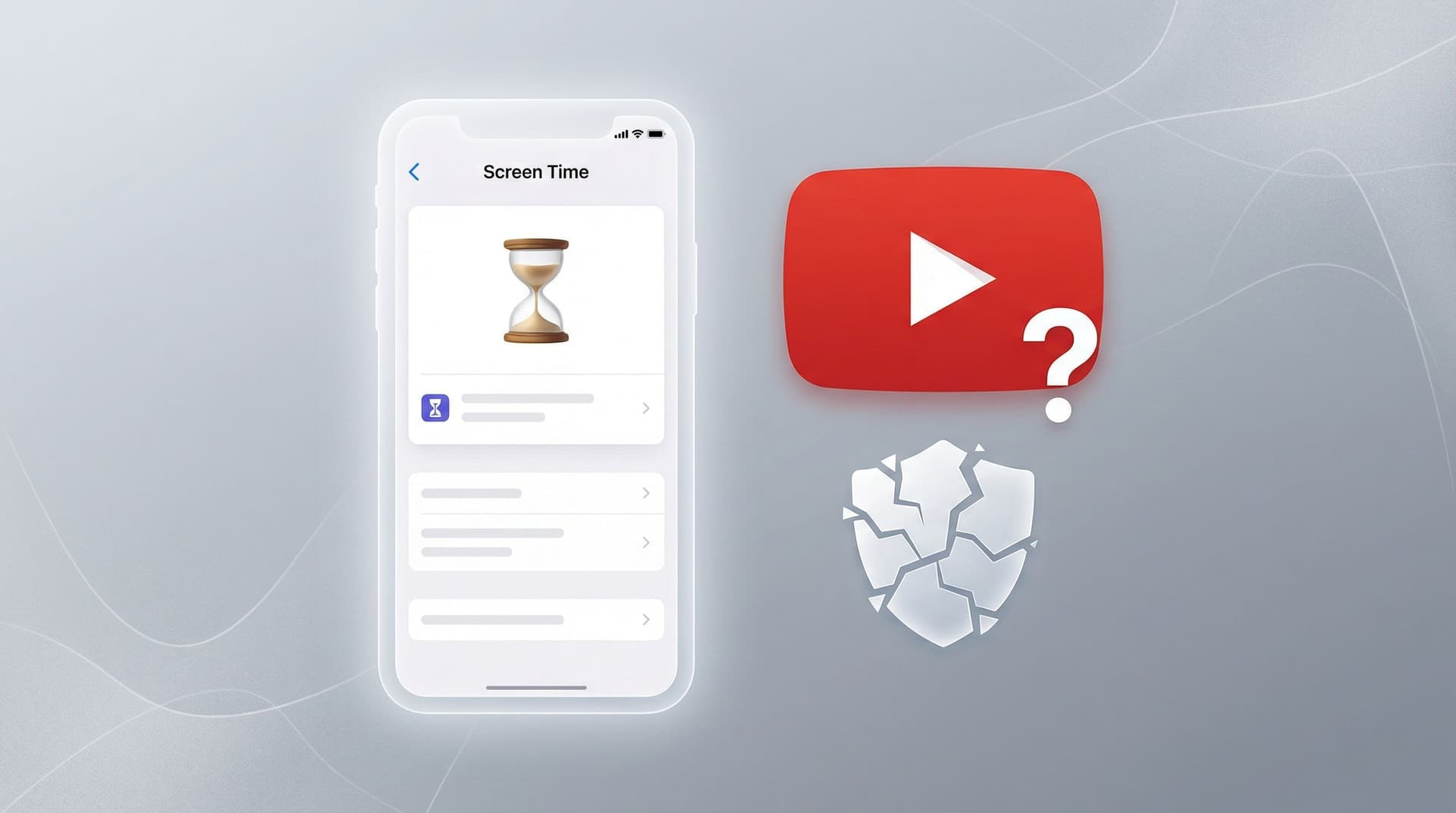
Why Apple Screen Time Can't Filter YouTube Content (And What Does)
Apple Screen Time limits how long kids use YouTube but can't filter what they watch. Learn why Screen Time fails for YouTube content and what actually works on iPhone and iPad.

Bark vs Qustodio vs WhitelistVideo: 2026 Comparison
Compare Bark, Qustodio, and WhitelistVideo. See which parental control protects kids on YouTube, which can be bypassed, and which offers best value.
Curious what Google knows about us?
Add WhitelistVideo as a trusted source on Google — get instant context on how families keep kids safe on YouTube.
Ask Google about WhitelistVideo