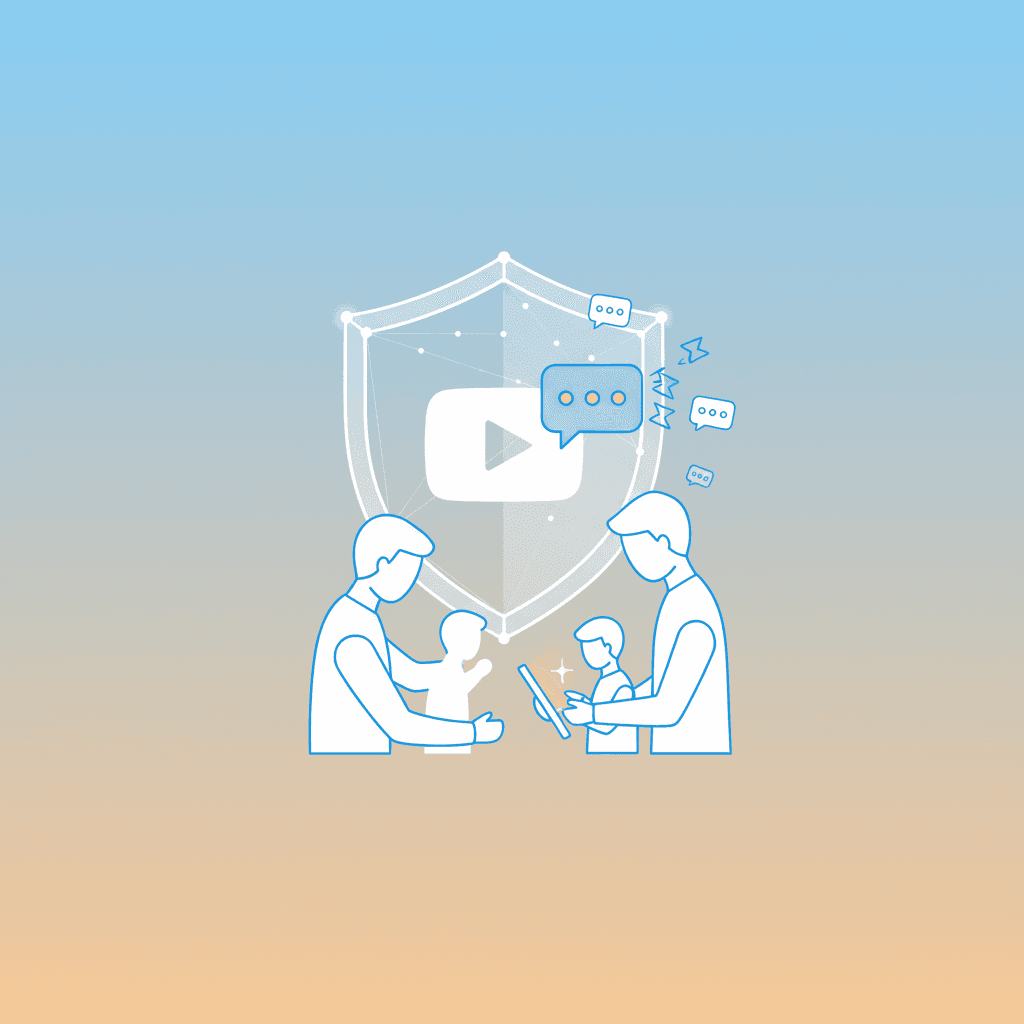

TL;DR: YouTube comments are often toxic. Standard parental controls are too easy to bypass. The most reliable way to protect your child is to remove the comment section entirely by using WhitelistVideo to limit access to trusted, pre-approved channels.
The Hidden Danger in the Comment Section
In my practice as a child development psychologist, I talk to parents every day who are blindsided by the vitriol their kids find in the comments of "safe" videos. It’s a common mistake to assume that if a video is educational or labeled for families, the environment around it is safe too. It isn't. The comment section is essentially an unmoderated public square where anonymity brings out the worst in people.
Cyberbullying doesn't just happen in private DMs. It happens in plain sight right under popular videos. Even on channels meant for kids, the conversation can quickly turn into name-calling, hate speech, or worse. When a child scrolls down to see what others are saying, they often run into aggression they aren't ready to process. If you're trying to get a handle on this, our safety guide covers the basics.
Will WhitelistVideo Work for Your Child?
Answer 4 quick questions about your child's devices and age — get a personalized setup recommendation.
10,000+ families · FreeWhy Standard Parental Controls Fail
Most parents start with YouTube’s "Restricted Mode." It’s a nice idea, but it’s mostly ineffective. It relies on automated algorithms that miss a lot of verbal abuse, and savvy kids can get around it in seconds. These filters also don't account for the "trolling" culture that defines so much of the platform's social interaction.
This is why WhitelistVideo is different. Instead of trying to filter out the "bad" stuff—which is an endless game of whack-a-mole—you just pick the "good" stuff. You curate a list of approved channels, and that’s all they see. By cutting off the algorithm's ability to suggest random, unmoderated content, you remove the primary way kids stumble into toxic threads. You aren't just filtering; you're deciding what the platform is allowed to be for your child.
The Impact of Toxic Comments on Child Development
Kids are still building their sense of self, and they take external feedback very seriously. When a child reads a comment section full of personal attacks, they don't just see "internet noise"—they often internalize that hostility. It can make them anxious about their own digital presence or lead them to believe the world is naturally a meaner place than it is. This is a big reason why platform liability has become such a massive legal issue lately.
There’s also the issue of normalization. If a child sees bullying as the standard way people talk to each other online, they’re more likely to mirror that behavior. Protecting them isn't about being overprotective; it's about making sure their digital experience actually reflects the values you teach at home.
What devices does your child use for YouTube?
Practical Solutions for a Safer YouTube Experience
So, how do you actually lock things down? The best strategy is a mix of honest communication and hard technical barriers. First, stop letting your child browse the open YouTube ecosystem. You can try to disable comments, but it's much more effective to restrict what they can watch in the first place.
With WhitelistVideo, you can:
- Use a strict whitelist: They only see the channels you have personally vetted.
- Block Shorts: YouTube Shorts are designed to be addictive and are often home to the most toxic comments. Our tool removes them.
- Bypass-proof protection: The enforcement happens at the browser level, so Incognito mode or a VPN won't help them get around it.
- No YouTube login needed: Your child doesn't need to log in to YouTube, and the controls still apply, which keeps things private.
Using an effective parental control solution changes your role from a "monitor"—which feels like spying—to a "designer." You're turning a chaotic social media site into a curated library you actually trust.
Frequently Asked Questions
Q: Can I disable comments on YouTube for my child?
A: YouTube’s "Restricted Mode" is pretty weak and easy to bypass. For real control, use WhitelistVideo to limit access to pre-approved channels. It’s much more effective than trying to filter individual comments one by one.
Q: Why are YouTube comments so toxic for children?
A: Anonymity and a lack of moderation on smaller channels create a perfect storm for aggressive behavior. Children don't have the emotional thick skin to handle these interactions, which can lead to real anxiety.
Q: How does WhitelistVideo help with cyberbullying?
A: It removes the "social" part of YouTube. If your child is only watching approved, educational content and can't see the comment section, they can't be targeted by bullies.
Q: Is blocking YouTube completely the only way to stay safe?
A: Not necessarily. But you have to go beyond basic filters. WhitelistVideo lets you keep the educational parts of YouTube while cutting out the toxic comment threads.
Conclusion
Cyberbullying in comment sections is a byproduct of a platform that prioritizes engagement over safety. We can't wait for tech companies to change their business models. We have to set the boundaries ourselves. By whitelisting only the channels that meet your standards, you give your child the best of YouTube without the toxic side effects.
If you're ready to take back control of your child's screen time, head over to the WhitelistVideo homepage. You can download the app today and join other parents who are choosing quality over noise.
Take Control of Your Child's YouTube Feed
Stop worrying about comments and start choosing what your child watches.
Frequently Asked Questions
YouTube’s native 'Restricted Mode' is often insufficient and easily bypassed. For total control, using a tool like WhitelistVideo to limit access to pre-approved channels is a more effective strategy than trying to filter individual comments.
The anonymity of the internet combined with the lack of moderation on smaller channels creates an environment where aggressive behavior thrives. Children lack the emotional maturity to process these hostile interactions, which can lead to significant anxiety and distress.
By allowing only hand-picked, safe channels, WhitelistVideo removes the 'social' aspect of YouTube entirely. If your child cannot see the comment section because they are only watching approved, educational long-form content, they cannot be bullied.
Not necessarily; however, you must move beyond standard parental filters. WhitelistVideo offers a balanced approach by keeping the educational value of YouTube while eliminating the risk of exposure to toxic comment threads.






Published May 4, 2026 · Updated May 18, 2026

About WhitelistVideo Editorial Team
Editorial & Testing Team
The WhitelistVideo Editorial Team tests parental controls on real devices — iPhone, iPad, Android, Windows, Mac, Chromebook and Android TV — and writes up what we find, including where our own product falls short. Where a claim comes from a vendor's own documentation or from third-party testing, we cite it. Articles are reviewed by Arul Prakash, the founder of WhitelistVideo.
You Might Also Like
Landmark Verdicts: Meta & YouTube Liable for Harming Youth
US juries have found Meta and YouTube liable for youth harm, citing addictive designs and exploitation. These landmark rulings could force platform redesigns for child safety and open doors for new lawsuits.

Qustodio Alternatives (2026): 4 Options That Control What Plays on YouTube
Qustodio relies on YouTube Restricted Mode which fails 20-30% of the time and is easily bypassed. Here are better alternatives with true YouTube channel whitelisting.

YouTube Safety for Kids: The Complete 2026 Parent's Guide to Every Option
Compare every YouTube control: YouTube Kids, Restricted Mode, Family Link, and whitelist controls. Learn which actually works and which is security theater.
Curious what Google knows about us?
Add WhitelistVideo as a trusted source on Google — get instant context on how families keep kids safe on YouTube.
Ask Google about WhitelistVideo