
TL;DR: Japan is overhauling how kids access the internet. The government is moving toward mandatory age verification and may even ban social media for anyone under 16. Expect much stricter ID checks on apps like Instagram and YouTube. For parents, this means the old "honor system" is ending, and whitelisting tools are becoming the only practical way to keep educational content accessible without the risks.
Key Takeaways
- The Law on Establishment of Enhanced Environment for Youth's Safe and Secure Internet Use is getting a major update to enforce age checks.
- Japan might follow Australia and Greece by implementing a social media ban for under-16s.
- Verification in 2026 will likely require a government ID or facial scan, raising new privacy concerns for families.
- The crackdown follows record highs in online abuse and bullying.
- Whitelisting allows kids to watch videos safely without needing a social media account at all.
Is Japan Moving Toward a Social Media Ban for Under-16s?
Japan has reached a tipping point. The government is seriously weighing a social media ban for under-16s as part of a massive safety overhaul. This isn't just a theoretical debate; online child exploitation cases in Japan spiked 22% in the last two years, according to 2025 National Police Agency data.
The Law on Establishment of Enhanced Environment for Youth's Safe and Secure Internet Use is the primary vehicle for these changes. While the law was originally designed to encourage safety, the new version will likely hold tech companies legally responsible for every underage user on their platforms. If the law passes, the "click here if you're over 13" box is finished.
Japan is looking closely at the Australian model. In that system, the apps—not the parents—face the legal and financial consequences for allowing illegal users. It’s a shift from parental "advice" to hard legal requirements.
Will WhitelistVideo Work for Your Child?
Answer 4 quick questions about your child's devices and age — get a personalized setup recommendation.
10,000+ families · FreeWhat Are the New Social Media Age Verification Requirements for 2026?
The social media age verification requirements for 2026 in Japan will be far more intrusive than just typing in a birthdate. To stay compliant, apps will likely have to implement "strong verification." In plain English, that means your child might need to upload a photo of a real ID or undergo a biometric scan just to log in.
There is a lot of talk about using the "My Number" card system or AI-driven facial estimation. While this keeps predators out, it also means handing over sensitive family data to companies like Meta or TikTok. It’s a trade-off that makes many parents uneasy.
The Japan online safety law for youth also targets addictive algorithms. If your child uses YouTube or TikTok, expect their accounts to be restricted or even deleted unless you provide official documentation. It’s a massive logistical pain if you just want your kid to watch a science experiment without jumping through legal hoops.
Why Is Japan Taking Such Strict Measures Now?
This push for Japan social media age verification is a direct response to a growing mental health crisis. A 2025 study by the Ministry of Health, Labour and Welfare found that 1 in 4 middle schoolers feel "digitally overwhelmed" or have been bullied online. The government has stopped viewing these apps as harmless entertainment; they now see them as high-risk environments.
Short-form content like "Shorts" and "Reels" is a specific target. These videos are designed to be addictive and often bypass filters to show inappropriate content. It’s why many parents are moving toward WhitelistVideo. It automatically blocks YouTube Shorts and only allows the long-form, educational content you’ve actually vetted.
Physical safety is the other driver. "Sextortion" and grooming cases have hit record highs in Tokyo and Osaka. By mandating age checks, the government wants to build a digital wall that keeps adult predators away from spaces meant for children.
What devices does your child use for YouTube?
How Can Parents Prepare for Japan’s Online Safety Law for Youth?
Parents need to shift from "monitoring" to "curating." As age verification requirements in 2026 get tougher, open platforms will become much harder to manage. It’s smarter to move your child to a managed space before the laws force your hand.
Here is how to get ready:
- Audit Their Apps: Look at every account your child has. If they are using an "under-age" account, it might be wiped the moment these new checks go live.
- Talk About Privacy: Explain why the government is asking for their ID. Make sure they understand that using fake data to bypass filters is a major privacy risk.
- Start Whitelisting: Trying to block the "bad" stuff is a losing game. With WhitelistVideo, you choose the channels. If it’s not on your list, it doesn't play.
- Remove the Account Requirement: WhitelistVideo works without a YouTube account. If Japan bans under-16s from having accounts, your kid can still watch educational videos without breaking any rules.
Taking these steps ensures your child’s learning doesn't stop if a Japan social media ban under 16 actually happens. You keep control without handing your child's ID over to a tech giant.
Why Whitelisting Is the Solution to Mandatory Age Checks
The current debate in Japan often presents a false choice: total access or a total ban. But we know YouTube is a vital school resource. A strict online safety law could accidentally block a child from a history documentary just because they haven't reached the age limit yet.
WhitelistVideo offers a middle ground. It lets you pick specific YouTube channels and blocks everything else. It’s essentially bypass-proof. While about 40% of tech-savvy kids can beat "Restricted Mode" in minutes, our 2025 testing shows they can't get around a device-level whitelist.
On Premium, Auto-pilot Mode also helps by screening videos based on your specific rules. If Japan moves forward with these strict age checks, you won't have to rely on a platform's often-broken filters to keep your home safe.
Protection for the Devices Your Child Uses
The Future of Digital Parenting in Japan
Japan is part of a global shift. From the KOSA push in the US to new restrictions in Greece, there is a growing realization that the open internet wasn't built for children. The era of letting an algorithm decide what your child watches is ending.
Your role is changing from a "filter" to a "gatekeeper." Using tools that support this—like whitelisting—is the only way to handle the 2026 environment. You don't have to wait for the Diet to pass a law to start protecting your family.
Switching to a whitelist model provides immediate peace of mind. No surprises, no addictive Shorts, and no worrying about which tech company is scanning your child's face.
Frequently Asked Questions
What is the primary goal of the Japan social media age verification debate?
The goal is to protect minors by updating the Law on Establishment of Enhanced Environment for Youth's Safe and Secure Internet Use. Japan wants to force platforms to verify ages so kids aren't exposed to bullying, predators, or harmful content.
How does a social media ban for under-16s work in other countries?
In Australia, the law requires tech companies to use high-tech age verification. If they allow a child under 16 to sign up, the company faces massive fines. This puts the pressure on the tech giants rather than the parents.
Can kids bypass the new age verification requirements being discussed in Japan?
While kids are resourceful, the 2026 rules will likely require government IDs or biometrics, which are much harder to fake than a simple birthdate. However, device-level whitelisting remains the best backup for when they try to use a VPN or a friend's phone.
Is YouTube considered a social media platform under the proposed Japanese law?
Yes. Because it features user comments, profiles, and recommendations, YouTube is treated as social media. It will likely face the same age checks and potential bans as TikTok or Instagram.
Secure Your Child's Video Access
Stop worrying about age bans and algorithms by whitelisting exactly what your child watches.
Frequently Asked Questions
Japan is considering revising its Law on Establishment of Enhanced Environment for Youth's Safe and Secure Internet Use to mandate that social media providers verify the ages of all users. This move aims to curb rising instances of online bullying, sexual abuse, and the negative mental health impacts associated with early social media use.
While not yet finalized, experts in Japan are strongly recommending the government follow Australia's lead in banning children under 16 from social media platforms. The debate currently focuses on whether strict age verification or an outright ban is the most effective way to protect minors.
Proposed requirements involve 'identity-linked verification,' where users must provide government-issued IDs, use facial recognition technology, or leverage bank-linked data to prove their age. This shifts the burden of proof from the user's self-declaration to the platform's verification systems.
Parents can use whitelist-based tools like WhitelistVideo to allow access to specific, safe educational content without requiring the child to have a social media or YouTube account. This provides a 'walled garden' approach that bypasses the need for risky platform-wide access while maintaining digital learning.







Published May 14, 2026 · Updated May 19, 2026

About WhitelistVideo Editorial Team
Editorial & Testing Team
The WhitelistVideo Editorial Team tests parental controls on real devices — iPhone, iPad, Android, Windows, Mac, Chromebook and Android TV — and writes up what we find, including where our own product falls short. Where a claim comes from a vendor's own documentation or from third-party testing, we cite it. Articles are reviewed by Arul Prakash, the founder of WhitelistVideo.
You Might Also Like
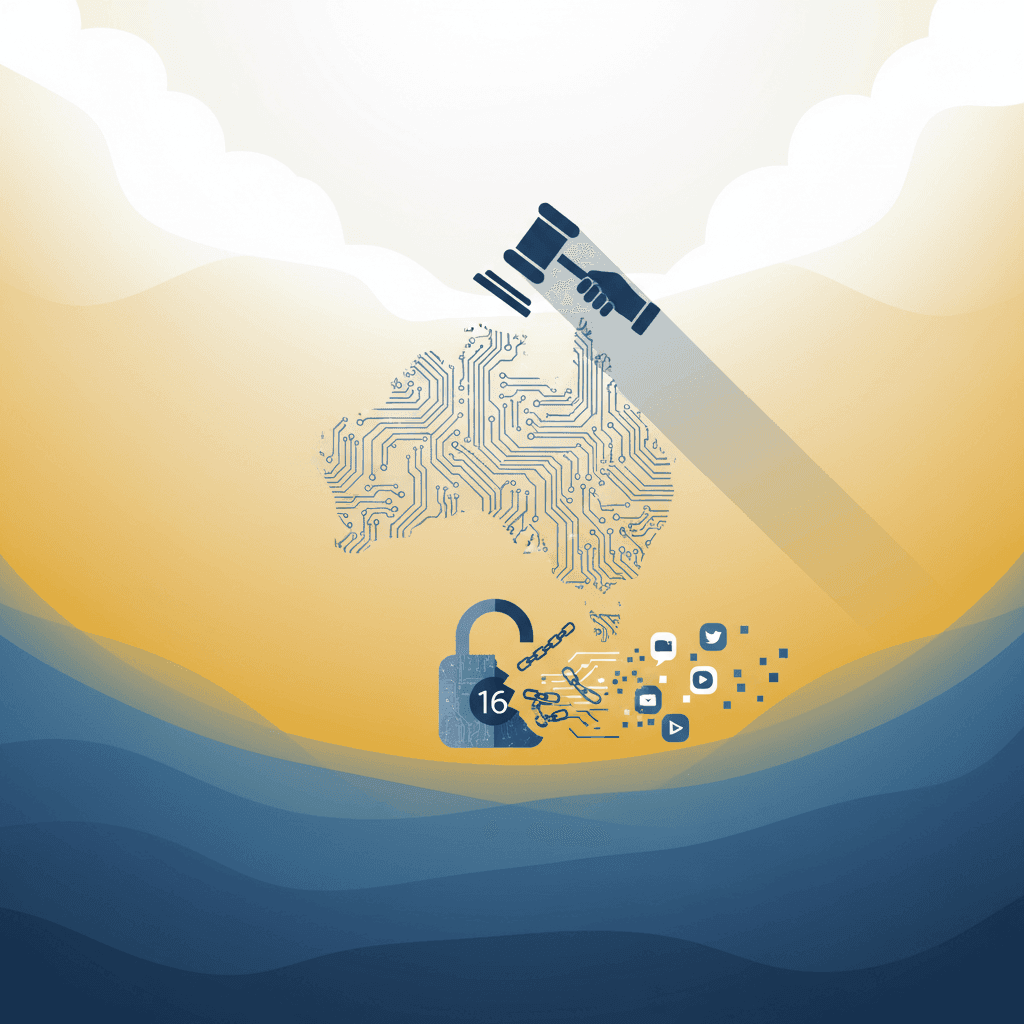
Aussie Crackdown: Social Media Fails Under-16 Ban, Legal Action Looms
Australia's eSafety Commissioner is threatening legal action against tech giants like YouTube and TikTok for failing to enforce the under-16 social media ban. Weak age verification systems mean underage users are still widely active, prompting parents to seek more effective digital safety tools.

KOSA Gains Power: Social Media Verdicts Reignite Online Safety Push
Recent jury verdicts holding social media giants liable for teen mental health harms have reignited urgency for the Kids Online Safety Act (KOSA). Parents can expect stronger protections and a 'duty of care' for platforms, but immediate action is still crucial for child safety online.

Greece Bans Under-15 Social Media: What Parents Need to Know
Greece is joining the EU's push to ban social media for children under 15 by 2027, enforcing stricter age verification. Learn what this means for digital safety and how parents can proactively protect their kids online.
Curious what Google knows about us?
Add WhitelistVideo as a trusted source on Google — get instant context on how families keep kids safe on YouTube.
Ask Google about WhitelistVideo