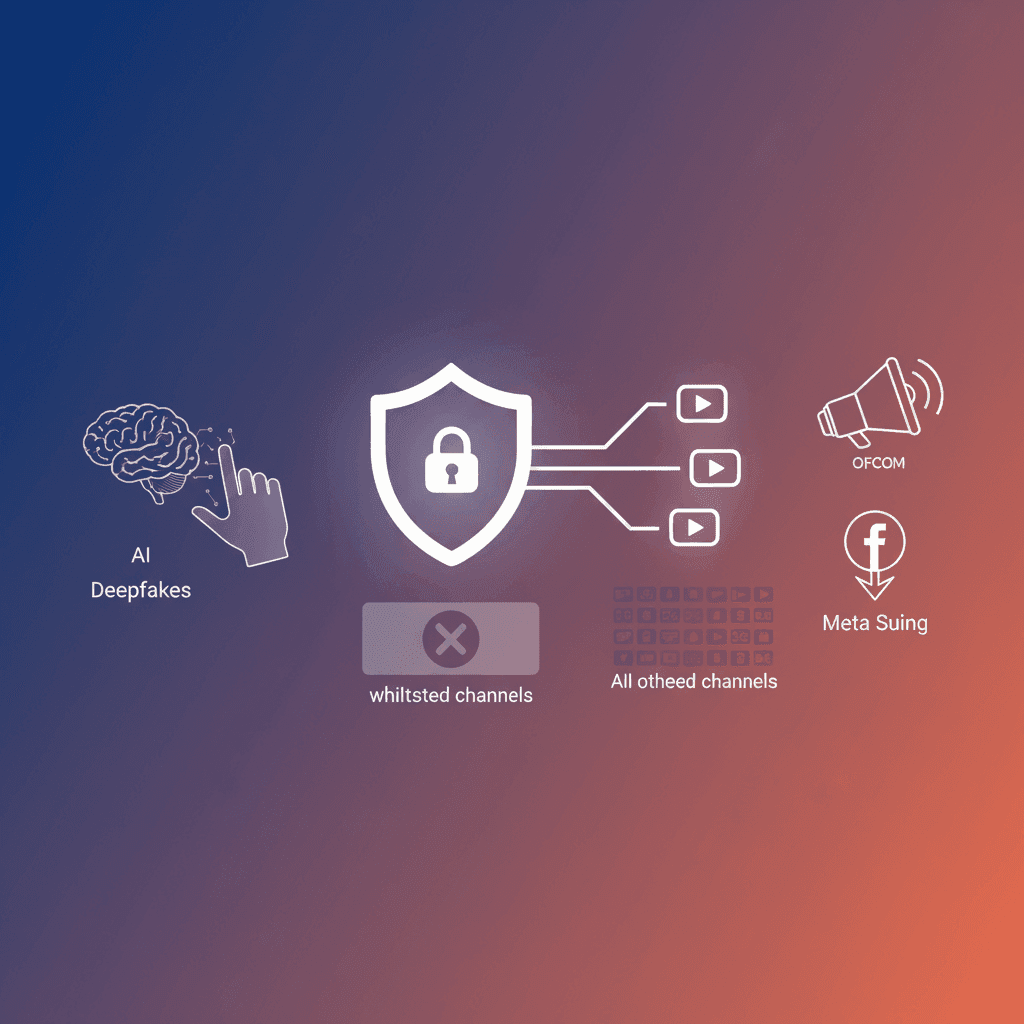

TL;DR: The UK’s Online Safety Act is finally getting some teeth. Ofcom just announced it’s going after AI-generated harm and deepfakes to protect kids. Meanwhile, Meta is already fighting back in court, suing over the fees Ofcom wants to charge to police the internet. It’s the start of a long, messy battle between regulators and Big Tech.
Key Takeaways
- Ofcom is making child protection its top priority, specifically targeting deepfakes and AI content.
- New rules announced May 10, 2026, mean platforms can't just wait for reports; they have to stop kids from seeing harmful AI content before it spreads.
- Meta filed for a judicial review on May 7, 2026, because it doesn't want to pay the bill for its own regulation.
- The legal fight shows that even with new laws, enforcement is going to be expensive and slow.
- Parents shouldn't wait for the government to win these court cases. Proactive tools are still the best defense.
- WhitelistVideo bypasses the "detection" problem entirely by letting parents pick exactly what is allowed, rather than hoping an algorithm catches what's bad.
What is the UK Online Safety Act and its New Priorities?
The UK Online Safety Act is the government’s attempt to clean up the internet. It forces platforms to take responsibility for what they host, especially when it comes to children. On May 10, 2026, Ofcom—the agency now running the show—laid out its battle plan. They aren't just looking at standard "bad" content anymore; they are zeroing in on AI-generated material and deepfakes.
This is a big shift. Ofcom knows that human moderators can't keep up with AI that can churn out thousands of fake images in seconds. By making this a priority, they are telling tech companies they need better tech to fight tech. For parents, it’s a step in the right direction, but it also shows how much the "digital world" has changed. We aren't just worried about mean comments anymore; we're worried about hyper-realistic fakes.
Will WhitelistVideo Work for Your Child?
Answer 4 quick questions about your child's devices and age — get a personalized setup recommendation.
10,000+ families · FreeWhy is AI-Generated Content a Growing Concern for Child Safety?
AI content is a nightmare for safety because it’s so easy to make and so hard to spot. Deepfakes can create realistic videos of anyone saying or doing anything. According to a 2025 report by the Digital Safety Institute, these fakes are becoming nearly impossible for standard filters to catch. We’re seeing everything from fake "celebrity" endorsements that lead to scams to much darker, non-consensual imagery used for bullying.
YouTube is a massive target for this. The sheer volume of uploads means that even the best AI detection will miss things. This is why relying on "Restricted Mode" feels like bringing a knife to a gunfight. It’s reactive. You have to wait for the harm to happen before the video gets flagged. WhitelistVideo takes the opposite approach through channel whitelisting. Instead of trying to block the millions of bad videos, you just pick the five or ten channels you trust. If it’s not on the list, it doesn’t play. It’s the only way to stay ahead of an algorithm that doesn't always know what it's recommending.
Meta's Judicial Review: A Sign of Industry Pushback?
Meta isn't going down without a fight. On May 7, 2026, they launched a judicial review to challenge how Ofcom calculates its fees. Basically, Ofcom needs money to hire experts and investigators to enforce the Online Safety Act, and they want the tech giants to pay for it. Meta’s argument is that the bill is too high and the math is fuzzy.
This lawsuit is a classic stall tactic, but it also highlights a real problem: regulation is expensive. If the biggest companies in the world are fighting the fees, it could starve the regulator of the resources it needs to actually protect people. For parents, the message is clear: don't wait for the government to fix your child's feed. These legal battles can drag on for years while the technology—and the risks—keep moving forward.
What devices does your child use for YouTube?
Can Existing Parental Controls Handle Advanced AI Threats?
The short answer is no. Most built-in tools are outdated. YouTube’s Restricted Mode is better than nothing, but it’s far from perfect.
A 2025 report by ChildNet International found that it still misses a huge chunk of inappropriate content. Even worse, any kid with a smartphone and thirty seconds of free time can usually find a way around it. It’s a filter, not a wall.
Deepfakes make these old filters even less effective because they don't always trigger the "red flags" that traditional moderation looks for. Parents need something bypass-proof. WhitelistVideo was built for this. By using Channel Whitelisting, you aren't playing a game of cat-and-mouse with an algorithm. You are the gatekeeper. It’s also designed to be impossible to bypass, with built-in protections against VPNs and incognito mode. It keeps the boundaries you set in place, no matter how tech-savvy your kid is.
What Practical Steps Can Parents Take Today to Ensure YouTube Safety?
You can't wait for Ofcom to win its lawsuits or for YouTube to perfect its AI. The threats are here now. The best way to handle it is to combine old-fashioned conversation with modern, proactive tools. You want to give your kids the freedom to learn without the risk of stumbling into a deepfake or an addictive rabbit hole.
WhitelistVideo is designed to make this easy. Here is how it actually works in a household:
- Channel Whitelisting: You pick the channels. Your kids watch those, and nothing else. No "Up Next" surprises.
- Shorts Blocking: Shorts are the wild west of YouTube. You can turn them off entirely while still letting your kids watch long-form educational videos.
- Every Device Covered: It works on iPhones, Androids, Chromebooks, and even the living room TV. One list covers everything.
- Bypass-Proof: It’s built to stay on. It detects when a kid tries to use a VPN or incognito mode to get around the rules.
- Privacy First: Your child doesn't need to log in to YouTube, and the controls still apply. This is a huge plus for parents who want to keep their kids' data off Google's servers, especially with the recent crackdowns in Australia.
- The Request System: If your kid finds a new science channel they want to watch, they can send a request to your phone. You check it, hit approve, and it’s added to their list instantly.
The internet is changing fast, and the UK's new laws are a good start. But until the dust settles on these lawsuits, the best way to keep your kids safe is to take control of the screen yourself.
Frequently Asked Questions
What is the UK Online Safety Act?
It’s a new law that forces social media and search engines to protect users from illegal and harmful content. If they don't, Ofcom can hit them with massive fines.
How does Ofcom plan to enforce the Online Safety Act regarding AI and deepfakes?
As of May 10, 2026, Ofcom is requiring platforms to use better detection tools to find and remove AI-generated abuse and deepfakes before they go viral.
Why is Meta suing Ofcom over the Online Safety Act?
Meta is challenging the "tax" Ofcom wants to levy on tech companies to pay for the regulation. They claim the fee structure is unfair and lacks transparency.
How can parents protect their children from harmful online content like deepfakes?
The most effective way is to use a "whitelist" approach. Instead of trying to block the bad stuff, only allow the specific channels and creators you already trust.
What impact will these regulations have on platforms like YouTube?
YouTube will likely have to change its algorithms and spend a lot more on moderation. You might see more aggressive age verification and fewer "random" recommendations in the future.
Is WhitelistVideo an effective solution for YouTube parental control?
Yes. It’s one of the few tools that doesn't rely on YouTube's own flawed filters. It gives parents total control over what is allowed and blocks everything else by default.
Tired of YouTube Surprises?
Whitelist specific channels for truly safe viewing, free from algorithms, deepfakes, and harmful content.
Frequently Asked Questions
The UK Online Safety Act is landmark legislation designed to make online platforms safer, particularly for children. It places legal duties on companies to prevent the spread of illegal content and protect users from harmful material, enforced by the regulator Ofcom.
Ofcom announced new enforcement priorities on May 10, 2026, specifically targeting AI-generated content and deepfakes, especially concerning child sexual abuse material and other forms of abuse. This signals a proactive approach to evolving digital threats, requiring platforms to implement robust safety measures.
Meta initiated a judicial review on May 7, 2026, challenging Ofcom's proposed fee calculation methodology under the Online Safety Act. This lawsuit highlights growing industry pushback against the financial burdens and regulatory scope imposed by new online safety laws.
Parents can protect children by using robust parental control tools that block unwanted content, encouraging open communication, and teaching digital literacy. Solutions like WhitelistVideo allow parents to proactively approve only specific, safe YouTube channels, blocking all unapproved content by default.
The Online Safety Act will likely compel platforms like YouTube to significantly invest in content moderation, AI detection tools, and age verification systems. They will face pressure to remove illegal and harmful content faster, leading to substantial operational changes and potential legal challenges.
Yes, WhitelistVideo offers an effective solution for YouTube parental control by allowing parents to whitelist specific channels, blocking everything else by default. It also blocks YouTube Shorts, works across all devices, and is bypass-proof, providing a secure and curated viewing experience for children.








Published May 13, 2026 · Updated September 6, 2026

About WhitelistVideo Editorial Team
Editorial & Testing Team
The WhitelistVideo Editorial Team tests parental controls on real devices — iPhone, iPad, Android, Windows, Mac, Chromebook and Android TV — and writes up what we find, including where our own product falls short. Where a claim comes from a vendor's own documentation or from third-party testing, we cite it. Articles are reviewed by Arul Prakash, the founder of WhitelistVideo.
You Might Also Like

KOSA Gains Power: Social Media Verdicts Reignite Online Safety Push
Recent jury verdicts holding social media giants liable for teen mental health harms have reignited urgency for the Kids Online Safety Act (KOSA). Parents can expect stronger protections and a 'duty of care' for platforms, but immediate action is still crucial for child safety online.
Landmark Verdicts: Meta & YouTube Liable for Harming Youth
US juries have found Meta and YouTube liable for youth harm, citing addictive designs and exploitation. These landmark rulings could force platform redesigns for child safety and open doors for new lawsuits.
Aussie Crackdown: Social Media Fails Under-16 Ban, Legal Action Looms
Australia's eSafety Commissioner is threatening legal action against tech giants like YouTube and TikTok for failing to enforce the under-16 social media ban. Weak age verification systems mean underage users are still widely active, prompting parents to seek more effective digital safety tools.
Curious what Google knows about us?
Add WhitelistVideo as a trusted source on Google — get instant context on how families keep kids safe on YouTube.
Ask Google about WhitelistVideo