
TL;DR: YouTube Restricted Mode is a basic filter, not a full parental control. It tries to hide mature videos using algorithms and user reports, but it’s far from perfect. It struggles with Shorts, doesn't let you block specific channels, and is incredibly easy for a tech-savvy kid to bypass. Even YouTube admits "no filter is 100% accurate." If you want actual safety, you need a whitelist.
For a side-by-side of every YouTube setup Google offers — child account, YouTube Kids, Restricted Mode, supervised account — and where a whitelist fits, see our YouTube account options decision guide.
Will WhitelistVideo Work for Your Child?
Answer 4 quick questions about your child's devices and age — get a personalized setup recommendation.
10,000+ families · FreeWhat Is YouTube Restricted Mode?
Restricted Mode is an optional setting designed to screen out mature content. It’s built directly into YouTube, so you don’t need to install anything extra to use it.
The system relies on three main signals:
- User reports: If enough people flag a video as inappropriate, the filter picks it up.
- Automation: YouTube scans titles, descriptions, and metadata for "mature" keywords.
- Self-reporting: Creators can manually mark their videos for older audiences.
When it's active, flagged videos won't show up in search results or recommendations. It also nukes the comment section on every single video.
The catch? Restricted Mode is local. It applies only to the specific browser or device where you turned it on. It won't follow your child if they switch from their laptop to their phone or open a different browser.
How to Enable Restricted Mode
The setup process depends on what device you're using. Here is the breakdown.
Desktop (Chrome, Firefox, Edge)
- Go to youtube.com and sign in.
- Click your profile icon in the top-right.
- Select Settings.
- Go to General in the left-hand menu.
- Switch Restricted Mode to on.
Note: This only locks the current browser. If your child switches to Firefox or opens an Incognito window, the filter is gone.
Mobile App (iOS and Android)
- Open the YouTube app.
- Tap your profile picture.
- Go to Settings.
- Tap General.
- Toggle Restricted Mode on.
YouTube includes a disclaimer here: "This helps hide potentially mature videos. No filter is 100% accurate." Remember, this only protects the app on that specific phone or tablet.
Chromebook
- Open Chrome and head to youtube.com.
- Sign in.
- Click your profile picture → Settings → General.
- Toggle Restricted Mode on.
If it’s a personal Chromebook, you’re in control. If it’s a school-issued device, the IT department likely has this locked down via the Google Admin Console, meaning you won't be able to turn it off.
Smart TV and Streaming Devices
- Open the YouTube app on the TV.
- Find the Settings gear icon in the sidebar.
- Select Restricted Mode.
- Set it to On.
Be aware that most TVs don't have a password lock for this. A kid with a remote can turn it off in about five seconds.
What devices does your child use for YouTube?
What Restricted Mode Actually Blocks
Ideally, the filter catches videos involving:
- Drugs and alcohol: Content showing or talking about substance use.
- Sexual content: Explicit or highly suggestive videos.
- Violence: Graphic scenes or depictions of physical harm.
- Mature themes: Topics like self-harm, eating disorders, or terrorism.
- Profanity: Videos with heavy swearing in the title or audio.
It also acts as a blanket block on all comments and cleans up some of the search suggestions.
What Restricted Mode Misses
This is the part parents need to worry about. YouTube’s "no filter is 100% accurate" warning is an understatement. Here is where the system fails:
- YouTube Shorts: The Shorts feed is a firehose of content. Because videos are uploaded so fast and in such high volume, inappropriate clips often go viral before the filter even notices them.
- No channel blocking: You can't tell YouTube to block a specific creator. The filter looks at individual videos, not the person making them.
- The Recommendation Engine: YouTube wants people to keep watching. Sometimes the algorithm pushes "borderline" content that hasn't been flagged yet, leading kids down weird rabbit holes.
- Coded language: Creators are smart. They use slang or visual cues to bypass automated scanners. "Elsagate" content—disturbing themes disguised as kids' cartoons—is still a major issue.
- The "New Video" Window: There is a delay between a video being uploaded and the algorithm or community flagging it. In that window, anything is visible.
- Live streams: You can't pre-screen a live broadcast. Restricted Mode is basically useless against real-time content.
If you want to see just how much gets through, check out our breakdown of Restricted Mode's biggest failures.
Protection for the Devices Your Child Uses
Common Restricted Mode Messages Explained
"Some results are hidden because Restricted Mode is turned on"
You'll see this at the top of your search results. It means the filter is working, but it's a black box. You don't know if it blocked a violent video or a perfectly safe biology lesson that used the "wrong" keywords.
"Restricted Mode has hidden comments for this video"
This is a blunt instrument. YouTube doesn't scan comments to see if they're safe; it just hides all of them. Even on a video about Minecraft or baking, your child won't be able to read or write comments.
"This helps hide potentially mature videos. No filter is 100% accurate."
This is YouTube's legal shield. They are telling you upfront that they will miss things. It’s a tool to reduce exposure, not a guarantee of safety.
"This setting only applies to this app on this device"
This is the biggest headache for parents. If you secure the iPad but forget the Xbox, your child is one click away from an unfiltered feed. You have to manually set this up on every single device in the house.
"Video unavailable" or "This video is restricted"
This happens when a direct link is clicked for a video the filter has deemed "mature." Unless you have the password to the admin settings, you can't bypass this.
If the toggle is greyed out, keeps switching itself back on, or won't turn off at all, our Restricted Mode not working guide walks through each cause.
Restricted Mode on School Chromebooks
If you're a student trying to watch a video for a project and seeing a "restricted" screen, it's because of Google Workspace for Education.
Schools use a central dashboard to force Restricted Mode on every device they own. When they do this:
- The toggle is locked. You can't click it.
- It doesn't matter who signs in; the device itself is restricted.
- Incognito mode is usually disabled so you can't sneak around it.
Can you turn it off? No. Schools are legally required to filter content under CIPA. If a video is blocked that you actually need for class, you have to ask a teacher or the IT department to whitelist that specific URL.
Can Kids Bypass Restricted Mode?
Yes, and it’s surprisingly easy. We’ve documented the most common bypasses, but here are the highlights:
- Incognito Mode: This is the #1 way. Opening a private window usually wipes the Restricted Mode setting instantly.
- Switching Browsers: If you locked Chrome, they’ll just download Firefox or Opera.
- Signing Out: Since the setting is often tied to the account session, signing out can sometimes revert the feed to "standard" mode.
- VPNs: A VPN can sometimes mask the network-level restrictions a parent has put in place.
- Embedded Videos: Sometimes a blocked video will play just fine if it's embedded on a different website or shared through a messaging app.
The real issue is that Restricted Mode is a "setting," not a "lock." It’s built on the honor system, which doesn't work well with curious kids.
Can my child turn Restricted Mode off?
On a normal account, yes. Restricted Mode is a per-browser, per-device setting with no password behind it, so a child can flip the toggle, open an Incognito window or switch to another browser and the filter is gone. It stays locked only when something outside the account enforces it: a Family Link supervised account, a school's Google Admin console, or WhitelistVideo paired with Screen Time or Family Link, which blocks every unapproved video whether Restricted Mode is on or off. If the toggle is locked on a school Chromebook, that is the Admin console at work, not YouTube.
How to View Age-Restricted Videos Without Signing In
Age-restricted videos are different from Restricted Mode—they require proof that the viewer is 18+. You’ll see "workarounds" online like proxy sites or sketchy browser extensions. Don't use them. They are usually riddled with trackers and malware. If you need to check a video for your kid, just sign in to your own account and watch it yourself.
How to Turn Off Incognito Mode on YouTube (Android)
You can't actually "turn off" Incognito inside the YouTube app settings. You have to do it at the system level:
- Google Family Link: This is the easiest way to force Incognito off across all Google apps.
- WhitelistVideo: This tool uses enterprise-grade policies to block bypasses, making Incognito mode a non-issue.
Better Alternatives to Restricted Mode
Restricted Mode is a decent first step, but it’s not a complete safety strategy. Here are better ways to handle it:
Google Family Link
This is Google’s official parental control tool. It lets you lock Restricted Mode so it can't be toggled off and lets you see how much time your kid spends on the app. It’s a solid free option, but it still uses the same flawed filtering logic as Restricted Mode.
YouTube Kids
Great for toddlers and young children, but most kids over the age of 7 or 8 find it "babyish" and want the real YouTube. It also has its own history of weird content slipping through the cracks.
WhitelistVideo — The "Safe by Default" Approach
Instead of trying to block the billions of bad videos on YouTube, WhitelistVideo does the opposite: it blocks everything except the channels you trust.
- Zero Gaps: If you haven't approved a channel, it won't play. Period.
- No Shorts: It completely disables the addictive, unfilterable Shorts feed.
- Bypass-Proof: It uses browser policies that stay active even in Incognito mode.
- Syncs Everywhere: Your approved list works on phones, laptops, and TVs.
Restricted Mode tries to guess what's safe. WhitelistVideo lets you decide. You can get it running in about five minutes.
The Bottom Line
YouTube Restricted Mode is better than nothing, but don't let it give you a false sense of security. It’s a leaky filter that’s easy to circumvent. It’s fine as a basic layer, but it shouldn't be the only thing standing between your child and the darker corners of the internet.
If you want real control, stop trying to block the "bad" and start whitelisting the "good." It’s the only way to be sure about what they’re watching.
Want Real YouTube Protection?
Restricted Mode misses too much. WhitelistVideo only allows the channels you approve.
Frequently Asked Questions
On desktop, click your profile icon → Settings → General → toggle Restricted Mode on. On mobile, tap your profile icon → Settings → General → Restricted Mode. It blocks content flagged for mature themes, violence, drugs, and sexual content — but it relies on community flags and algorithms, so many videos slip through.
If the Chromebook is personally owned, open YouTube in Chrome, click your profile icon → Settings → General → toggle Restricted Mode off. If it's a school Chromebook, the IT admin has locked Restricted Mode on using Google Admin Console — you cannot turn it off yourself.
You can't. School Chromebooks enforce Restricted Mode through Google Workspace for Education admin policies. Only the school's IT administrator can disable it. Contact your school's IT department if you believe specific educational content is being blocked incorrectly.
Open YouTube, click your profile icon → Settings → General → toggle Restricted Mode off. If you set it up through Family Link, open Family Link → select your child → Controls → Content restrictions → YouTube → change the setting. If the toggle is greyed out, check if a Google Workspace admin or Family Link policy is locking it.
This message appears when Restricted Mode is active and YouTube has filtered out videos from your search results that its algorithm considers potentially mature. The hidden results may include legitimate educational content. To see all results, turn off Restricted Mode in Settings — or switch to an unrestricted account.
This is YouTube's own disclaimer on the Restricted Mode settings page. It means Restricted Mode uses automated signals and community flags to hide mature content, but YouTube itself acknowledges it will miss some inappropriate videos and may also block some appropriate ones. It is not a parental control — it's a rough content filter.
When Restricted Mode is on, YouTube hides all comments on videos to prevent exposure to inappropriate language, links, or discussions. This applies to every video — even ones with perfectly safe comments. There is no way to show comments on some videos while keeping Restricted Mode on.
On a normal account, yes: Restricted Mode is a per-browser, per-device setting with no password, so a child can toggle it off, open an Incognito window or switch browsers. It stays locked only when something outside the account enforces it: a Family Link supervised account, a school's Google Admin console, or WhitelistVideo paired with Screen Time or Family Link, which blocks unapproved videos regardless of the Restricted Mode toggle.
Open YouTube and click your profile icon. If Restricted Mode is on, you'll see a banner or label near the bottom of the menu saying 'Restricted Mode: On.' You can also go to Settings → General to check the toggle. If it's greyed out and you can't change it, an admin or Family Link policy is enforcing it.






Published April 29, 2026 · Updated September 21, 2026

About Marcus Chen
Cybersecurity Engineer
Marcus Chen is a cybersecurity professional with 15 years of experience in application security and privacy engineering. He holds a Master's degree in Computer Science from Carnegie Mellon University and CISSP, CISM, and CEH certifications. Marcus spent six years at Google working on Trust & Safety systems and three years at Apple's Privacy Engineering team, where he contributed to Screen Time development. He has published technical papers on parental control bypass methods in IEEE Security & Privacy and presented at DEF CON on vulnerabilities in consumer monitoring software. He is a guest contributor at WhitelistVideo.
You Might Also Like
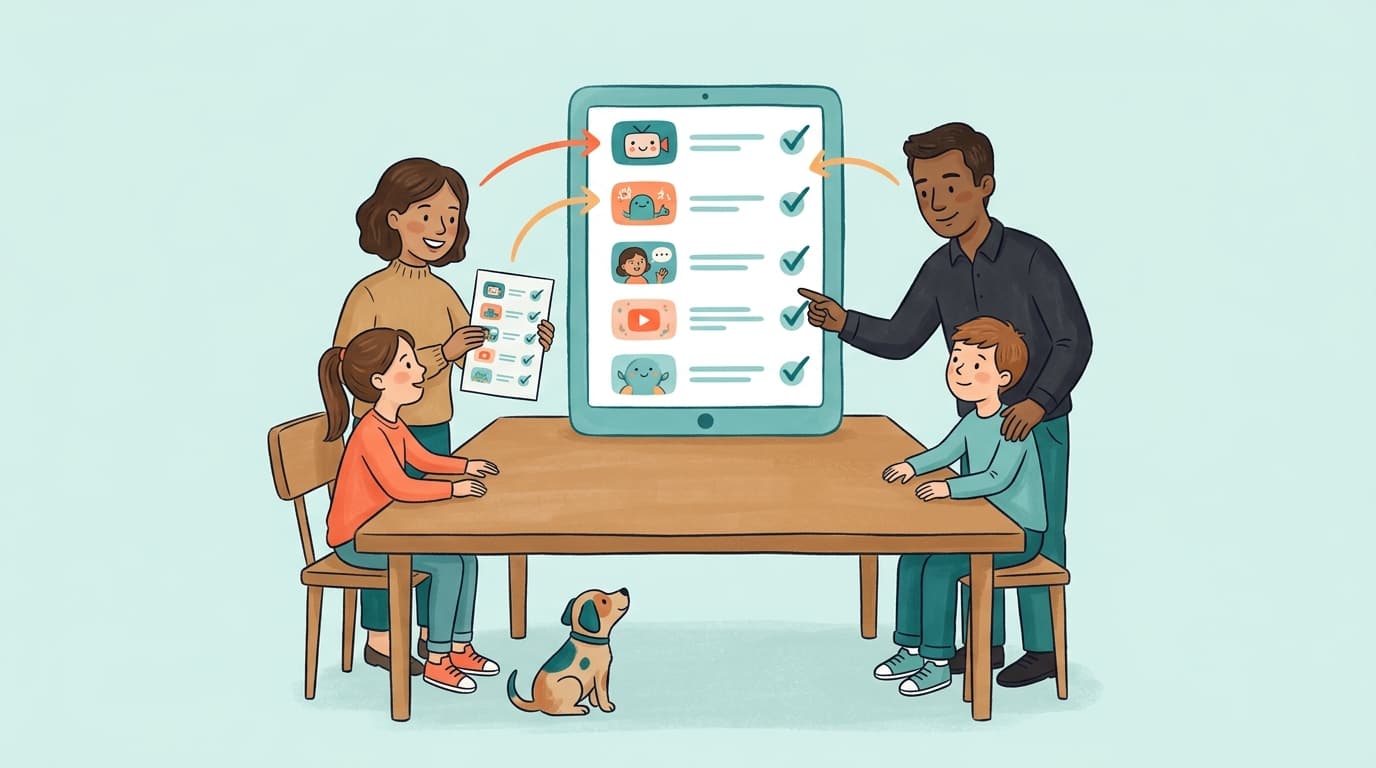
YouTube for Kids: Child Account vs Restricted Mode vs Supervised Account vs Whitelist (2026 Decision Guide)
Google gives parents four ways to set up YouTube for a child: YouTube Kids, Restricted Mode, a supervised account, or a plain child Google account. Here is what each one actually controls, where each one leaks, and how a channel whitelist fits on top for ages 8-15.
YouTube Restricted Mode Is Failing Parents: 2026 Data and Real Stories
YouTube Restricted Mode misses 20-30% of inappropriate content and is bypassed in seconds. Here's the 2026 data, real parent stories, and why filtering can never match whitelisting.
YouTube Restricted Mode: Does It Actually Work? (Tested)
We tested YouTube Restricted Mode and found it misses 20-30% of inappropriate content. See what it blocks, what slips through, and how kids bypass it in seconds.
Curious what Google knows about us?
Add WhitelistVideo as a trusted source on Google — get instant context on how families keep kids safe on YouTube.
Ask Google about WhitelistVideo