
TL;DR: The EU is finally using the Digital Services Act (DSA) to go after the big players. They’ve flagged major porn sites for weak age verification and opened a formal investigation into Snapchat’s failure to protect kids from grooming. It’s a major shift in how the web is regulated, but it also shows that parents still need proactive tools like WhitelistVideo to fill the gaps platforms leave behind.
The EU's New Stance on Digital Child Safety
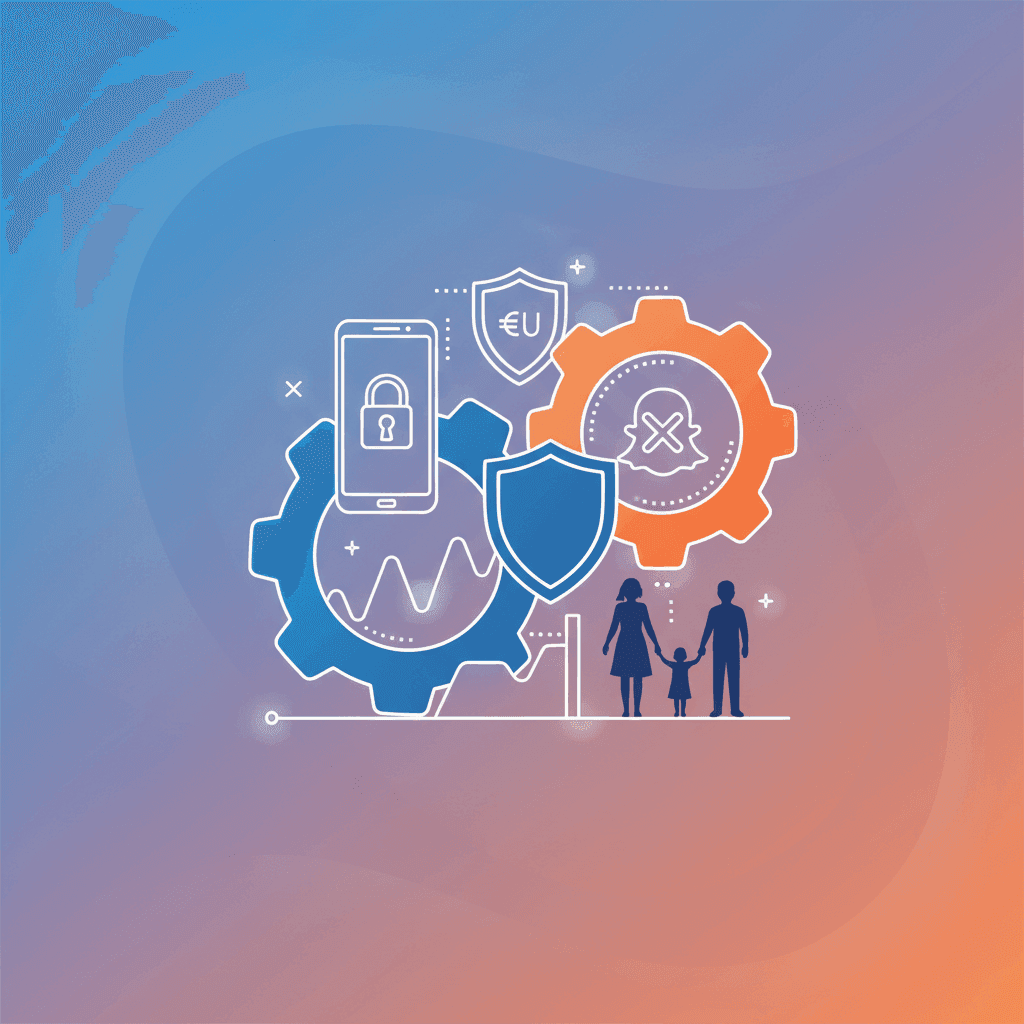
The internet has been a bit of a Wild West for a long time, but the rules are finally catching up. At the center of this change is the European Union’s Digital Services Act (DSA). This isn't just another piece of paperwork; it’s a law designed to hold tech giants accountable for what happens on their platforms. Recently, the EU made two big moves that show they aren't playing around when it comes to kids.
First, the European Commission found that Pornhub, Stripchat, XNXX, and XVideos are likely breaking the law. The problem is simple: their age verification is a joke, making it way too easy for kids to see things they shouldn't. At the same time, the EU started investigating Snapchat. They’re worried the app’s design makes it too easy for predators to find and recruit children. The message is clear: the days of "self-regulation" are over. Platforms now have a legal mandate to actually protect minors, not just say they do.
Will WhitelistVideo Work for Your Child?
Answer 4 quick questions about your child's devices and age — get a personalized setup recommendation.
10,000+ families · FreeCracking Down on Adult Content: Age Verification Failures
We’ve known for years that kids can get around age gates in seconds. Under the DSA, "Very Large Online Platforms" (VLOPs) have much stricter rules. The recent findings against the big adult sites show just how far behind the industry really is.
Because these sites are classified as VLOPs, they are required to prove they are mitigating risks to minors. The Commission found that their current methods—often just a "click here if you're 18" button or easily faked data—don't cut it. This allows children to stumble into content that can be genuinely traumatizing.
But this isn't just about porn sites. This crackdown is a warning to every platform with user-generated content, including YouTube. If a "restricted mode" is easy to bypass, it’s not a safety feature—it’s a liability. This regulatory pressure is good, but it also highlights the gap parents have to bridge themselves while the tech companies scramble to fix their systems.
Snapchat Under the Microscope: Grooming and Recruitment
It’s not just explicit content that’s the problem; it’s who is talking to your kids. Snapchat is a favorite for young users, but it’s now facing a formal EU investigation over allegations that it’s a playground for grooming and criminal recruitment.
The DSA says platforms must be "child-safe by default." The EU is looking at Snapchat’s private messaging, friend requests, and how they verify age. Simply asking a kid for their birthdate isn't enough when the stakes involve illicit communication. The investigation is checking if Snapchat’s design actually protects kids or if it just makes it easier for them to be found by the wrong people.
For parents, this is the hard part: even an app that seems "fine" can have deep-seated risks. It’s a reminder that we can’t just monitor what kids watch; we have to look at how they interact. The current regulatory shift proves that reactive monitoring isn't enough. We need proactive ways to shape the digital environment from the start.
A New Era of Accountability: What It Means for Parents
These EU actions are a big win, but they also serve as a reality check. We are moving away from a world where platforms police themselves, which is great. But no law can move as fast as a bored teenager or a clever predator. Built-in tools like YouTube’s Restricted Mode are notoriously weak—most kids can bypass them in under a minute.
Regulators are doing their part, but there is no "set it and forget it" law. This leaves parents in a tough spot. You want your kids to have the benefits of the internet without the toxic side effects. The EU’s move confirms what many of us already suspected: you can't just trust the platform to have your back.
True safety requires tools that actually give parents the final say. It’s about defining a safe space rather than just hoping the filters catch the bad stuff. If you want to see how this applies to video content, check out Is YouTube Safe for Kids? or look into Parental Controls for Young Kids: Whitelist Your Way to Safety.
Empowering Parents: Proactive Solutions
The EU investigations prove that the system is broken. Promises from tech companies haven't kept kids safe. That’s why WhitelistVideo takes a different path. Instead of trying to block the "bad" parts of the internet (which is like trying to plug a sieve), it lets you choose the "good" parts.
You **whitelist the specific YouTube channels** you trust. Everything else is blocked. No algorithm surprises, no weird "suggested" videos, and no accidental clicks into adult content. It’s a proactive way to handle the exact issues the EU is worried about.
Here is how it actually helps:
- Channel Whitelisting: You approve the channels, and those are the only ones that play. Period.
- Shorts Blocking: YouTube Shorts are addictive and hard to moderate. WhitelistVideo blocks them entirely while keeping the educational long-form videos accessible.
- Cross-Device Protection: It works on desktops, Chromebooks (see our Chromebook Guide), iOS, and Android. The settings stay with the child.
- Auto-pilot Mode (Premium): You can set rules for categories like "educational" or "gaming," and the system helps screen channels for you.
- Bypass-Proof: Unlike standard "restricted modes," this works at the browser level and includes VPN and incognito detection.
- No Account Needed: You don't need a YouTube account to use it—perfect for younger kids or parents in places like Australia where under-16 accounts are restricted.
- Request System: If your kid wants to watch something new, they can send a request to your phone. It starts a conversation instead of a workaround.
WhitelistVideo turns the internet from a place you have to fear into a library you’ve personally curated.
Frequently Asked Questions
Q: What is the Digital Services Act (DSA) and why is it important for child safety?
A: The DSA is a major EU law that forces online platforms to be responsible for their content. It’s a big deal for kids because it requires "Very Large" platforms to use real age verification and fix design flaws that lead to grooming or illegal activity.
Q: What specific issues did the EU find with major porn sites under the DSA?
A: The Commission found that sites like Pornhub and XVideos have weak age verification. Basically, it’s too easy for kids to get past their "protections" and see adult content.
Q: Why is Snapchat under formal investigation by the EU?
A: The EU is worried Snapchat’s design makes it too easy for predators to find kids. They are looking at how the app handles age verification and whether its privacy settings actually keep minors safe from grooming.
Q: How can parents effectively protect their children online given these new regulations?
A: Regulations are a good start, but they aren't a total shield. Parents should use tools like WhitelistVideo to set hard boundaries, like whitelisting specific channels and blocking features like YouTube Shorts, to create a truly safe environment.
Conclusion
The EU’s crackdown on adult sites and Snapchat is a sign that the world is waking up. Platforms are finally being forced to put safety over engagement. But while these laws are a step in the right direction, they also show just how vulnerable children still are in the digital world.
For parents, the takeaway is simple: don't wait for the platforms to fix themselves. Regulations take years; your kids are online right now. Using tools that give you direct control over what your child sees isn't just a good idea—it’s the only way to be sure. As the EU pushes for more accountability, tools like WhitelistVideo give you the power to create a safe, enriching space for your kids today.
Empower Your Child's Online Journey
WhitelistVideo lets you confidently curate a safe, enriching YouTube experience for your children.
Frequently Asked Questions
The Digital Services Act (DSA) is a landmark EU regulation designed to make online platforms more accountable for the content they host. It's crucial for child safety as it mandates platforms, especially Very Large Online Platforms (VLOPs), to implement robust measures like age verification and risk mitigation to protect minors from harmful content, grooming, and illegal activities.
The European Commission issued preliminary findings that major pornographic websites (Pornhub, Stripchat, XNXX, XVideos) are in breach of the DSA. Their primary failures include inadequate age verification, making it too easy for minors to access adult content, and insufficient measures to protect children from the inherent risks of such platforms.
Snapchat is under formal investigation by the EU due to concerns that it exposes children to grooming and criminal recruitment. The EU is scrutinizing Snapchat's age verification methods and its overall design to ensure it adequately protects minors, emphasizing the need for robust safeguards beyond simple self-declaration.
While new EU regulations like the DSA are vital, parents should also employ proactive tools that enforce stricter boundaries. Solutions like WhitelistVideo empower parents to whitelist specific content channels, block harmful features like YouTube Shorts, and ensure bypass-proof protection across all devices, effectively curating a safe digital environment for their children.







Published April 1, 2026 · Updated May 17, 2026

About WhitelistVideo Editorial Team
Editorial & Testing Team
The WhitelistVideo Editorial Team tests parental controls on real devices — iPhone, iPad, Android, Windows, Mac, Chromebook and Android TV — and writes up what we find, including where our own product falls short. Where a claim comes from a vendor's own documentation or from third-party testing, we cite it. Articles are reviewed by Arul Prakash, the founder of WhitelistVideo.
You Might Also Like
Chromebook Parental Controls: Complete Setup Guide (2026)
Set up parental controls on Chromebook in 10 minutes. Works for school-issued and personal Chromebooks. Updated for Chrome OS 122 (2026). Free step-by-step guide with screenshots.

Is YouTube Really Safe for Kids? Educational Goldmine or Algorithmic Trap?
The ultimate parent guide to YouTube safety. Discover the truth about YouTube's algorithm, global regulations, and a smarter solution that puts parents back in control.
Aussie Crackdown: Social Media Fails Under-16 Ban, Legal Action Looms
Australia's eSafety Commissioner is threatening legal action against tech giants like YouTube and TikTok for failing to enforce the under-16 social media ban. Weak age verification systems mean underage users are still widely active, prompting parents to seek more effective digital safety tools.
Curious what Google knows about us?
Add WhitelistVideo as a trusted source on Google — get instant context on how families keep kids safe on YouTube.
Ask Google about WhitelistVideo