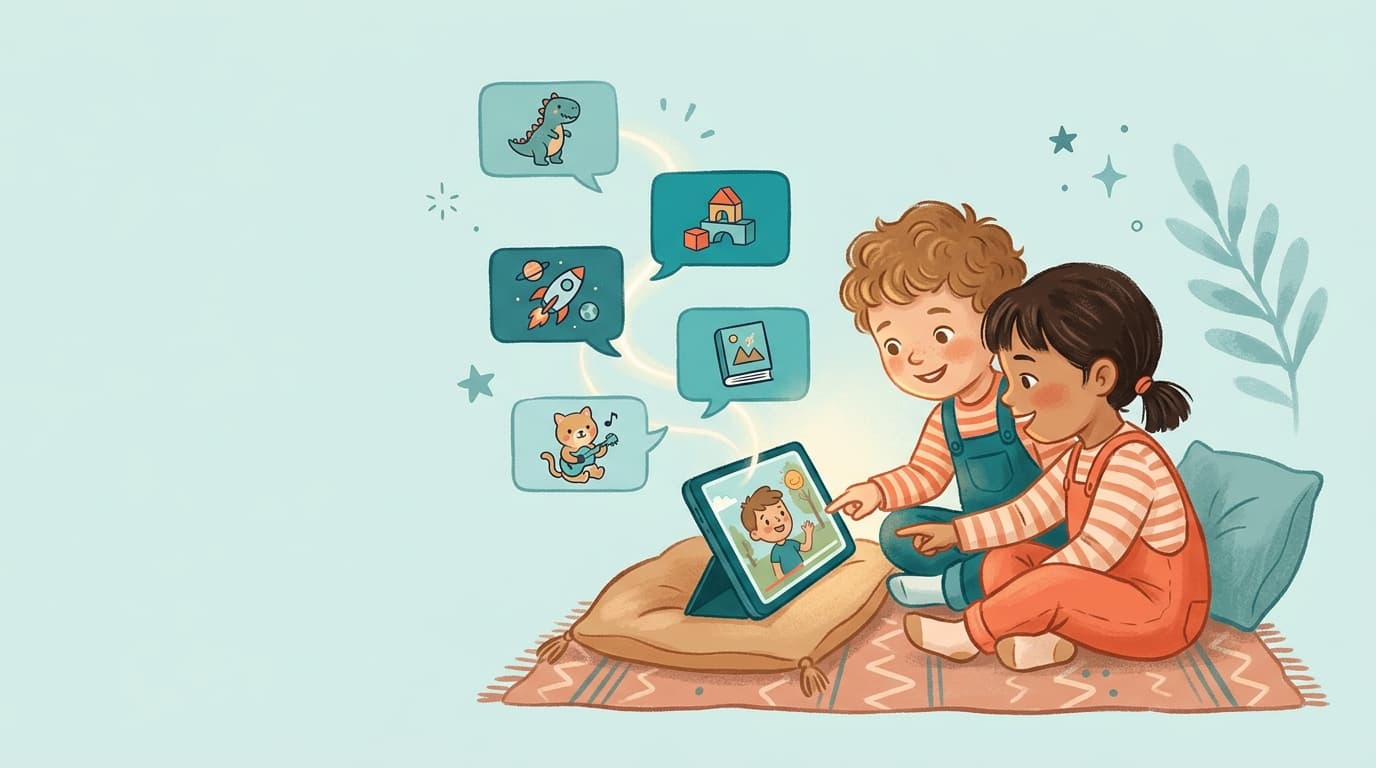

YouTube’s algorithm picks 70% of what kids watch. Autoplay then keeps them trapped in loops that exploit how their brains grow. We talked to parents, teachers, and psychologists about what’s happening on the ground, and the science is pretty clear: the prefrontal cortex—the part of the brain that handles self-control—isn't fully cooked until age 25. Expecting a child to resist a system built to maximize watch time isn't just difficult; it’s neurologically impossible.
The 70% Problem: Who Really Chooses What Your Child Watches?
When a child opens YouTube, they think they’re in the driver's seat. They aren't. Research from Shaped.ai shows that YouTube’s recommendation algorithm drives 70% of all views. This means for every 10 videos your child watches, seven were hand-picked by an AI designed to keep them glued to the screen.
This isn't a helpful librarian suggesting a good book. The algorithm cares about one thing: engagement. It doesn't care if a video is educational or fits your family's rules. It only asks if the video will keep the child from clicking away.
With over 500 hours of content uploaded every minute, humans can't possibly review it all. In fact, over 99.9% of content selection is handled by automated systems (YouTube Support Documentation). Your child is being guided by a machine that only knows what makes them click, not what's good for them.
If you want to see the hard numbers behind this, check out our YouTube statistics research page.
What Parents Are Seeing at Home
The data is one thing, but the daily reality for parents is where the real story is.
"I realized my son hadn't chosen a video in months"
A 2024 Pew Research survey found that 80% of parents with kids under 11 say their children use YouTube regularly. But look closer and you'll see a trend: kids aren't searching for things anymore. They’re just eating whatever the algorithm serves up.
Gallup’s 2023 survey of over 1,500 teens found they spend about 1.9 hours a day on YouTube. That’s more than TikTok. Across all social platforms, that number jumps to 4.8 hours. Parents often describe a "zombie" effect: a child sits down for one five-minute video and "wakes up" 90 minutes later having watched a dozen things they never looked for. Autoplay kills the natural stopping point that used to exist when a show ended.
"She gets agitated when I turn it off in a way she never did with TV"
This is a common complaint. It’s not just a "one more minute" plea; it’s a full-blown meltdown. Psychologists see this as a reaction to an interrupted reward cycle. A 2022 study in the American Economic Review found that 31% of social media time is driven by self-control issues—people keep scrolling because they can't stop, not because they're enjoying it. For kids, whose brains are still under construction, that struggle is even more intense.
"He watches things I'd never approve if he asked first"
The algorithm doesn't prioritize quality; it prioritizes what's "sticky." A child might start with Minecraft and end up on something violent or weirdly intense within a few clicks. Our child online safety statistics show that nearly half of parents have caught their kids watching something inappropriate on the platform. The ParentsTogether Foundation found that YouTube can lead kids down "rabbit holes" of extreme content very quickly, with no easy way for a parent to jump in and stop the flow.
Will WhitelistVideo Work for Your Child?
Answer 4 quick questions about your child's devices and age — get a personalized setup recommendation.
10,000+ families · FreeWhat Teachers Are Observing in the Classroom
Attention span collapse tracks with YouTube consumption
The Quebec Longitudinal Study found that for every extra hour of screen time a toddler gets at age 2, there’s a 7% drop in classroom participation by the time they hit fourth grade. Teachers are seeing this play out in real-time. Kids who are used to the 60-second hits of YouTube Shorts find it almost impossible to focus on a math problem or a long reading assignment.
The "dopamine gap" in morning classes
Teachers often talk about students arriving in a "YouTube fog." If a child spends their morning on a highly stimulating, algorithmically-curated feed, the real world feels incredibly boring by comparison. A 2023 review in Cureus noted that fast-paced, unpredictable content triggers dopamine pathways in a way that mimics ADHD symptoms. The content doesn't even have to be "bad"—it just has to be fast.
Homework completion correlates inversely with algorithmic screen time
The more time kids spend on these platforms, the less homework gets done. But it’s not just about losing time. Students often *intend* to do their work, but the lack of a "stop" button on YouTube makes task-switching nearly impossible. Gallup found that less conscientious teens spend over an hour more per day on these apps. The algorithm finds your weakness and exploits it.
What Neuroscience Says About Autoplay and Developing Brains
The UNC Chapel Hill longitudinal study (2023)
In 2023, JAMA Pediatrics published a study that tracked 169 young teens over three years using fMRI scans. The results were telling: kids who habitually checked social media (15+ times a day) showed growing sensitivity in the parts of the brain that handle rewards and punishments (the amygdala and ventral striatum).
Basically, their brains became more reactive to the "hits" provided by the platform. This is a process called sensitization, and it’s the same thing that happens with substance cravings. Their brains were literally being rewired to need that digital feedback.
Why children can't "just stop watching"
The American Psychological Association (APA) put it bluntly in their 2023 advisory: the parts of the brain that crave attention and reinforcement are active early, but the parts that handle self-control don't catch up until adulthood.
Asking a 10-year-old to turn off an autoplaying video is like asking them to fight their own biology. They don't have the "brakes" yet. The prefrontal cortex won't be fully ready for another decade or more.
The variable reward schedule: why YouTube is more addictive than TV
YouTube works like a slot machine. This is what psychologists call a "variable ratio reinforcement schedule." You don't know if the next video will be great or boring, so you keep clicking to find out. That uncertainty is actually what releases the dopamine. It’s why kids keep watching even when they look bored out of their minds—they’re waiting for the next "hit." We go deeper into this in our piece on variable reward loops.
What Child Psychologists Recommend
The APA's position on platform design
The APA isn't just suggesting parents try harder; they’re saying the platforms themselves are the problem. They’ve called for features like "likes" and infinite scrolling to be tailored to what a child can actually handle. The current design is built for adult engagement but is being used on brains that can't self-regulate.
The Surgeon General's warning
In 2024, Surgeon General Vivek Murthy suggested warning labels for social media. He pointed out that kids spending more than three hours a day on these sites have double the risk of depression and anxiety. Since the average teen is already at nearly five hours, we’ve passed the danger zone for most families.
Clinical consensus: removal of choice is the mechanism of harm
The real issue isn't always the video itself—it's that the child isn't making a choice. When an algorithm picks the next video, the child never has to ask, "Do I want to keep watching?" That "choice muscle" never gets exercised, and eventually, it atrophies. This makes it even harder for them to manage their time as they get older.
The Data Collection Layer: How the Algorithm Knows Your Child
The algorithm is scary-accurate because it has a lot of data. By age 13, companies have roughly 72 million data points on the average child. Even a toddler has millions of data points tracked through ad tech. This isn't a generic system; it's a personalized machine that learns exactly what your specific child can't resist. You can read more about this in our parental control research.
What Countries Are Doing About It
Some governments are trying to step in. Australia and the UK have both moved toward bans for younger kids, specifically citing algorithmic manipulation. But as we’ve seen in our guide to YouTube bans, these are hard to enforce. Kids find ways around them, and it often just moves the problem where parents can't see it.
The Alternative: Bypassing the Algorithm Entirely
If the algorithm is the problem, the solution is to take it out of the equation. You don't necessarily have to ban YouTube; you just have to stop the machine from choosing the content.
This is where "whitelisting" comes in. Instead of letting an AI suggest what’s next, you pick the channels you trust. If it’s not on the list, it doesn't play. No "up next" videos, no rabbit holes, no autoplay.
WhitelistVideo was built for this exact reason:
- Kill the algorithm — Kids only see what you’ve approved.
- End the loops — When a video ends, it actually ends. No autoplay.
- No accounts needed — This is huge for privacy and for avoiding age-restricted account issues.
- Works everywhere — You can set it up on the TV, phones, or tablets.
- Actually works — Unlike Restricted Mode, which most kids can bypass in their sleep, this is enforced at the browser level.
The goal is to give the power back to the parent. YouTube has great content, but your child’s brain shouldn't be the testing ground for an engagement algorithm.
Key Takeaways
- The algorithm is in charge — 70% of what kids watch is picked by AI, not the child.
- Biology is against them — Kids lack the brain hardware (prefrontal cortex) to resist autoplay loops.
- It changes the brain — Heavy use is linked to higher sensitivity in reward centers, making it harder to quit.
- Classroom impact — Early screen exposure leads to lower participation and focus in school.
- Mental health risks — Crossing the three-hour daily mark doubles the risk of anxiety and depression.
- Whitelisting is the fix — Removing the algorithm's ability to choose is the most effective way to protect developing brains.
Sources
- Maza, M.T., et al. (2023). "Association of Habitual Checking Behaviors on Social Media With Longitudinal Functional Brain Development." JAMA Pediatrics, 177(2):160-167.
- American Psychological Association (2023). Health Advisory on Social Media Use in Adolescence.
- Murthy, V. (2024). "Surgeon General: Why I'm Calling for a Warning Label on Social Media Platforms." The New York Times, June 2024.
- Gallup (2023). Familial and Adolescent Health Survey. Sample: 1,591 adolescents aged 13-19.
- Pew Research Center (2024). "Teens, Social Media and Technology." December 2024.
- Pagani, L.S., et al. (2010). "Prospective associations between early childhood television exposure and academic, psychosocial, and physical well-being." Archives of Pediatrics & Adolescent Medicine, 164(5):425-431.
- Muppalla, S.K., et al. (2023). "Effects of Excessive Screen Time on Child Development." Cureus.
- World Health Organization (2019). Guidelines on Physical Activity, Sedentary Behaviour and Sleep for Children Under 5 Years of Age.
- Shaped.ai. YouTube Recommendation Algorithm Analysis.
Bypass the Algorithm Completely
Only parent-approved channels play. No recommendations, no autoplay loops.
Frequently Asked Questions
YouTube's recommendation algorithm drives 70% of all views on the platform (Shaped.ai Research). For children, this means 7 out of every 10 videos they watch were selected by an AI optimizing for engagement, not educational value or age-appropriateness. Parents have no visibility into why specific videos are recommended.
Research from UNC Chapel Hill (JAMA Pediatrics, 2023) found that habitual social media use is associated with increasing neural sensitivity in the amygdala and prefrontal cortex of adolescents aged 12-15. The APA confirms that brain regions for self-control are not fully developed until approximately age 25, making children neurologically vulnerable to variable-reward systems like autoplay.
The American Psychological Association's 2023 Health Advisory states that 'brain regions associated with a desire for attention, feedback, and reinforcement from peers become increasingly sensitive beginning in early adolescence' while 'regions associated with mature self-control are not fully developed until adulthood.' They recommend platforms tailor features like recommended content and unrestricted time limits to adolescent comprehension levels.
The most effective approach is to bypass the algorithm entirely. Channel whitelisting tools like WhitelistVideo let parents approve specific channels — only those channels play. No recommendations, no autoplay rabbit holes, no algorithm-driven content. This gives children access to educational content without exposing them to algorithmic manipulation.
Published: June 26, 2026 • Last Updated: June 27, 2026

About Dr. Rachel Thornton
Child Development Psychologist
Dr. Rachel Thornton is a licensed clinical psychologist specializing in child development and digital media impact. She holds a Ph.D. in Developmental Psychology from Stanford University and completed her postdoctoral fellowship at the Yale Child Study Center. Dr. Thornton spent eight years as a senior researcher at Common Sense Media, leading longitudinal studies on screen time effects in children ages 5-14. Her research has been published in JAMA Pediatrics and Developmental Psychology, with her 2022 meta-analysis on algorithmic content exposure cited over 300 times. She is a guest contributor at WhitelistVideo.
You Might Also Like
 Research
YouTube Shorts Addiction in Kids: The Variable Reward Machine Parents Don't Understand
YouTube Shorts uses slot-machine psychology to hook children. Learn how variable reward schedules create compulsive viewing, why kids are neurologically more vulnerable, and how to block the mechanism without banning YouTube entirely.
 Research
YouTube Algorithm: 50+ Stats Every Parent Must Know
YouTube's algorithm controls 70% of what kids watch. Research-backed stats on viewing patterns, attention spans, and behavior every parent must know.
 Research
The Attention Span Crisis: How YouTube Shorts Are Rewiring Young Brains
Research shows short-form video is changing how children focus and learn. Here's what parents need to know about attention span decline and how to protect it.
Curious what Google knows about us?
Add WhitelistVideo as a trusted source on Google — get instant context on how families keep kids safe on YouTube.
Ask Google about WhitelistVideo