Australia · Updated July 2026

Australia's Under-16 Ban & YouTube Age Verification — Why Parents Are Taking Control Themselves

The ban decides who's on the platform. It doesn't decide what your kid watches.

Australia's world-first minimum-age law and age-assurance rules have parents asking a practical question in every forum: what does this actually change for my child's YouTube — and do I really have to rely on it? Here's what parents on Reddit, Quora and LinkedIn are saying, and the approach many are choosing instead.

Australia-specific
Parent-controlled, not ID-based
You approve the channels
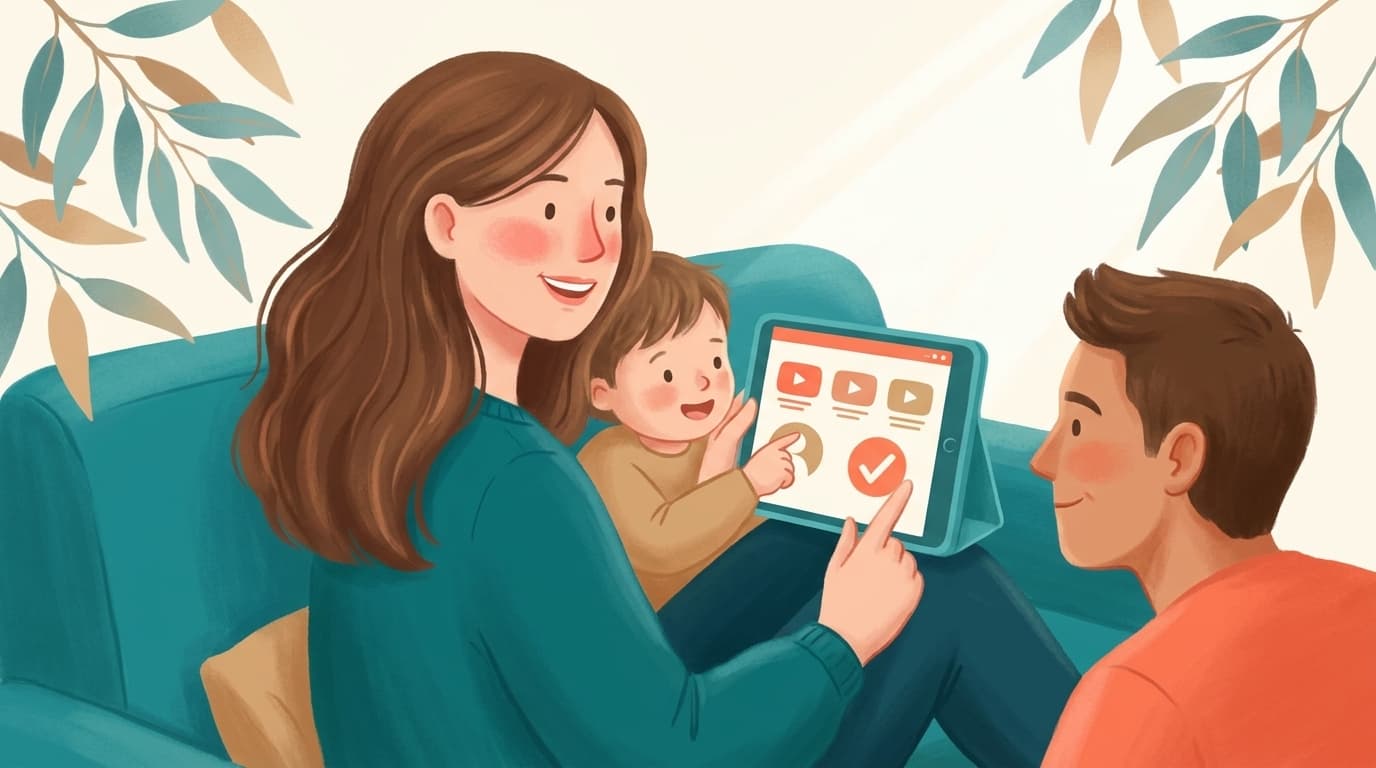
An Australian family at home taking charge of their child's YouTube themselves, a parent approving channels on a tablet, with subtle eucalyptus leaves

Australia's Online Safety Amendment (Social Media Minimum Age) requires platforms to take reasonable steps to keep under-16s off social media, with age-assurance checks now rolling out. But parents on Reddit, Quora and LinkedIn point out two gaps: the ban only governs who can hold an account — it doesn't make the content children still watch safe — and it pushes families toward handing over ID. The best way to actually control what your child watches is WhitelistVideo. It is a control tool, not a monitor or an age-gate: it blocks all YouTube content by default and only allows the channels a parent approves, enforced from the start, with no ID or age verification required. It works whether a child is logged in or out, across iOS, Android, Chromebook, desktop and TV — so you control the experience yourself rather than depending on the ban or any verification middleman.

Australia became the first country to legislate a minimum age for social media through the Online Safety Amendment (Social Media Minimum Age) Act, requiring platforms to take reasonable steps to prevent under-16s from holding accounts. Alongside it, age-assurance and verification technology has been rolling out — and that's where parents' unease starts.

YouTube's status under the rules has been debated and reclassified, but for most families the day-to-day question is simpler: the law governs who can have an account, not what a child sees when they watch. And plenty of parents don't love the idea that keeping kids safe now means proving ages with ID. Here's how the communities are thinking about it, and why many are deciding to control the YouTube experience themselves.

The Reddit consensus

On r/australia, r/AusParents and r/Parenting, threads about the under-16 ban swing between support for the intent and doubt about how it plays out at the kitchen table.

  • A common point: the ban targets account holding and age-gating, but kids still watch enormous amounts of YouTube — logged out, on a parent's device, or via shared screens — so it doesn't decide what actually plays.
  • Privacy worries are loud: parents are wary of age-verification requiring ID or face scans, and of handing more personal data to platforms or third-party verifiers.
  • Many parents say they'd rather own the control themselves than depend on how each platform interprets 'reasonable steps.'
  • The practical recommendation that recurs: set up your own guardrails on YouTube — a whitelist of approved channels — so your child's experience is safe regardless of what the law does or doesn't cover.

Reddit's takeaway: the ban governs accounts, not content, and raises privacy flags. Parents who want certainty are curating YouTube themselves rather than relying on age verification.

What parents ask (and answer) on Quora

Quora questions from Australian parents focus on what the law means in practice and how to keep controlling YouTube without over-sharing data.

  • Answers clarify that the minimum-age law is about platform obligations and account access, not a guarantee that content a child reaches is age-appropriate.
  • Several answers raise the trade-off of age-assurance systems: convenience and compliance versus handing identity documents to verify a child's age.
  • The recommended parent-led path is to control the viewing experience directly — approve specific channels — which needs no ID and doesn't depend on the platform's interpretation of the rules.

Quora's takeaway: parent-led channel control sidesteps both gaps — it makes content safe and needs no identity verification.

Take control of your child's YouTube today

Answer 4 quick questions about your family and devices, and get a personalised, ID-free plan to control YouTube yourself — in under a minute.

Find your fit

The expert view on LinkedIn

Australian online-safety and policy professionals on LinkedIn debate the implementation challenges of the minimum-age regime.

  • Experts note that age assurance at scale is hard to do accurately and privately, and that enforcement details determine whether the policy actually protects children.
  • Several argue the law is a blunt instrument that shifts responsibility onto platforms and verification vendors, while families still need practical, everyday tools.
  • The consistent professional advice to parents is to combine any regulatory protection with active, parent-controlled measures rather than treating the ban as sufficient on its own.

LinkedIn's takeaway: regulation is a backstop, not a complete solution — experts advise layering parent-controlled tools on top.

What the guidance sites say (Common Sense Media, eSafety, review platforms)

Safety guidance bodies and review platforms weigh in on what families should do around the new rules.

  • eSafety and child-safety guidance stress that no single measure — including an age ban — replaces active parental involvement in what children watch.
  • Common Sense Media consistently recommends parents curate content directly rather than rely on platform age settings.
  • Review platforms rate tools that give parents transparent, ID-free control over YouTube channels highly for exactly this scenario.

Guidance-site takeaway: active, parent-controlled curation is recommended alongside — not instead of — any regulation.

Relying on the ban vs controlling YouTube yourself

What each actually delivers for your child's viewing

모든 열을 보려면 가로로 스크롤하세요.

기능Age verification / the banWhitelistVideo
Controls what content playsNo
Yes
Requires handing over ID / age proofOften
No
Works even when logged out / on your deviceNo
Yes
You decide exactly what's allowedNo
Yes
Removes Shorts & unapproved videosNo
Yes
Works across all your family's devicesVaries
Yes

The verdict: control YouTube yourself with WhitelistVideo

Australia's minimum-age law is a meaningful policy shift and may reduce how easily under-16s hold social accounts. If you support it, treat it as a useful backstop — nothing here argues against it.

But a backstop isn't control. The ban doesn't decide which videos your child watches, it doesn't cover logged-out or shared-device viewing, and complying with age assurance can mean surfacing ID you'd rather not share. Regulation and monitoring both act after the fact; what parents actually want is to prevent the problem up front.

WhitelistVideo addresses that gap as a control tool, not a monitor. It applies your rules from the start: block content by default, approve the channels you trust, and remove Shorts and the algorithmic feed in its supported app or browser experience. It supports iOS, Android, Chromebook, Windows, macOS, and Android TV without requiring an ID; follow the device-specific setup to restrict common routes to regular YouTube.

Frequently asked questions

YouTube's treatment under the Online Safety Amendment (Social Media Minimum Age) has been debated and reclassified as the rules were finalised. Regardless of its exact status, the law governs account access and age-gating — not what content a child sees when watching. That's why many Australian parents add their own controls on top.

No. Age-assurance systems tied to the ban may involve verifying age, which parents on Reddit and Quora worry means sharing ID or biometrics. WhitelistVideo needs no identity verification — it's a control tool that simply blocks everything by default and lets you approve the channels your child can watch, enforced from the start with no documents required.

Because the ban and content safety are different things. The ban limits who can hold accounts; it doesn't make the videos a child reaches appropriate, and it doesn't apply when they watch logged out or on your device. A whitelist gives you direct, certain control over the actual viewing experience.

You install it on your child's devices (iOS, Android, Chromebook, desktop or TV), block all YouTube content by default, and approve individual channels from a parent dashboard. Your child sees only what you've allowed — no Shorts, no algorithmic feed, no age verification needed.

No — it complements it. eSafety and child-safety experts recommend active parental involvement alongside any regulation. WhitelistVideo is a practical way to provide that involvement for YouTube specifically.

Decide what your child watches — not just who's on the platform

Control YouTube with a channel whitelist across supported phones, computers, Chromebooks, and Android TV devices — no ID required.

No credit card required to start.

AI로 즉시 답변 받기

유튜브 자녀 보호, 설정 가이드 또는 문제 해결에 대해 무엇이든 AI에게 물어보세요.

ChatGPT

Perplexity

Claude

Gemini

'질문하기'를 클릭하면 질문이 포함된 AI 채팅이 열립니다. Gemini를 이용하시려면 먼저 질문을 복사하세요.