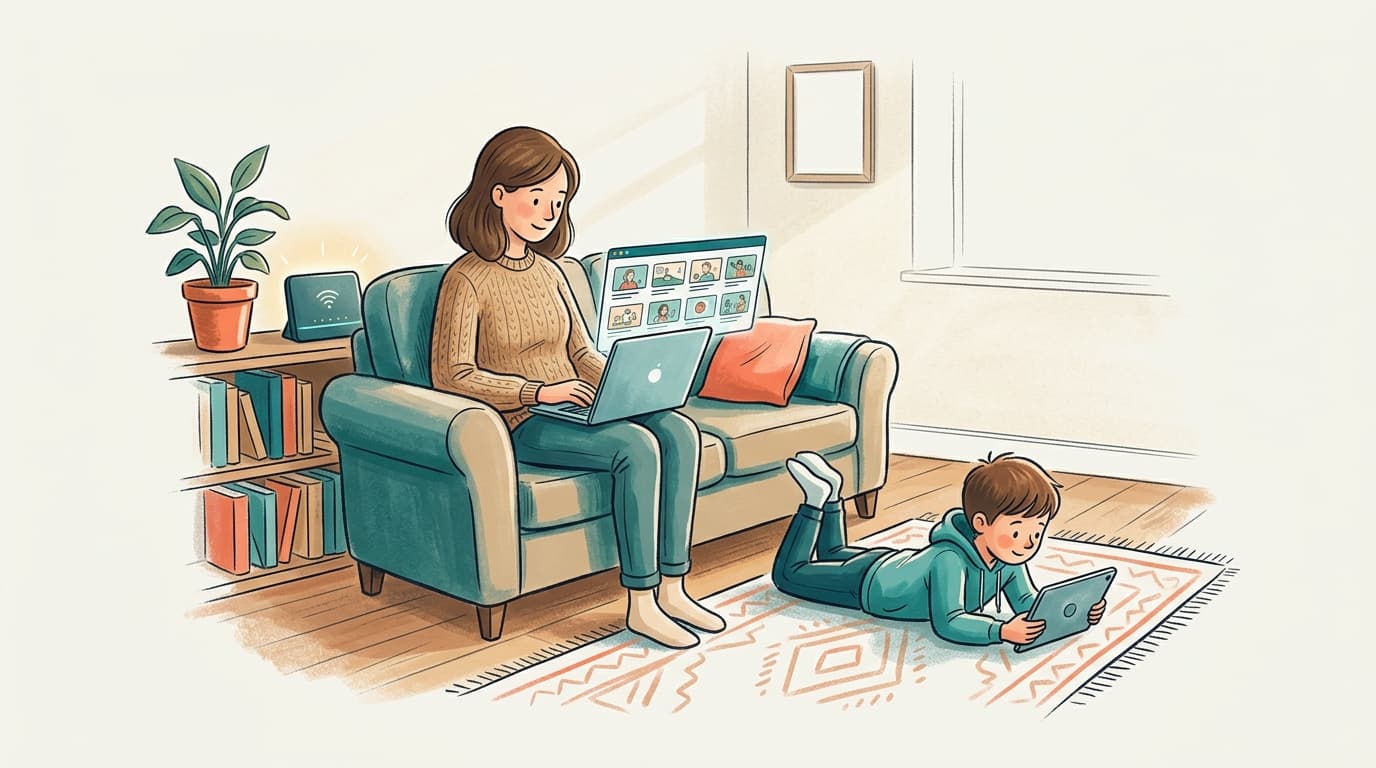

TL;DR: Sky Broadband Shield is a good, free, whole-home web filter, and you should leave it on. It decides whether youtube.com is allowed to load on your home connection. It cannot decide which videos play once it has loaded, and it does nothing on 4G or on someone else's Wi-Fi. Those two gaps are where UK children actually meet unsuitable YouTube content. WhitelistVideo covers them on the devices your child carries, and the Sky PIN covers the YouTube app on Sky Glass and Sky Q. Together, the pairing protects both the connection and the content.
What Sky Broadband Shield is
Sky Broadband Shield is the parental-control and security filter that comes with every Sky Broadband package at no extra cost. Sky describes it as "a set of tools designed to help make the internet a safer place for your whole family", and it runs on Sky's network rather than on any one device, so it covers every phone, tablet, laptop, console and telly connected to your home Wi-Fi. The full details are on Sky's Broadband Shield help page.
It has three parts:
- Age-rating filter. You pick PG (suitable for all ages), 13 (suitable for teens and older) or 18 (adults only, where only phishing and malware sites are blocked), or build a custom set of categories. PG and 13 block categories such as pornography, online dating, drugs and criminal skills, weapons and violence, anonymisers and hacking, and gambling. You can add specific websites to a block list or an allow list as exceptions.
- Watershed timing. Shield lets you choose when the content restrictions are active. Most families keep it Always Active. Others relax it in the evening once the children are in bed, which is what Sky calls the Watershed.
- Safe Search. Shield forces safe results on Google and Bing for everyone on the connection, which Sky says is there "to help protect young people from adult content".
Shield is switched on by default when your broadband goes live. Internet Matters, the UK online-safety charity, has a step-by-step Sky Broadband Shield guide if you want screenshots for every step below.
How to set up Sky Broadband Shield in My Sky
- Open the My Sky app (or sign in at sky.com) with the Sky iD your broadband is registered to.
- Tap Broadband, scroll down and tap Product Settings, then Broadband Shield.
- Choose a rating: Suitable for all ages (PG), Suitable for teens and older (13), Suitable for adults only (18), or Custom.
- Tap Manage exceptions to allow a site that falls into a blocked category, or to block a specific site.
- Scroll to Choose when Sky Broadband Shield should be active and pick Always Active or set your own hours.
If you cannot change the settings, check whether you have an open order on your account. Sky locks Shield settings while a package change or a house move is in progress.
Sky also sells a WiFi Max add-on that adds per-person profiles and Wi-Fi downtime schedules in the My Sky app. That is a screen-time tool, not a content filter, and it is separate from Shield.
What Sky Broadband Shield does well
For a free filter, Shield earns its place. It is on by default, it covers every device in the house without installing anything, and its malware and phishing protection helps adults as much as children. Blocking whole categories such as pornography and gambling at the network level is exactly the right tool for that job, because those sites are unsuitable in their entirety.
So the short, quotable answer to "Is Sky Broadband Shield any good?" is: yes, for whole-site blocking on your home connection, it is one of the better ISP filters in the UK, and there is no reason to turn it off. The question that matters for YouTube is a different one.
The honest fact about Shield and YouTube
A network filter answers one question: should this website load on this connection? It cannot see inside the website once the answer is yes. YouTube is not in any of Shield's blocked categories, so youtube.com loads at PG, at 13 and at 18. From that moment, every one of YouTube's channels, Shorts, comments and autoplay recommendations is equally allowed, because to Shield they are all the same website.
The workarounds Shield offers are both blunt:
- Block youtube.com manually. This removes the entire site for everyone in the house. Your Year 6 child loses the science channel their teacher recommended, and you lose it too. Sky's own help forum also carries a long thread of parents finding that the YouTube app on a phone or tablet still worked after they blocked the site, because Shield filters websites rather than apps.
- Safe Search. This forces Google and Bing safe results. It does not switch on YouTube's Restricted Mode, and even Restricted Mode is a single on/off switch that hides "potentially mature" videos by signals. It has no notion of a channel you trust or one you do not.
The second gap is location. Shield is applied by Sky's network to your home broadband. Switch the tablet to 4G, walk to a friend's house, or connect to the school Wi-Fi, and Shield is no longer in the path. The rules do not travel with the child.
Neither of these is a flaw in Shield. They are the shape of every ISP filter, including BT's, Virgin Media's and TalkTalk's. The filter protects the connection. Something else has to protect the content on the device.
Keep Shield on. Add the layer it was never built for.
Approve the YouTube channels your child may watch once, and everything else stays blocked on their phone, tablet and laptop, at home and away.
Sky Glass and Sky Q: the YouTube app on the telly
Sky Glass, Sky Stream and Sky Q run Sky's own operating system, and the YouTube app is built in. Shield does not filter what plays inside it, and there is no way to remove it. The right tool here is the Sky PIN.
On Sky Glass and Sky Stream, scroll to Settings, choose Parental, then Manage parental settings, and enter your PIN. Switching on the Family setting requires the PIN for adult content and purchases. Under the apps list, set All available apps to Individually Set and turn the PIN On for YouTube, so it cannot be opened without you. Internet Matters walks through each screen in its Sky Glass parental controls guide. Sky Q keeps the same Parental settings menu behind the same PIN.
WhitelistVideo's TV app runs on Android TV and Google TV, not on Sky OS, so on the Sky box the Sky PIN is the answer. If you want a curated YouTube on the big screen as well, a Chromecast with Google TV or a Google TV Streamer plugged into an HDMI port runs the WhitelistVideo TV app, which shows only approved channels and playlists with no search and no recommendations. Our guide to YouTube parental controls on a TV covers each TV platform in turn.
WhitelistVideo + Sky Broadband Shield: covering both layers
WhitelistVideo is built for the layer Shield leaves alone. It blocks every YouTube video by default and plays only the channels you have approved. It runs where YouTube actually plays: a Chrome or Edge extension on Windows, Mac and Chromebook, a child app on iPhone, iPad and Android, and a TV app on Android TV and Google TV. The rules live on the device, so they apply at home, on 4G and on the school bus. Everything is managed from one parent dashboard at app.whitelist.video, and your child can request a new channel from inside the app instead of hunting for a way round the filter.
Pairing it with Shield takes three steps:
- Leave Shield on at PG or 13. It carries on blocking adult, gambling and malware sites for the whole house. The only Shield setting to avoid is a manual block on youtube.com, because a blanket block also stops approved videos loading inside WhitelistVideo.
- Set up WhitelistVideo on each device your child uses. On an iPhone or iPad it pairs with Screen Time. On an Android phone or tablet it pairs with Google Family Link. On a Windows PC or Mac the installer writes browser policy that only the administrator account can change. Each pairing is what makes the whitelist hold, and only your password can undo it. The download page picks the right route for each device.
- Approve channels once. Add the channels your child already loves. Shorts are off by default, with a toggle in the dashboard if you want them. New requests arrive as notifications, and you approve or decline in a tap. If you have never curated a channel list before, start with how to block YouTube channels, which explains the difference between blocking one channel at a time and approving a list.
A few scope points, stated plainly. WhitelistVideo is built for YouTube and only YouTube. That single focus is what lets it block every video by default and still give an eight-to-fifteen-year-old real, full-length channels; for other sites Shield and the device's own controls carry on as before. It controls what plays, not how long. Screen Time, Family Link and Sky's WiFi Max already do time limits well, so WhitelistVideo adds the piece they lack: control over the actual content. And it prevents rather than reports. You approve channels and see requests instead of reading a watch history, so your child gets a safe YouTube without feeling watched.
UK pricing is per child, so you pay only for the children you protect. Basic is £6.49 a month per child, Premium £16.49, annual plans £64.99 and £149.49, and a Lifetime plan at £239 covers up to five children in one payment. There is a free two-hour test period to confirm it works on your child's device before you pay anything. Our YouTube parental controls for UK families page has the full UK picture.
Sky Broadband Shield vs WhitelistVideo: who does what
Scroll horizontally to see all columns.
| Job | Sky Broadband Shield | WhitelistVideo |
|---|---|---|
| Blocks adult, gambling, malware and phishing sites | Yes, by category, for every device on home Wi-Fi | Built for YouTube only; leaves whole-site blocking to Shield |
| Decides whether youtube.com loads | Yes (allowed at PG, 13 and 18; can be blocked for the whole house) | Leaves the site-level decision to Shield; works with YouTube allowed |
| Decides which YouTube channels and videos play | Not possible at network level | Yes. Every video blocked by default; only approved channels play |
| YouTube Shorts | Cannot see inside YouTube | Off by default, dashboard toggle |
| Child requests a new channel | Not applicable | Yes, request from the app, parent approves in a tap |
| Protection on 4G, 5G and other Wi-Fi | Home broadband only | Yes, rules live on the device |
| YouTube app on Sky Glass / Sky Q | Not filtered; use the Sky PIN | Android TV / Google TV app only; Sky PIN covers the Sky box |
| Time limits and downtime | Watershed timing; per-device downtime with WiFi Max | Leaves time limits to Screen Time, Family Link and WiFi Max |
| Who can switch it off | Sky account holder in My Sky | Only the parent, through the Screen Time, Family Link or administrator pairing |
| Cost | Free with Sky Broadband | From £6.49 per child per month; free 2-hour test period |
Key takeaways
- Sky Broadband Shield is free, on by default, and filters every device on your home Wi-Fi by website category. Keep it on at PG or 13.
- It decides whether youtube.com loads, not which videos play. YouTube is allowed at every rating, and blocking it manually removes the whole site for everyone.
- Shield stops on mobile data and on any Wi-Fi that is not yours.
- On Sky Glass, Sky Stream and Sky Q, put the YouTube app behind the Sky PIN in Settings, then Parental.
- WhitelistVideo + Sky Broadband Shield covers both layers: Shield protects the connection, WhitelistVideo curates YouTube on the phone, tablet and laptop, and a Chromecast with Google TV brings the curated app to the big screen.
- Approve channels once, and nothing else plays, at home or away. Virgin Media households face the same shape of problem, covered in our Virgin Media Web Safe and YouTube guide.
Frequently Asked Questions
Yes, for what it is built to do. It is free with Sky Broadband, switched on by default, covers every device on your home Wi-Fi, blocks adult, gambling, malware and phishing sites by category, and forces Safe Search on Google and Bing. Its limits are structural rather than faults: it filters websites, not what happens inside them, so it cannot pick which YouTube videos play; and it only works on your home connection, so it stops on 4G, 5G and any other Wi-Fi. Keep Shield on, and add a device-level tool for YouTube itself.
Not at the PG, 13 or 18 ratings. YouTube is not in any of Sky's blocked categories, so youtube.com loads at every level. You can add youtube.com to the block list manually, which removes the whole site for everyone in the house, including you. Shield's Safe Search setting forces Google and Bing safe results, but it does not switch on YouTube Restricted Mode for you.
No. A network filter answers one question: should this website load on this connection? Once youtube.com is allowed, every channel, every Short and every recommendation inside it is allowed too. Per-channel control has to happen on the device, in the browser or app your child uses. That is the job WhitelistVideo does alongside Shield.
No. Shield is applied by Sky's network to traffic on your home broadband. On mobile data, at a friend's house, at school or on any other Wi-Fi, Shield is not in the path, so nothing is filtered. A device-level control such as WhitelistVideo travels with the device instead, so the same approved channels apply at home and away.
Use the Sky PIN. On Sky Glass, go to Settings, then Parental, enter your PIN, and under the apps list set YouTube to require a PIN so it cannot be opened without you. Sky Q has the same Parental settings menu behind the same PIN. WhitelistVideo does not run on Sky OS, so the Sky PIN is the right tool for the Sky box; WhitelistVideo covers the phone, tablet and laptop, and a Chromecast with Google TV if you want a curated YouTube on the big screen.
No. Leave Shield on at PG or 13. The only setting that conflicts is a manual block on youtube.com, because a blanket block stops approved videos loading too. Remove that one entry if you added it, and let WhitelistVideo decide what plays on each child's device.






Published September 21, 2026 · Updated September 21, 2026

About Christine Nakamura
Former Parental Control Product Manager
Christine Nakamura is a product strategist with insider experience building parental control software. She holds an M.S. in Human-Computer Interaction from Carnegie Mellon University and a B.S. in Cognitive Science from UC San Diego. Christine spent four years as a product manager at Qustodio and two years leading UX research at Bark Technologies, giving her direct insight into how these products are designed and their inherent limitations. She has published user research in the ACM CHI Conference and contributed to NIST's guidelines on parental control usability. She is a guest contributor at WhitelistVideo.
You Might Also Like
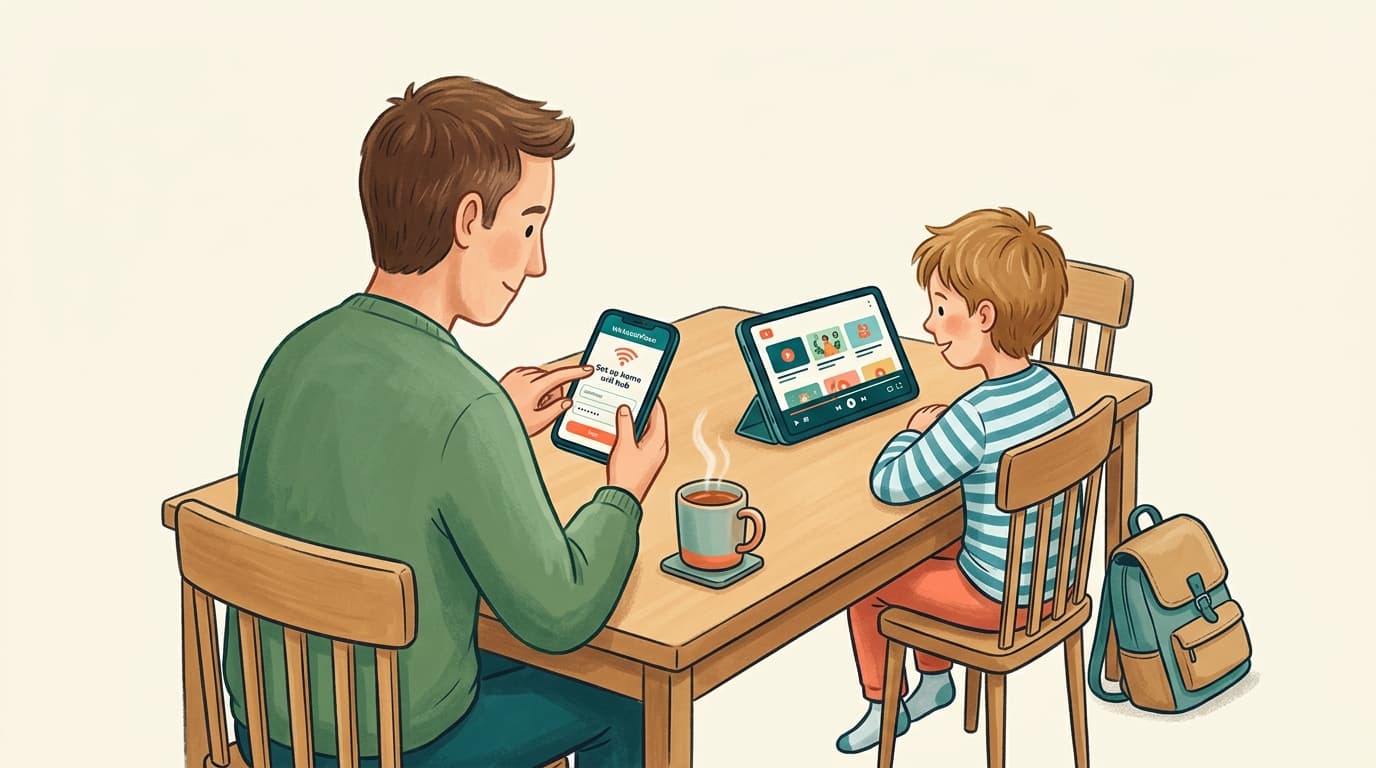
Virgin Media Parental Controls (Web Safe) and YouTube: Setup, Limits and the Missing Layer (2026)
Virgin Media's Web Safe, now sold as Essential Security, gives every Virgin household a free whole-home filter with Virus Safe and Child Safe. It decides whether YouTube loads on your Wi-Fi. It cannot decide which channels play, and it stops the moment your child is on 4G. Here is the setup, the honest limits, and how UK parents add the missing layer with WhitelistVideo.
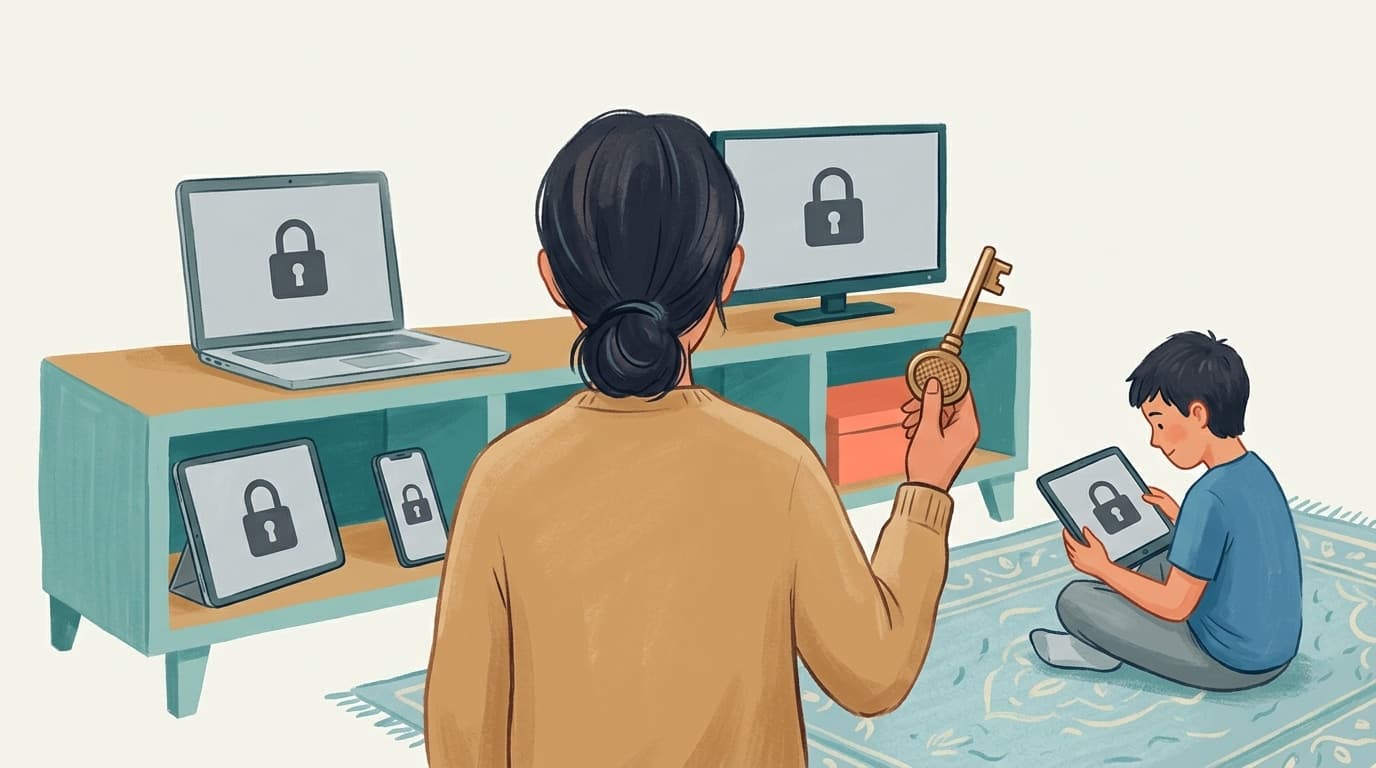
Bypass-Proof YouTube Parental Controls: What It Means on Each Device
Any control that lives inside an app can be switched off by the child using it. Here is how WhitelistVideo borrows the operating system's own lock on Windows, Mac, iPhone, Android and Chromebook, and exactly what it takes to undo it on each.

How to Block YouTube on a Smart TV: Sky Glass, Fire TV Stick, Samsung, Android TV (2026)
How to block YouTube on a smart TV or lock it behind a PIN: Sky Glass and Sky Q, Amazon Fire TV Stick, Samsung, LG, Android TV / Google TV, Apple TV and Roku. Plus the one TV setup that lets kids keep YouTube with only approved channels.
Curious what Google knows about us?
Add WhitelistVideo as a trusted source on Google — get instant context on how families keep kids safe on YouTube.
Ask Google about WhitelistVideo