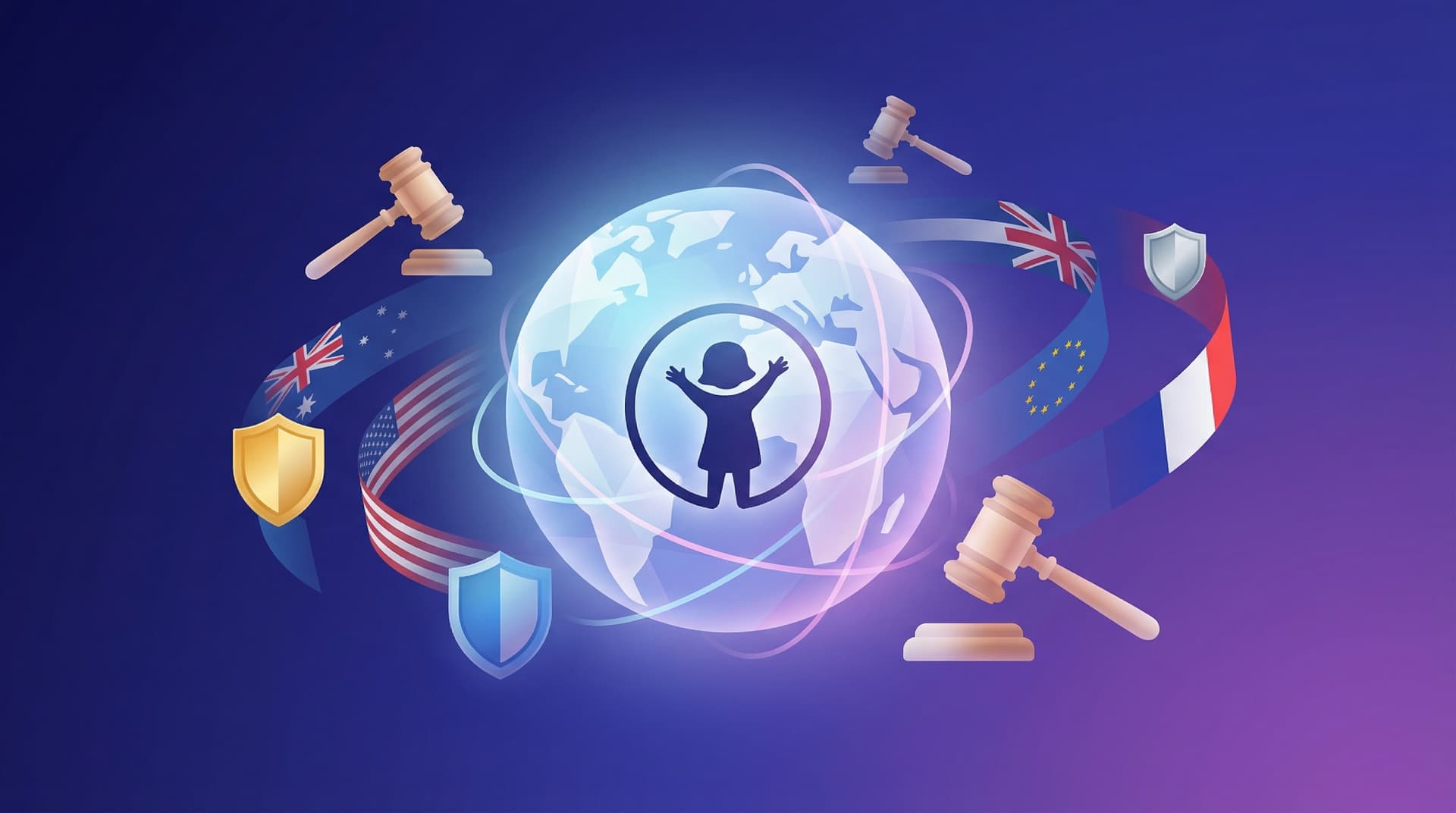

Poland’s proposed under-15 social media ban is still just a draft. Even if it becomes law, neither the ban nor the government’s free mOchrona app actually controls what kids see once they open YouTube. These measures are designed to regulate who gets onto a platform, not what happens once they're logged in. For Polish parents, managing YouTube in 2026 is still a DIY project.
The headlines make it sound like the government has a handle on things. There’s the draft ban, a new phone ban hitting primary schools this September, and a state-issued parental control app. But there’s a catch: most European legislation leaves YouTube in a grey area between a "video service" and "social media." Since YouTube is where Polish kids spend the bulk of their time, this distinction matters.
Here is the reality of where the ban stands, the limits of the government’s free tools, and how to set up a system that actually works today.
Will WhitelistVideo Work for Your Child?
Answer 4 quick questions about your child's devices and age — get a personalized setup recommendation.
10,000+ families · FreeWhere Poland's under-15 social media ban actually stands
In February 2026, a group of MPs—including Education Minister Barbara Nowacka—proposed a law to ban social media for anyone under 15. The plan includes fines for platforms that don't verify ages properly. By May, Digital Affairs Minister Krzysztof Gawkowski said more details were coming, and a separate bill regarding age verification for adult sites hit the Sejm in June 2026.
The government is moving on this because the numbers are hard to ignore. A 2025 report from NASK found that 1.4 million Polish children aged 7 to 12 are already on social media. Teenagers are averaging over five and a half hours online every day. It’s no surprise that 64% of Poles support a ban for under-16s.
But parents shouldn't hold their breath. First, this isn't law yet. Poland is currently watching how Australia’s ban plays out while their own draft goes through consultations. Second, it’s still unclear if YouTube will even be classified as "social media." Australia went back and forth on this, and France’s similar law is barely enforced. It's safer to assume YouTube will remain accessible.
What the government's free tools do, and where they stop
Poland is one of the few countries that provides a state-built parental control app. mOchrona is free and does a decent job with the basics. It lets you link your phone to your child’s, block specific app categories, and see activity reports. It even has an S.O.S. button for kids.
The problem is that it can't see what's happening inside YouTube. mOchrona works like a blunt instrument: you either block the whole app or you don't. It’s the same story with the filters provided by Orange (Ochrona Rodzicielska), Play, Plus, and T-Mobile, or the Beniamin software used in many schools. They are simple on/off switches. They can't block Shorts, they can't filter specific creators, and they can't approve individual channels.
This is a major gap. Blocking YouTube entirely might work for a seven-year-old, but it’s a losing battle with a ten-year-old who needs it for school or wants to follow Polish science channels. Without a middle ground, most parents just give in and leave the algorithm completely unmonitored.
What devices does your child use for YouTube?
How to set up layered YouTube controls in Poland
The most effective setup treats device access and YouTube content as two different problems.
Layer 1: Device and time limits. Use mOchrona or your mobile operator’s filter for the big-picture stuff—screen time schedules and blocking non-essential apps. They’re free, so you might as well use them. If your child has a school-issued Chromebook, check what’s already installed so you don't create software conflicts.
Layer 2: YouTube itself. You can’t manually filter the 500 hours of video uploaded to YouTube every minute. Instead, flip the script: block everything and only allow the channels you trust. WhitelistVideo handles this on Windows, Mac, Chromebooks, and mobile devices. It works for Polish creators just as well as international ones, and pricing is in PLN. While you're at it, turn on YouTube’s Restricted Mode and Google Family Link, but don't rely on them—kids usually figure out how to bypass these via incognito mode in about five minutes.
Layer 3: The conversation. NASK’s own advice is spot on here: no app is a substitute for actually talking to your kids. With the school phone ban starting in September 2026, kids will likely spend more time on their devices at home. It’s better to agree on the rules now before they start testing the boundaries.
What's likely to change
Don't expect a quick fix. The under-15 draft still has to survive the Sejm, and while the EU is pushing for stricter defaults for minors, platforms are slow to change. Even if the ban passes, "age verification" usually just means an age gate that kids bypass by lying about their birth year. It rarely results in the kind of content control parents actually want.
The reality for Polish parents in 2026 is that the government might eventually guard the door, but they aren't going to clean up the room. If you want to control what your child is watching, you need tools that work at the channel level. Don't wait for the legislation to catch up.
Key takeaways
The under-15 ban is still a proposal and might skip YouTube entirely. Free tools like mOchrona and operator filters are good for setting time limits, but they can't filter specific videos. Since the digital age of consent (16) is easily bypassed, the best move is to pair a device-level timer with a channel-level whitelist. It gives you control right now without having to wait for a vote in the Sejm.
YouTube parental controls in other countries: we keep the same kind of guide for Canada, France, Germany, India and Japan, plus the UK guide and the Australia page.
YouTube Controls That Work in Poland
Approved channels only, Polish and international. Works on every device. PLN pricing.
Frequently Asked Questions
A ban is being drafted, not yet law. In February 2026, lawmakers from the ruling Civic Coalition, including Education Minister Barbara Nowacka, submitted draft legislation to ban social media for children under 15, with platforms responsible for age verification. Digital Affairs Minister Krzysztof Gawkowski confirmed in May 2026 that the government is actively working on it. Whether YouTube falls inside the ban's scope has not been settled.
Only bluntly. mOchrona, the free parental-control app from NASK under the national OSE programme, blocks websites and apps by category and reports screen-time activity. It can block YouTube entirely, but it cannot filter inside YouTube. There is no channel-level control, Shorts blocking or video approval. For YouTube-specific control, Polish parents need a dedicated tool.
16. Poland kept the GDPR default, so information-society services relying on consent need parental authorisation for users under 16. In practice YouTube applies its standard EU age gates, which children routinely bypass with a false birth date.
Layered: use mOchrona or your operator's filter (Orange Ochrona Rodzicielska, Play, Plus, T-Mobile) for device-level limits, and a whitelist-based tool for YouTube itself. WhitelistVideo blocks all of YouTube by default and lets parents approve individual channels, including Polish ones, on Windows, Mac, Chromebook, iPhone, Android and Android TV, with pricing in PLN.
In primary schools, yes. A nationwide ban on mobile phones during lessons takes effect on 1 September 2026. That limits school-time exposure but does nothing about the after-school hours when most YouTube viewing happens.
Published August 13, 2026 · Updated September 21, 2026

Arul is a parent and the founder of WhitelistVideo. He built the app after his daughter started watching YouTube and he couldn't find a single parental control that was simple enough to use daily. Before WhitelistVideo, he spent over 15 years building enterprise-scale products at some of the world's largest companies. He holds an MBA from IIM Mumbai.
You Might Also Like
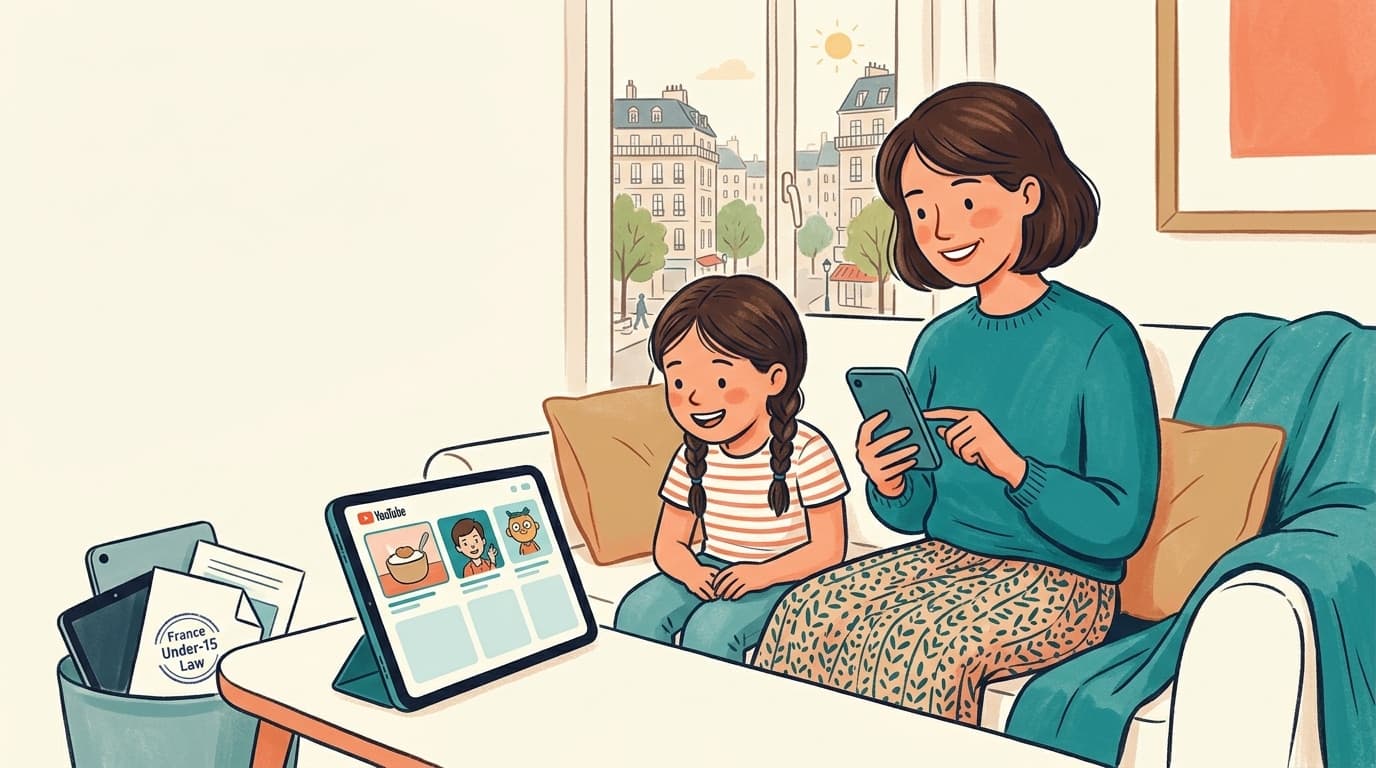
YouTube Parental Controls in France: Under-15 Law & Setup Guide (2026)
France requires parental consent for under-15s on YouTube. Here's what the law means for French families and how to set up proper YouTube controls.
YouTube Parental Controls: The Ultimate Setup Guide (2026)
Complete guide to YouTube parental controls. Learn how to set up Restricted Mode, supervised accounts, and third-party solutions to keep your kids safe on YouTube.
How to Block YouTube on iPad: 3 Methods That Actually Work (2026)
Block or filter YouTube on your child's iPad using Screen Time, Restricted Mode, or whitelist-based controls. Step-by-step guide for 2026 with Australian post-ban context.
Curious what Google knows about us?
Add WhitelistVideo as a trusted source on Google — get instant context on how families keep kids safe on YouTube.
Ask Google about WhitelistVideo